Behind the Glass: What Dr. Ruchi Amin’s “Chanel Bag Theory” Teaches Us About Boundaries and Self-Worth
Inspired by an essay from paediatric surgeon Dr. Ruchi Amin, MD (In Good Hands with PedSurgMD), this National Self-Care Week reflection explores why letting go of approval-seeking and choosing genuine alignment protects your mental wellbeing and self-worth.
Reflecting on her years through medical school, residency, hospital life, and motherhood in a 20 April 2026 essay for In Good Hands with PedSurgMD, paediatric surgeon Dr. Ruchi Amin, MD captures a pivotal realisation: you were never meant to be available to everyone, and the moment you stop trying, everything changes.
Known as “The Chanel Bag Theory”, Dr. Amin’s reflection reframes exhausting people-pleasing as a misunderstanding of personal value. Rather than stretching endlessly to prove belonging in every room, it argues for holding onto inherent worth and letting genuine alignment—not universal approval—guide who gets close.
The Exhaustion of Conditional Worth
The essay opens by looking back at medical school and residency, a period Dr. Amin describes as spent “always… reaching”—reaching for approval, reassurance, and proof that she belonged in rooms she had already earned her way into. That habit meant saying yes to everything, over-preparing, over-explaining, and bending in ways that later felt “almost unrecognisable.” Notably, this relentless proving did not stop at the hospital doors.
At home, the same quiet pressure resurfaced as a perceived need to prove she was not falling short as a mother while remaining all-in on her career. The result was overcompensation on both fronts: doing more, giving more, and stretching herself thinner. Looking back, she identifies the root cause not as an external demand—no one had asked her to bend that far—but as an internalised belief that her worth was conditional. Breaking that cycle required a fundamentally different way of viewing her own value.
Behind Glass: Holding Value Without Discounting Yourself
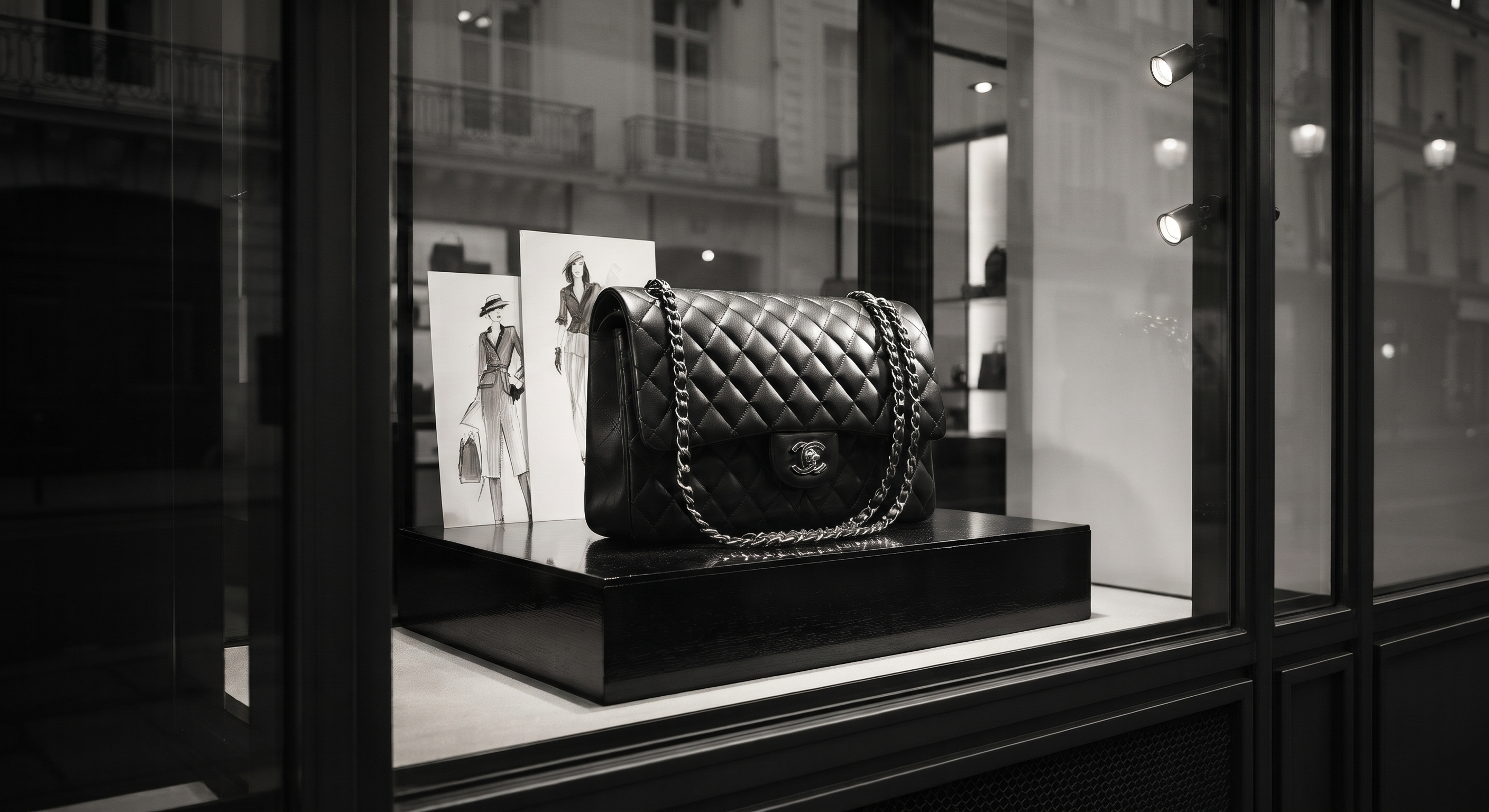
The shift away from overcompensation arrived through a simple visual metaphor of a luxury handbag on display
“A Chanel bag doesn’t chase. It sits. Beautifully made. Undeniably valuable. Behind glass. People walk by and admire it. Some step inside. Very few actually take it home.”
From that image, Dr. Amin draws a clear line between intrinsic worth and universal availability. A Chanel bag does not become less valuable simply because 95% of people cannot attain it, nor does it question itself, “go on sale to be more likeable,” or reshape itself to fit someone else’s budget—it simply holds its worth. Placing the two mindsets side by side highlights how this shift transforms everyday choices:
By treating boundaries as a natural expression of inherent worth, the metaphor shifts focus away from winning universal approval and toward deciding who belongs nearby.
Alignment Over Universal Availability
Extending the metaphor to medicine and everyday life, the essay emphasises a lesson rarely taught explicitly: you are not meant to be for everyone. Not everyone has the capacity to meet another person across four core areas:
Four Capacities of Genuine Alignment
- Understand your ambition
- Support your schedule
- Appreciate your standards
- Match your energy
When someone cannot meet you in those areas, Dr. Amin contends, it is not a reflection of your value—it is a reflection of alignment. The right people do not need convincing, do not need you to shrink, and do not need access to every part of you to feel secure; instead, they meet you where you are and “respect the glass.”
“Holding your worth is one thing. Deciding who gets access to it is where your power lives.”
About Dr. Ruchi Amin, MD (PedSurgMD)
Dr. Ruchi Amin, MD is a triple board-certified paediatric general, thoracic, and trauma surgeon (certified in General Surgery, Surgical Critical Care, and Pediatric Surgery) practising full time in private practice in South Florida while raising two young children. After completing a dual BS-MD programme at Stevens Institute of Technology and medical school at Rutgers Medical School, she trained in general surgery at ECU-Vidant Medical Center—where she received the American College of Surgeons’ 2019 Jameson L. Chassin, MD, FACS Award for Professionalism in General Surgery—before completing fellowships in surgical critical care and paediatric surgery.
She writes n Good Hands with PedSurgMD on Substack to share honest mentorship on navigating medicine, boundaries, and life beyond training. Official links: pedsurgmd.
Why I Wanted to Share “The Chanel Bag Theory” for Self-Care Week 2026
When we think about National Self-Care Week (16–22 November), we often focus on the physical side of health—movement, hydration, skincare, or managing a long-term condition. Yet the Self-Care Forum defines self-care as the actions we take for ourselves and with others to develop, protect, maintain, and improve our health and wellbeing—and on the Self-Care Continuum, wellbeing relies on positive relationships, a sense of purpose, and having some control over our lives.
Reading Dr. Ruchi Amin’s “Chanel Bag Theory” struck a real chord with me because it captures the mental side of that “Mind & Body” balance so clearly. Whether you are navigating a demanding career, caring for others, or living with a health condition, constantly stretching to please everyone leaves nothing in the tank. Setting boundaries, holding onto your self-worth, and surrounding yourself with people who respect your energy is not selfish—it is everyday self-care in action.
Inspired by “The Chanel Bag Theory” by Dr. Ruchi Amin, MD in In Good Hands with PedSurgMD (20 April 2026).
Five Years of Supporting Self-Care
PhysioPod® UK & National Self-Care Week: 2021–2025
From Mary Fickling’s first nomination as a National Self-Care Champion in 2021 to our ongoing collaborations with Gaynor Leech of L-W-O Community and the Self Care Forum, explore how PhysioPod® UK has championed everyday self-care over the years:
- 2026: L-W-O Community: National Self-Care Week (16th–22nd November 2026) →
Gaynor Leech’s 7-day lymphoedema self-care guide, highlighting her collaboration with Mary Fickling, Day 6 emotional wellbeing, and peer-reviewed Self Care Forum fact sheets. - 2025: Self Care Week 2025: Mind and Body →
A joint video series by nominated National Self-Care Champions Mary Fickling and Gaynor Leech, paired with downloadable Self Care Forum fact sheets. - 2024: Self Care Week 2024 – Mind and Body: PhysioPod® UK & LWO Community →
Daily self-care mini-videos and practical guidance supporting people living with lymphoedema. - 2023: Self-Care Innovations Award 2023: PhysioPod® Didn’t Win But… →
Sharing encouraging feedback from the Self Care Forum judges praising PhysioPod® UK’s work empowering home self-care with DEEP OSCILLATION® Personal Basic. - 2022: National Self Care Week: Exercise Self Care for Life (14–20 November 2022) →
A resource hub featuring Self Care Forum fact sheets, specialist lymphoedema videos, and patient self-care testimonials. - 2021: National Self Care Week (15–21 November 2021) →
Marking Mary Fickling’s first year as a Self-Care Champion with seven daily wellbeing videos and spotlights on inspiring self-care advocates.
