
Potassium and Wellness: Why This Essential Mineral Matters More Than You Think by Gaynor Leech
In this highly personal article, Gaynor Leech recounts her frightening hospital admission for sudden leg collapse to highlight the important role potassium plays in daily muscle and nerve function. She shares valuable insights into the hidden signs of low potassium, known as hypokalaemia, and offers a practical guide to boosting your intake through everyday potassium-rich foods like bananas, spinach, and lentils.

Goodness gracious me, where do I begin? I’ve always taken pride in looking after myself. From a young age, I was taught that your vitamins and minerals should come from the food you eat, and that belief has stayed with me. I was lucky; from the day I got married, I could cook from scratch. Those skills became essential when the children were little, helping us eat well even on a tight budget. Even now, with just the two of us, I feel a real frustration when food goes to waste. Cooking has always been more than a necessity; it’s been a source of nourishment, resourcefulness, and pride.
Despite living with lymphoedema, I also manage several other health issues, which I won’t bore you with. Almost two years ago, I had a nasty fall getting out of bed. My legs simply gave way, leaving me bruised and with a badly sprained ankle, an injury I should have had checked because it’s never been the same since. What stands out most from that time is the frustration of lying awake with persistent pins and needles in both feet. Usually, getting up helps my legs “wake up,” but over the past two years the tingling, numbness, and cramping have steadily worsened. No one could give me a clear answer, and it was often put down to my diabetes.
Then, in mid-August 2025, it happened again: I went to get out of bed, and both legs collapsed beneath me. I wasn’t hurt, but I couldn’t stand or control my feet. It was frightening, and we eventually had no choice but to call an ambulance.
I was taken to the hospital. There, I underwent two CT scans, an X-ray, and a full blood panel. I thought my ankles were giving way, but after all the tests, the doctors suggested that the issue was with my hips. I spent two days in the hospital, and the suggestion was that I should go for nerve induction tests. Which I had two months later.
After all the tests, a nurse came in holding a paper cup. “I want you to drink this,” he said gently. “You’re low in potassium.” When discharged, I was sent home with a week’s supply of potassium drinks to take four times a day.
As those who know me might expect, I didn't stop there...
After being discharged with potassium drinks, I couldn’t help wondering whether this deficiency was something new. So, I checked my blood results on the NHS app, and there it was. As far back as 2023, my potassium had been low. Because it hovered around the borderline, it had been marked as “normal for the patient.”
I’ve always sworn by bananas. I eat one every day, and I often recommend them to others who struggle with cramps. So, when I asked the hospital consultant what I should do going forward, her advice was simple: “Eat a banana a day.” When I told her I already did, she replied, “Then eat two.” It left me wondering, what happens when one or two bananas are simply not enough?
Understanding Low Potassium (Hypokalaemia)
What are the real consequences of low potassium?
Potassium is a vital mineral and electrolyte that helps regulate nerve signals, muscle contractions (especially the heart), and fluid balance. When potassium levels drop too low, a condition known as hypokalaemia, the body can experience a range of symptoms, some of which may be serious.
Low potassium is usually caused by losing too much potassium or not taking in enough. The most common causes are:
- Diuretics (water tablets)
- Vomiting or diarrhoea
- Not eating enough potassium-rich foods
- Overuse of laxatives
- Kidney problems
- Hormonal conditions such as high aldosterone
- Certain medications, including some steroids
- Excess alcohol
Side Effects of Low Potassium
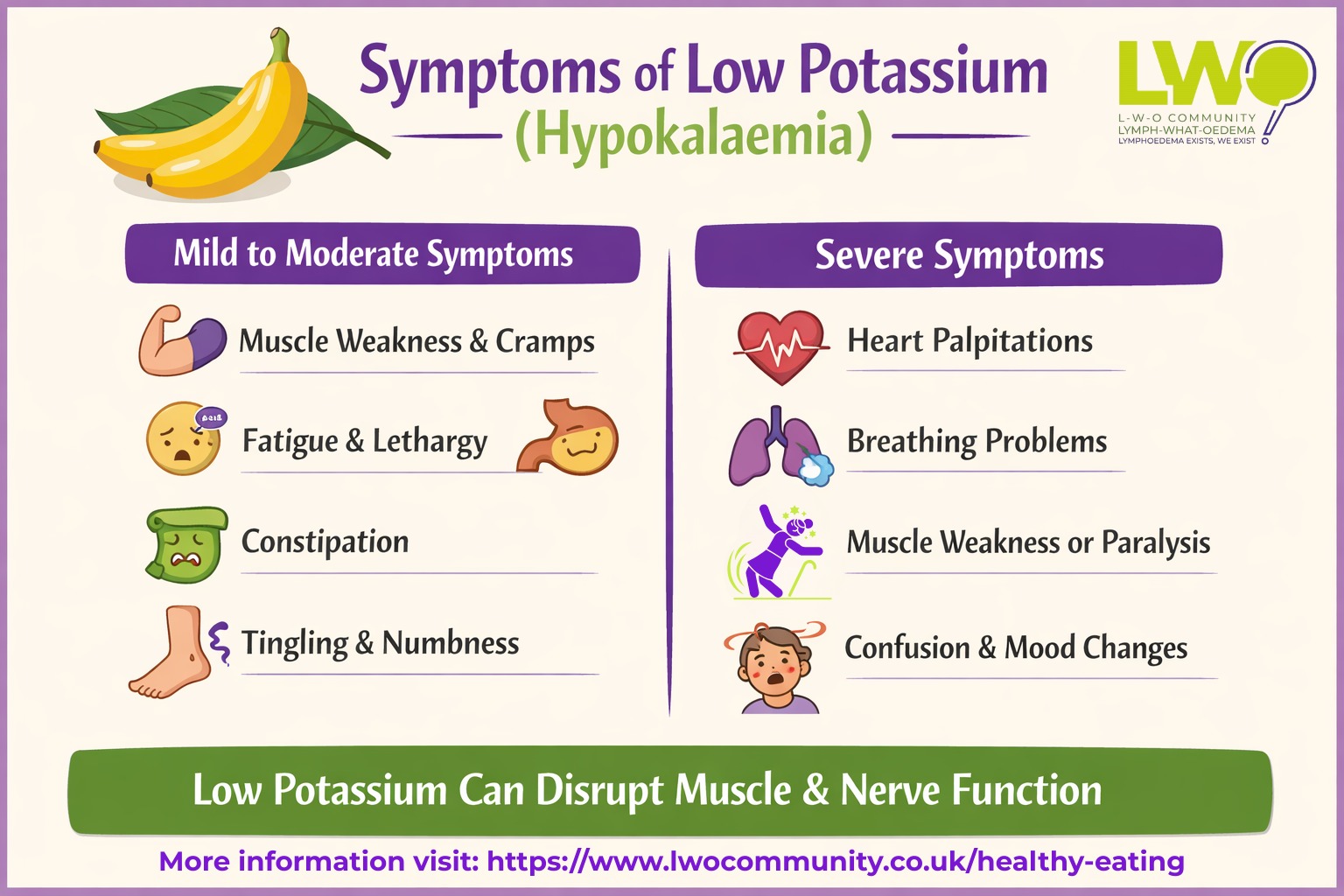
Low potassium can manifest in mild to severe symptoms depending on the degree of deficiency.
Mild to Moderate Symptoms:
- Muscle weakness or cramps
- Fatigue or lethargy
- Constipation
- Tingling or numbness
Severe Symptoms:
- Heart palpitations or arrhythmias
- Breathing difficulties
- Paralysis
- Mental confusion or mood changes
These symptoms occur because potassium plays a key role in muscle and nerve function. A significant drop can disrupt electrical activity in the heart and other muscles.
There’s currently no direct clinical link between low potassium (hypokalaemia) and lymphoedema in the mainstream literature. However, here’s how the two might intersect in practice:
Indirect Connections Worth Considering
While lymphoedema itself doesn’t cause low potassium, certain co-occurring factors or treatments might influence potassium levels:
- Diuretic Use
- Some patients with lymphoedema may be prescribed diuretics (though this is controversial and not standard practice).
- Loop and thiazide diuretics can lead to potassium loss, increasing the risk of hypokalaemia.
- Renal Function
- Lymphoedema patients with coexisting kidney issues (e.g., nephrotic syndrome, chronic kidney disease) may have altered potassium handling.
- Potassium replacement must be done cautiously in such cases.
- Nutrition and Comorbidities
- Malnutrition, diabetes, or gastrointestinal losses (e.g., vomiting, diarrhoea) can affect potassium levels.
- These conditions may be present in some lymphoedema patients, especially those with complex health profiles.
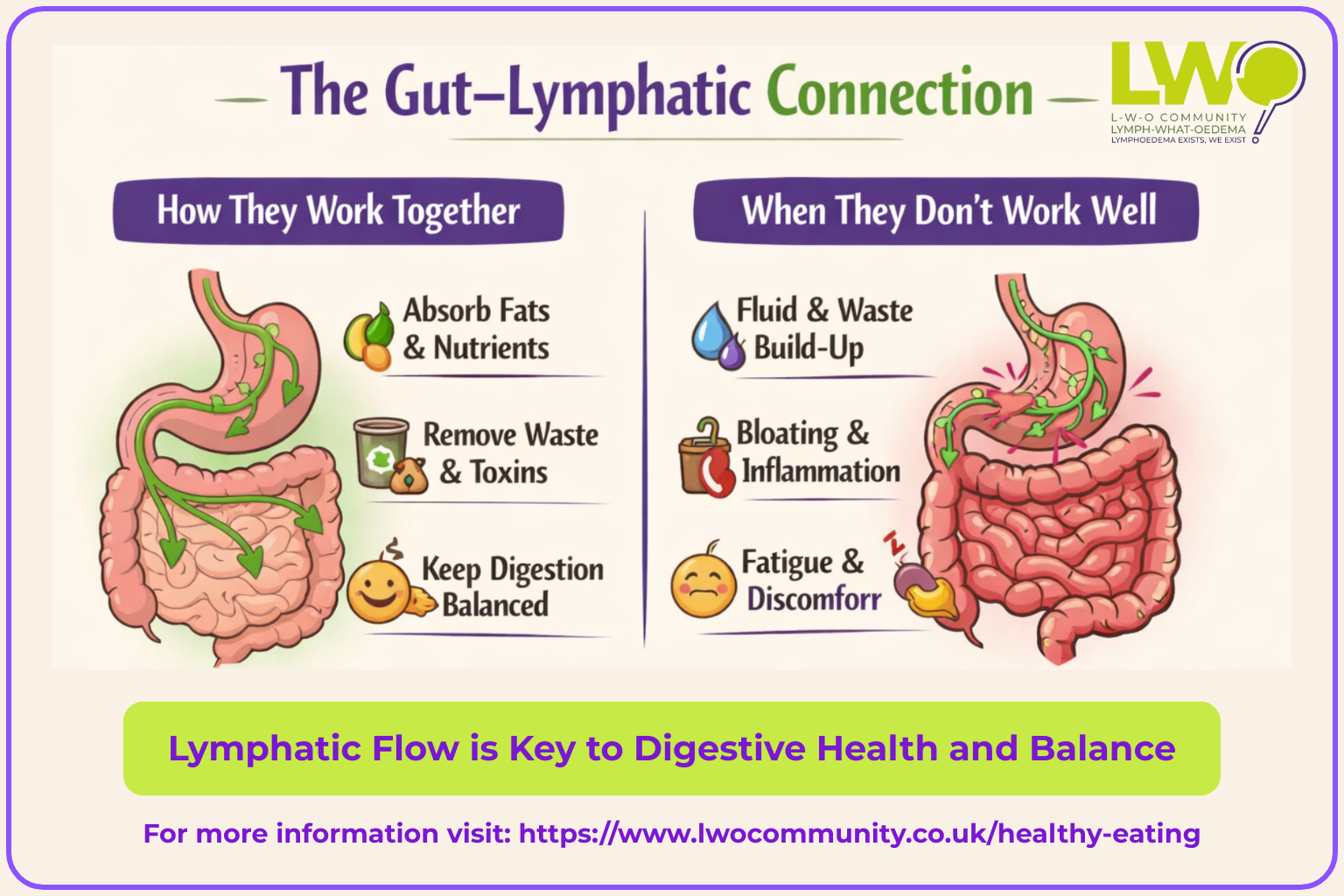
The gut is closely supported by the lymphatic system, which helps absorb fats, move nutrients, and clear waste and inflammation. When the two don’t work well together, the result can be sluggish digestion, fluid buildup, and a general sense that the body is out of balance.
Personal note: When my father was diagnosed with kidney cancer, he was advised to reduce his potassium levels and not to eat bananas or drink coffee. It is essential that you follow your healthcare provider's advice.
Foods High in Potassium
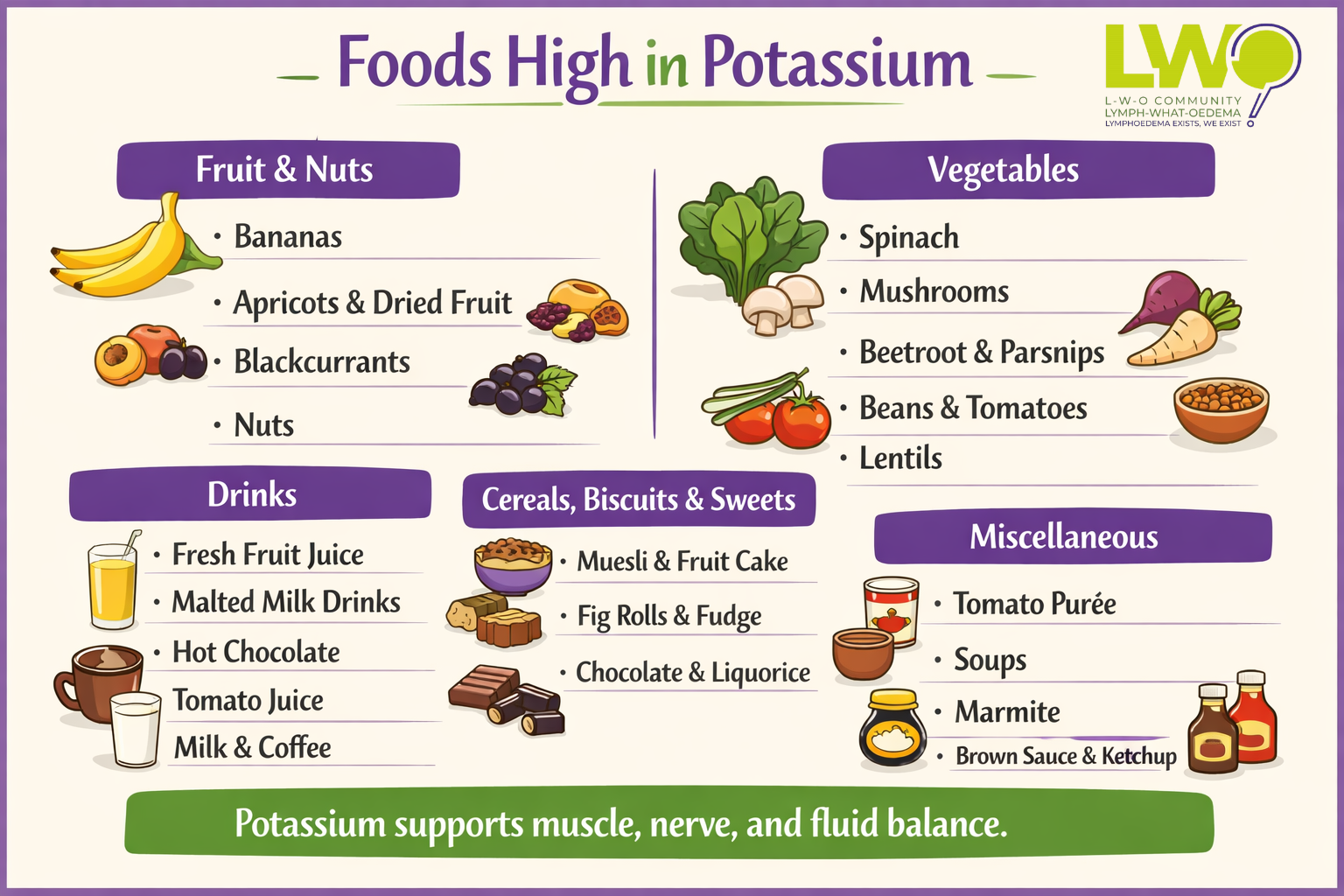
If you're aiming to increase potassium intake, here are some potassium-rich foods to consider:
Fruit & Nuts: Bananas, rhubarb, apricots, dried fruit (apricots, raisins, prunes, figs, dates, and coconuts), blackcurrants, and nuts (all kinds)
Vegetables: Brussels sprouts, spinach, mushrooms, beetroot, parsnips, beans (e.g., baked beans), tomatoes, lentils.
Drinks: Fresh fruit juice (orange, apple), malted milk drinks, hot chocolate, tomato juice, milk (aim for at least 300 ml/½ pint per day), and coffee.
Cereals, Biscuits, Cakes & Sweets: Foods containing dried fruit or nuts (muesli, fruit cake, currant tea cake, fruit scones), fig rolls, fudge, chocolate, liquorice, and wine gums.
Miscellaneous: Tomato purée, soup (especially tomato or mushroom), Marmite, brown sauce, ketchup
Conclusion
Living with long-term health conditions often means becoming your own detective, piecing together symptoms, history, and instinct when the answers aren’t straightforward. My experience with low potassium has reminded me how easily something essential can be overlooked, even when we believe we’re doing everything “right.” It also reinforced how closely our systems are connected: the gut, the lymphatic system, our nerves, and our muscles all working together and all capable of sending signals when something is out of balance.
Potassium may be a small mineral, but its impact on well-being is anything but small. From fatigue to muscle function, from nerve health to fluid balance, it plays a quiet but powerful role in how we feel day to day. While bananas have always been my go-to, this journey has shown me that sometimes our bodies need more support than we realise, and that listening to those early signs of discomfort matters.
Most importantly, it’s a reminder that none of us should navigate these concerns alone. If something feels “off,” if symptoms change, or if your body isn’t responding the way it used to, it’s essential to seek proper medical advice. Food can nourish us, but only a healthcare professional can guide us safely when things become more complex.
In the end, understanding potassium’s role isn’t just about nutrition; it’s about paying attention, asking questions, and advocating for your well-being. If my story inspires even one person to examine their symptoms or diet more closely, then sharing it has been worthwhile.
Read more from Gaynor Leech, founder of LWO Community and expert lymphoedema patient advocate
