More Than a Machine: How DEEP OSCILLATION® Has Changed My Practice
If someone had told me that attending a scar therapy course would change the direction of my clinical practice, I would probably have smiled politely and carried on. After all, I enrolled simply to improve my scar management skills. I certainly wasn’t looking for a treatment modality that would become one of the most valuable tools in my clinic.
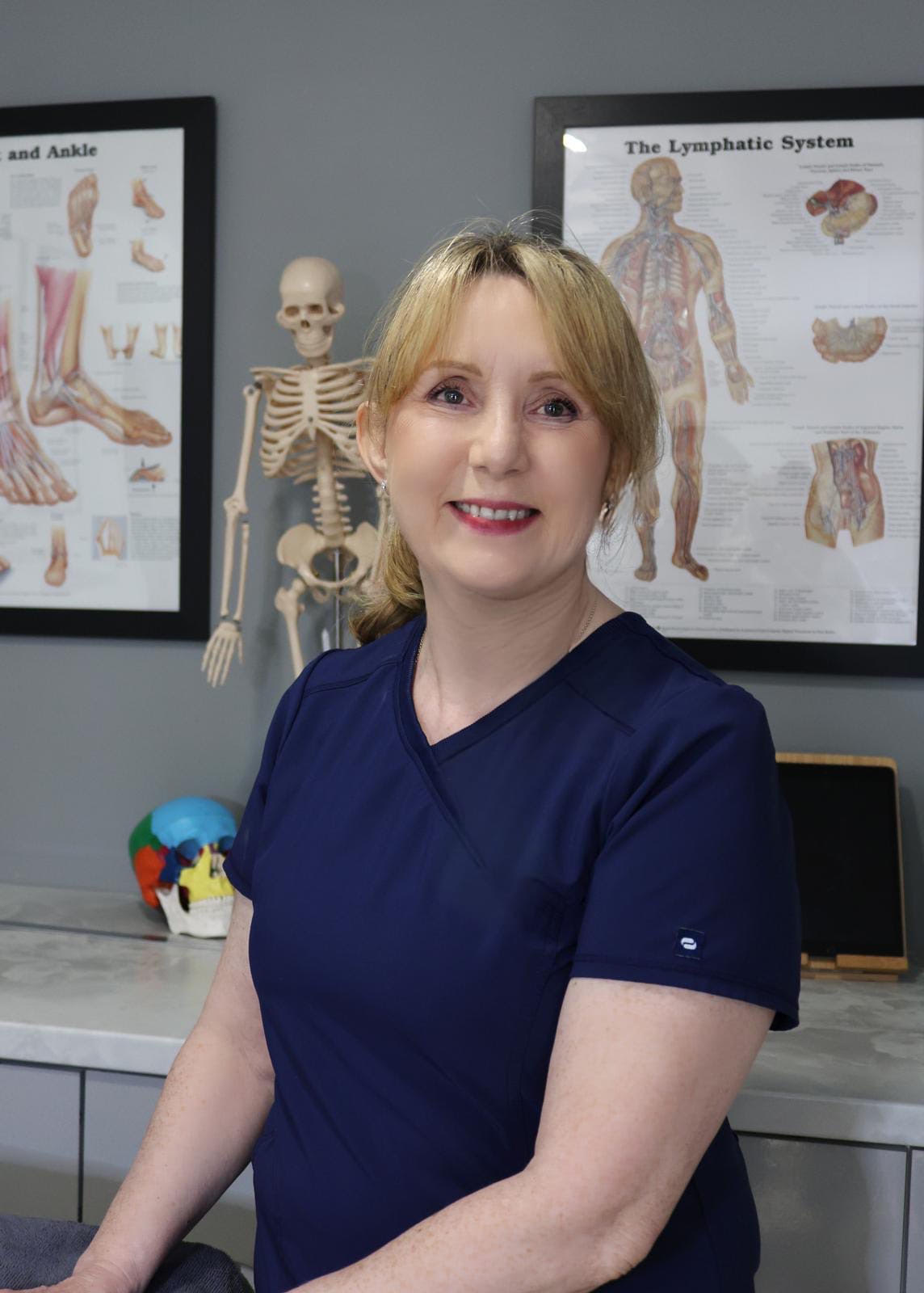
Tina Murray
ACMT, LTA Cert (DLT), LTA (Lip), MLD UK, SMA, BLS
Yet, that is exactly what happened.
As therapists, we never stop learning. Every course we attend has the potential to change the way we think, refine our clinical skills and, ultimately, improve the care we provide for our clients. Looking back, I can honestly say that one particular training course completely changed the direction of my clinical practice.
My introduction to Deep Oscillation Therapy happened unexpectedly during a scar therapy course. I had enrolled to develop my scar management skills, but one of the treatment modalities demonstrated was Deep Oscillation Therapy. Watching its effects on healing tissues immediately captured my interest. The science behind the technology, combined with the comfort experienced by patients, convinced me there was something genuinely different about this treatment.
Unlike many modalities that work from the outside in, Deep Oscillation creates gentle electrostatic oscillations within the tissues themselves. This allows treatment to be applied comfortably, even when tissues are painful, swollen, or at an early stage of healing. It wasn’t simply the technology that impressed me; it was how naturally it complemented skilled manual therapy.
Following the course, I invested in the equipment and began incorporating it into my own clinical practice at Old Mill Therapies. Initially, it was used primarily for scar management, but it quickly became apparent that its application extended much further than I ever imagined.
Today, Deep Oscillation Therapy forms an important part of my work with lymphoedema and lipoedema management, post-surgical rehabilitation, scar therapy, and advanced musculoskeletal treatment. Rather than replacing hands-on techniques, it complements them, allowing me to tailor every treatment to the individual sitting in front of me.
One of the most memorable clients I have is a lady who suffered a stroke that left her with left-sided hemiplegia. Her arm remains permanently held tightly in flexion against her clavicle, with a pronounced claw hand. Unsurprisingly, this places considerable strain on both sides of her neck and shoulder girdle. The unaffected arm has had to compensate for many years, undertaking almost all functional activities and repetitive daily movements. As a result, it is also subjected to increased muscular demand, overuse, and secondary soft-tissue discomfort.
One comment from this client has stayed with me. She describes the treatment as ‘scratching an itch that you can’t reach’. It was such a simple description, yet it perfectly captured something I could never have expressed using clinical terminology alone. Moments like these remind me that listening to our patients is just as important as understanding anatomy.
Another memorable client is a 57-year-old lady who has lived with Takayasu arteritis since she was 25 years old. This was a situation where clinical reasoning and professional responsibility became just as important as treatment itself.
In accordance with my training, I first sought consent from her consultant before considering treatment. I also consulted Julie and Mary from PhysioPod, who contacted Physiomed for additional guidance. Their advice confirmed that treatment could be considered provided the disease was not in an active inflammatory phase.
For me, this case perfectly illustrated that using specialist equipment is about far more than knowing how to operate it. It requires understanding the condition, recognising your professional boundaries, seeking expert advice where appropriate, and working collaboratively with the wider healthcare team to ensure treatment is delivered safely.
Deep Oscillation has also become an invaluable part of my post-operative rehabilitation programme. Whether supporting patients following cosmetic surgery, orthopaedic joint replacement, or scar rehabilitation, I frequently integrate it alongside Manual Lymphatic Drainage and evidence-informed rehabilitation techniques. Every treatment plan is carefully adapted according to the surgical procedure, the stage of healing, and the advice provided by the client’s surgeon.
Looking back, I realise that using Deep Oscillation Therapy has completely changed my clinical practice. What began as curiosity has evolved into one of the most valuable tools I use today.
Clients often thank me for helping them, but in many ways they have helped me too. Every person who walks through my clinic door teaches me something new, challenges my thinking, and reminds me why continuing to learn is one of the greatest responsibilities and privileges of being a therapist.
Tina Murray
ACMT, LTA Cert (DLT), LTA (Lip), MLD UK, SMA, BLS
- Deep Oscillation: A gentle, non-invasive biophysical therapy utilising a pulsed electrostatic field to generate rhythmic endogenous microdeformations deep within the tissue layers. Unlike mechanical vibratory massages that apply downward compression, this electrostatic friction operates from the "inside out" with minimal mechanical load, making it comfortable even on highly sensitive, painful, or recovering tissues. The biophysical mechanism of these electrostatic fields is detailed in International Archives of Medicine (Hernández Tápanes et al., 2018), while its clinical and draining effects on tissue are evaluated in European Journal of Dermatology (Boisnic & Branchet, 2013).
- Hemiplegia: Localised muscle weakness or paralysis affecting one side of the body, commonly resulting from a stroke. Spasticity can cause muscles to remain held in tight flexion, placing significant compensatory physical demand and secondary musculoskeletal fatigue on the unaffected side of the body. The clinical utility of electrostatic modalities in supporting movement and managing associated tissue discomfort in chronic conditions is discussed in Medicine (Daia et al., 2026).
- Takayasu Arteritis: A rare, chronic autoimmune inflammatory disease affecting the large arteries (specifically the aorta and its major branches). Because it affects vascular structures, physical modalities must be approached with strict professional boundaries, and therapy should only be considered with formal consultant clearance and when the disease is confirmed to be in an inactive, non-inflammatory phase.
Contact Tina Murray
Website Facebook Email
PhysioPod® UK Therapist Map Listings
Complementary MLD Scars Sports
