Empowered Choices: How Mindful Drinking Transforms Lymphatic and Brain Health
Choosing to drink mindfully is a proactive way to maintain a healthy fluid balance, protect your immune defenses, and support your brain's natural waste-clearing processes.
By swapping alcoholic beverages for sophisticated alcohol-free alternatives, you can easily maintain your favourite social rituals while actively enhancing your physical and mental well-being.
Contents
- Introduction: The Rise of Mindful Drinking and Empowered Choices
- Fluid Balance: Avoiding the "Lymphoedema Hangover"
- Protecting the Immune Shield: NETs and Cellulitis
- Brain Clarity: Optimising the Glymphatic System
- Metabolism and Weight: The Impact of "Liquid Calories"
- Fibrosis and Adjunctive Therapy
- Mental Wellbeing and Better Sleep
- Keep the Ritual, Change the Ingredients: Alcohol-Free Alternatives
- Conclusion
- Further Support and Resources - Finding Your Community
- Glossary of Terms
- The Science Behind The Article
1. Introduction: The Rise of Mindful Drinking and Empowered Choices
The inspiration to research and produce this article was sparked by two incredible advocates for health and well-being. The first was an insightful page on healthy eating written by Gaynor Leech on the L-W-O Community website. Gaynor launched the LWO Community to support those with primary and secondary lymphoedema, and her dedication to patient empowerment highlights the profound impact of our daily lifestyle choices on our lymphatic health.
Living with a chronic condition like lymphoedema requires a continuous and dedicated daily commitment to the body. For decades, alcohol has been deeply ingrained in modern social culture, often treated as the default mechanism for unwinding or celebrating. In this context, it is entirely understandable that many patients turn to alcohol for social participation or to simply unwind.
However, a profound shift is occurring in how society views health and wellness, with a growing "sober curious" movement encouraging individuals to intentionally re-evaluate drinking habits to prioritise physical and mental wellbeing. This movement is heavily championed by advocates like Janey Lee Grace, founder of The Sober Club and author of Happy Healthy Sober. Janey’s work encourages individuals to replace the "fear of missing out" with a powerful focus on optimum health, mental clarity, and self-care. By embracing this movement and adopting philosophies like "Keep the ritual, change the ingredients," individuals can enjoy deep social connections without the physiological damage of alcohol.
For individuals managing chronic conditions like lymphoedema, choosing to drink mindfully or taking an extended break from alcohol is one of the most powerful, proactive steps that can be taken. By reducing alcohol intake, a major source of physiological stress is removed, allowing the lymphatic and glymphatic systems to function optimally. Introducing alcohol into a compromised lymphatic environment creates a myriad of physiological complications, ranging from immediate haemodynamic shifts to profound long-term immunological suppression. Clinical evidence confirms that alcohol consumption disrupts human immune function and severely alters the body's host defence mechanisms (Szabo & Saha, 2015). Moreover, chronic alcohol intake acts as an independent risk factor for systemic conditions, increasing susceptibility to severe respiratory and systemic infections (Samuelson, 2025).
Examining the latest clinical science allows us to understand exactly how alcohol interacts with the lymphatic system. By bringing together the compassionate community support of advocates like Gaynor and Janey with clinical evidence, this article aims to empower patients and clinicians alike to understand their bodies and make informed, evidence-based choices without guilt.
2. Fluid Balance: Avoiding the "Lymphoedema Hangover"
Patients with lymphoedema who consume alcohol frequently report a delayed, uncomfortable swelling "flare" 24 to 48 hours after drinking. By reducing intake, individuals can bypass the biological cascade that causes this.
Protecting Capillary Integrity
Alcohol is a potent vasodilator that physically disrupts the tight junctions sealing blood vessels, leading to increased leakage of fluid and proteins into the surrounding tissues (Kondo & Iwakiri, 2020). By drinking mindfully, individuals maintain strong, healthy vascular walls and endothelial barrier function, thereby preventing unnecessary fluid overload that could overwhelm the lymphatic system (Souza-Smith et al., 2019).
Avoiding the Dehydration-Retention Paradox
Alcohol acts as a well-documented diuretic, suppressing the antidiuretic hormone and forcing water out of the body through urine. This leaves a high concentration of leaked proteins in the tissues, which act like sponges. When the body inevitably tries to rehydrate, these proteins aggressively pull water back into the affected limb, causing severe rebound swelling. Managing fluid intake helps the body maintain stable hydration without extreme fluctuations in fluid status (Hobson & Maughan, 2010).
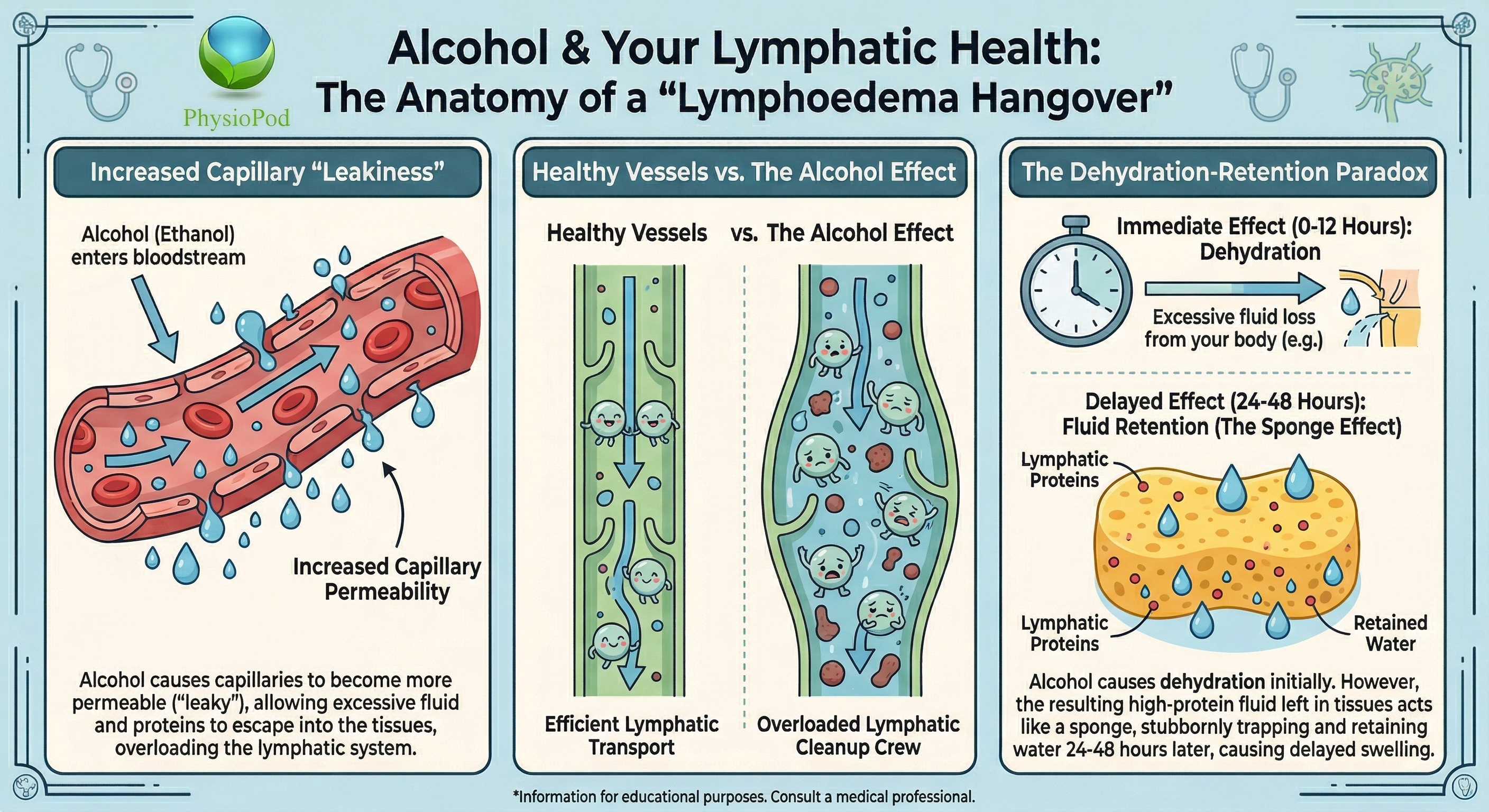
The Anatomy of a "Lymphoedema Hangover" and Gentle Steps for Balance.
3. Protecting the Immune Shield: NETs and Cellulitis
The lymphatic system is the cornerstone of the body's immune defence. Stagnant lymph fluid already places patients at a much higher risk for cellulitis, a severe and potentially damaging bacterial skin infection commonly seen in chronic oedema (Burian et al., 2021).
Alcohol severely compromises the immune system by suppressing the production of cytokines that fight infection (Szabo & Saha, 2015). Crucially, acute ethanol exposure destroys the ability of neutrophils—the first-responder white blood cells—to form Neutrophil Extracellular Traps (NETs). These web-like DNA structures are essential for capturing and killing invading bacteria, thereby protecting against polymicrobial sepsis (Jin et al., 2017). By limiting alcohol intake, individuals help ensure their innate immune system remains robust, neutrophils function properly, and the risk of recurrent cellulitis is drastically reduced.
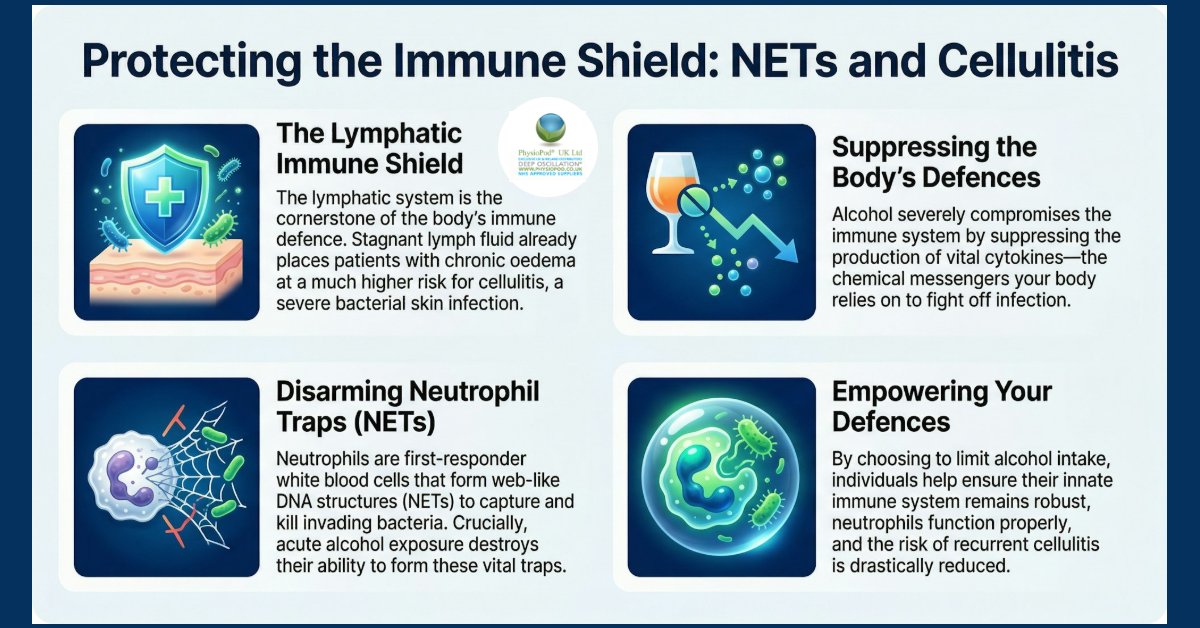
Mechanisms of alcohol-induced immune suppression and the disruption of Neutrophil Extracellular Traps (NETs) in chronic oedema.
4. Brain Clarity: Optimising the Glymphatic System
The glymphatic system is the brain's unique waste clearance pathway, responsible for flushing out metabolic toxins during sleep.
Chronic alcohol exposure is deeply toxic to this system, leading to significant glymphatic dysfunction. It impairs the brain's ability to clear itself of harmful waste and metabolic byproducts (Lin et al., 2025). It causes crucial water channels in the brain, known as astroglial Aquaporin-4 (AQP4), to depolarise and drift away from their proper positions around blood vessels, effectively shutting down the brain's ability to clean itself. Embracing a lifestyle with less alcohol preserves the efficiency of this clearance pathway, supports deep, restorative sleep, and allows individuals to wake up with a clear, sharp mind rather than experiencing brain fog.
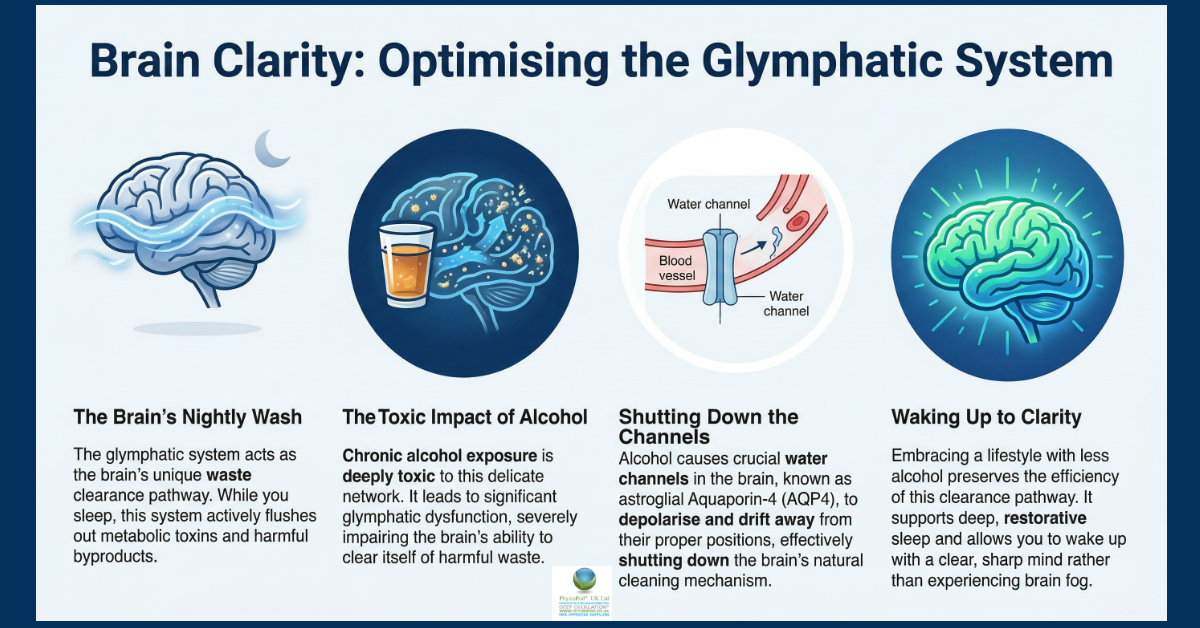
Waking Up to Clarity: How Reducing Alcohol Preserves the Brain's Natural Cleaning Mechanism.
5. Metabolism and Weight: The Impact of "Liquid Calories"
Weight management is a critical component of lymphoedema care. Excess adipose (fat) tissue can physically compress delicate lymphatic channels, reducing fluid flow and increasing systemic inflammation, effectively demonstrating a direct clinical link between obesity and lymphoedema.
Alcohol contains around seven calories per gram—almost as many as pure fat—but provides zero nutritional value.
Furthermore, when alcohol is consumed, the body halts other metabolic processes, including fat burning, because it must prioritise clearing the alcohol toxin. Cutting back on alcohol eliminates hundreds of "empty calories" from the diet, making it significantly easier to maintain a healthy weight and directly reducing the mechanical burden on the lymphatic system (Fletcher et al., 2025).
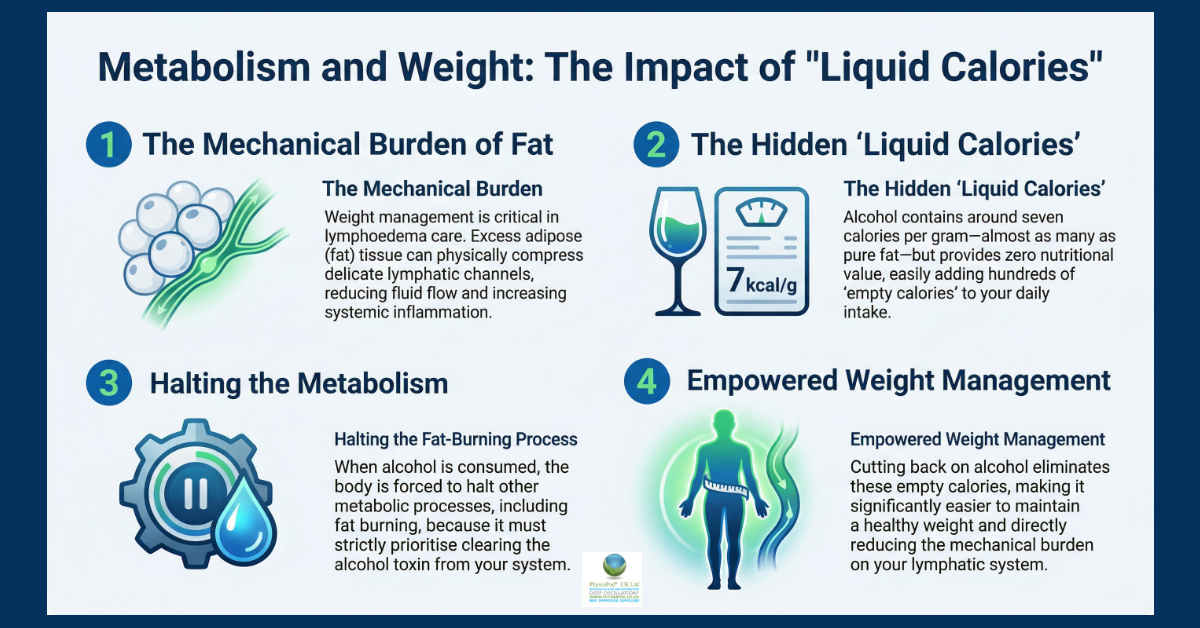
Empowered Weight Management: How Cutting "Liquid Calories" Reduces the Mechanical Burden on Lymphatic Flow.
6. Fibrosis and Adjunctive Therapy
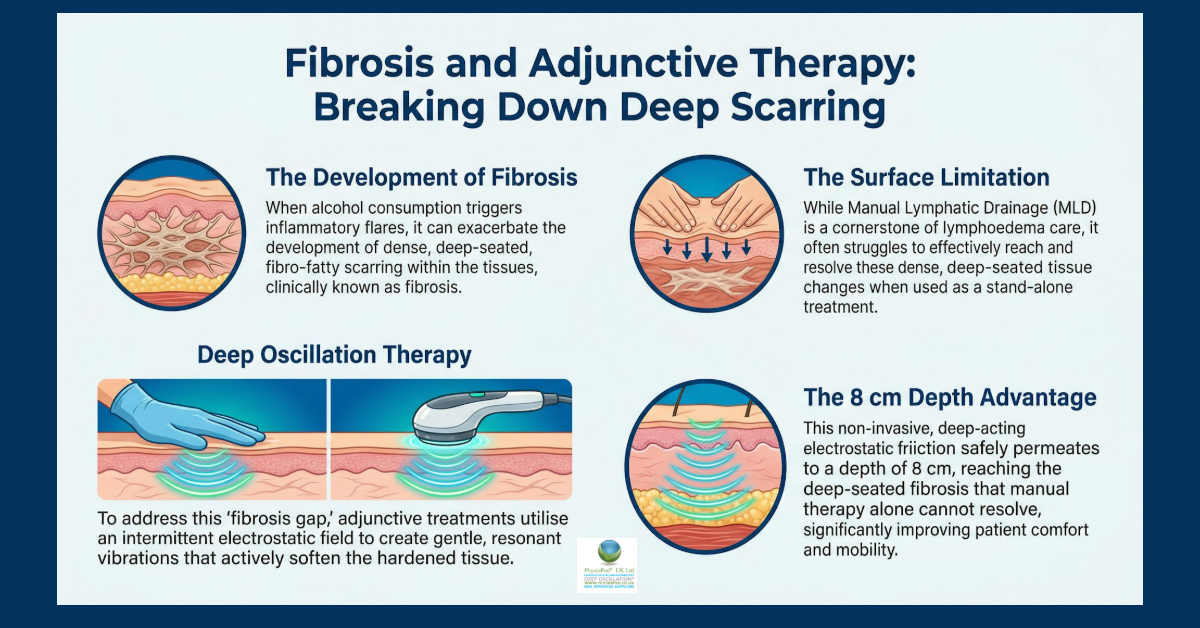
When alcohol consumption triggers inflammatory flares, it can exacerbate the development of deep, "woody" fibro-fatty scarring, clinically known as fibrosis. While manual lymphatic drainage (MLD) is a cornerstone of lymphoedema care, it often struggles to resolve these dense, deep-seated tissue changes when used as a stand-alone treatment. To address these issues, adjunctive treatments such as Deep Oscillation Therapy offer profound clinical benefits (Reinhold, 2025). This non-invasive therapy utilises an intermittent electrostatic field to create resonant vibrations that safely permeate the epidermis, dermis, subcutaneous fat, and muscles to a depth of 8 cm (Jahr et al., 2008). This deep-acting electrostatic friction reaches the deep-seated fibrosis that manual therapy alone cannot effectively resolve (Hernández Tápanes et al., 2018), significantly improving overall patient quality of life (Halliday et al., 2020).
Fibrosis and Adjunctive Therapy: Breaking Down Deep-Seated Scarring
7. Mental Wellbeing and Better Sleep
Many people use alcohol to unwind, only to wake up full of regret and racing thoughts as the alcohol leaves their system. Living with a chronic condition like lymphoedema already presents a significant psychological burden, as individuals navigate the daily stress of managing swelling and physical limitations (Williams et al., 2004). Furthermore, alcohol disrupts restorative sleep, which is particularly detrimental because sleep disruption further impairs lymphatic recovery (Academy of Lymphatic Studies, 2023). The sober curious community frequently highlights the immense psychological relief of cutting back, replacing the "fear of missing out" with the "joy of missing out".
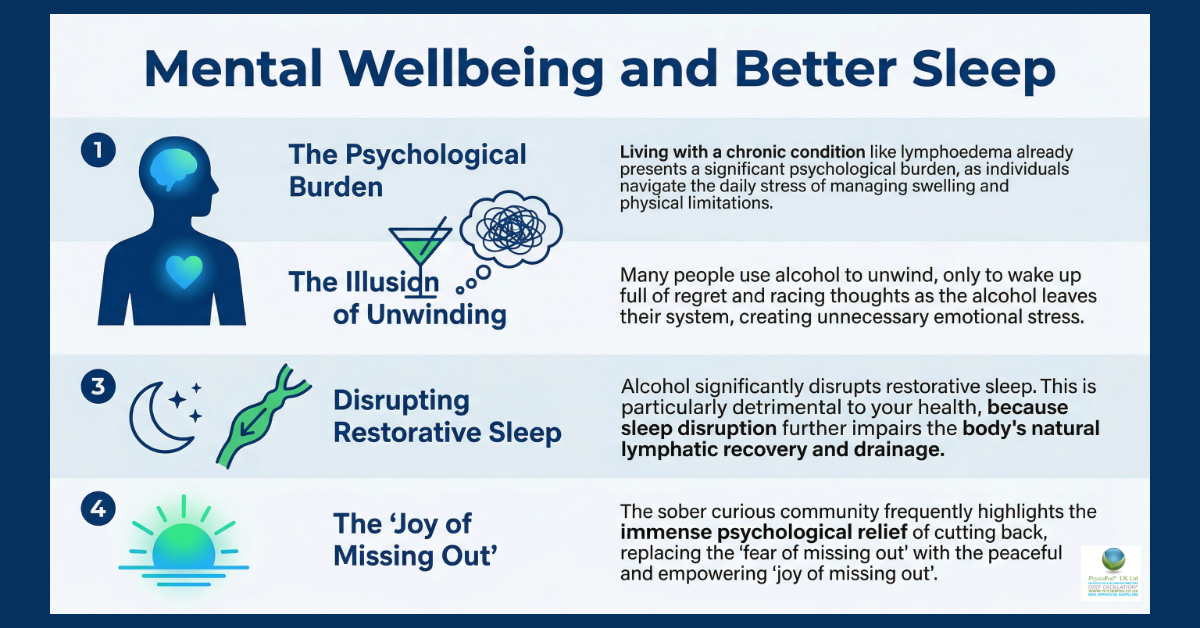
Reclaiming Rest: How Reducing Alcohol Supports Mental Wellbeing and Lymphatic Recovery During Sleep.
8. Keep the Ritual, Change the Ingredients: Alcohol-Free Alternatives
Choosing to drink less does not mean individuals must miss out on celebrations or social rituals. One can simply keep the ritual and change the ingredients.
The alcohol-free beverage market is booming, allowing adults to enjoy sophisticated drinks without the physiological damage. Excellent, lymph-friendly alternatives include:
- Kombucha: A fermented tea that offers a complex, tart flavour profile.
- Alcohol-Free Beers: Many leading brands now offer 0.0% lagers and ales that perfectly mimic the taste of traditional beer.
- Botanical Spirits and Shrubs: Drinks made from distilled botanicals offer rich, adult flavours when mixed with sparkling water and a fresh garnish, completely bypassing the risks of ethanol.
By shifting the focus to the incredible health, energy, and clarity gained, drinking mindfully becomes not a restriction but a profound act of self-care.
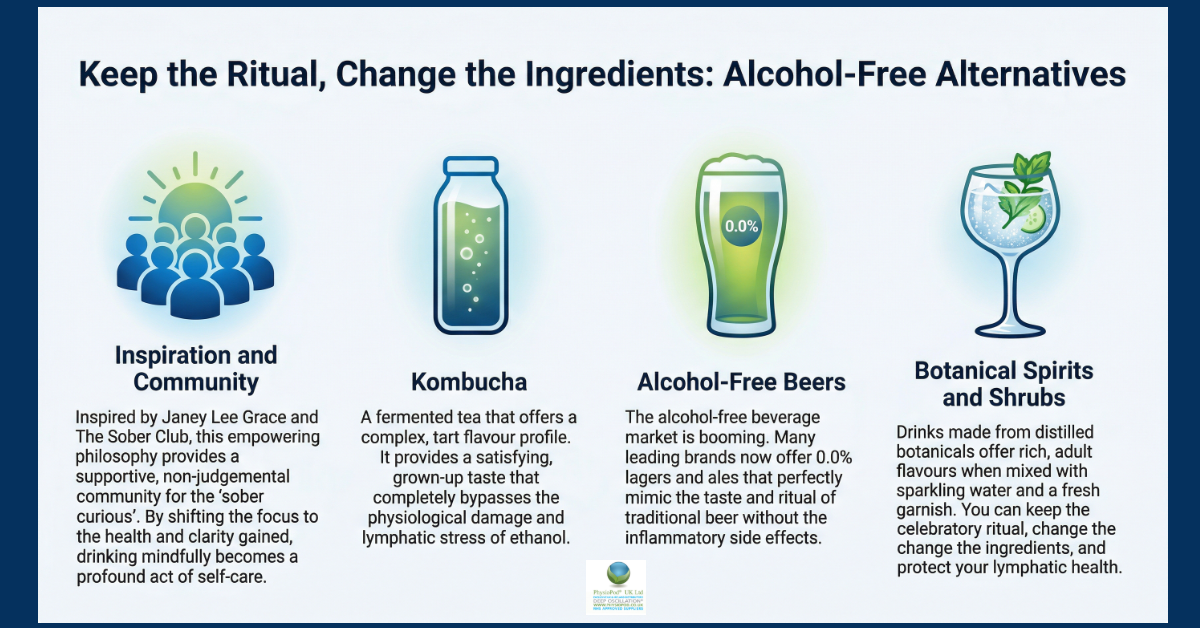
Keep the Ritual, Change the Ingredients: Alcohol-Free Alternatives.
9. Conclusion: Empowering Your Lymphatic Journey
Living with a chronic condition like lymphoedema requires a continuous and dedicated daily commitment to the body. As we have explored, choosing to embrace the "sober curious" movement and drink mindfully is not about restriction or missing out—it is about making an empowered choice to prioritise your physical and mental well-being. By reducing "liquid calories" and alcohol intake, you can actively protect your immune shield, prevent the frustrating "lymphoedema hangover" caused by the dehydration-retention paradox, and preserve your brain's natural glymphatic cleaning mechanism.
Here at PhysioPod® UK, we understand the daily dedication required to manage chronic oedema, and we know that holistic self-care yields the absolute best results. Whether you are swapping a glass of wine for a botanical spirit or taking an extended break from alcohol altogether, every step counts. Ultimately, by shifting the focus to the incredible health, energy, and clarity gained, drinking mindfully becomes not a restriction but a profound act of self-care. We encourage you to embrace this positive shift and share your mindful drinking experiences with the community.
10. Further Support and Resources: Finding Your Community
If reading this guide has made you feel "sober curious," or if you want to explore the incredible health benefits of taking a break from alcohol, you do not have to navigate it alone.
The Sober Club

Janey Lee Grace
We highly recommend exploring The Sober Club, an inspiring and non-judgemental community founded by Janey Lee Grace. Her platform is dedicated to helping people focus on optimum health, mental clarity, and self-care without restriction or guilt. Through her website, you can access a wealth of supportive blogs, resources, and expert advice. You can also tune into her highly acclaimed Alcohol Free Life podcast—a wonderful, refreshing resource for cutting through the noise surrounding alcohol and discovering the genuine joy of mindful drinking. To find out more, read the blog posts or listen to the podcast. Please visit www.thesoberclub.com.
L-W-O Community

Gaynor Leech
For dedicated support regarding living with primary or secondary lymphoedema, we highly recommend the L-W-O Community. Founded by patient advocate Gaynor Leech in 2013, this independent, voluntary patient association is deeply committed to raising awareness and encouraging individuals to become their own health advocates. Their platform provides a wealth of practical information promoting emotional wellness, lymphatic health, and daily self-care without dictating strict rules or restrictions. To find out more about their support group, read their blogs, or access their resources, please visit: www.lwocommunity.co.uk.
11. Glossary of Terms
- Adipose Tissue Deposition (ATD): The accumulation of fat cells in the body, which can worsen lymphoedema and reduce the success of clinical treatments.
- Cellulitis: An acute, spreading bacterial infection of the skin and subcutaneous tissues characterised by pain, warmth, swelling, and erythema that can cause permanent damage to lymphatic vessels.
- Deep Oscillation: A non-invasive adjunctive therapy that utilises low-intensity electrostatic fields that penetrate to a depth of 8 cm to reduce pain, soften deep fibrotic tissue, and enhance lymphatic volume reduction.
- Dehydration-Retention Paradox: A physiological response where diuretic fluid loss (such as from alcohol) leaves behind high protein concentrations in tissues, causing a delayed rebound that attracts more water and worsens swelling.
- Fibrosis: The development of dense, "woody", fibro-fatty scarring in the tissues caused by chronic inflammation, which creates a mechanical barrier to lymphatic drainage.
- Glymphatic System: The brain's specialised waste-clearance pathway that operates during deep sleep to clear neurotoxins.
- Interstitial Fluid: The fluid found in the spaces around cells. When blood vessels dilate due to alcohol, more fluid and proteins leak into the surrounding tissues, causing swelling.
- Microvascular Leakage: The escape of fluid and proteins from the tiny blood vessels into the surrounding tissues, which is profoundly worsened by acute alcohol intoxication.
- Neutrophil Extracellular Traps (NETs): Web-like structures cast by immune cells to trap and kill bacteria, a vital process that operates optimally without excessive alcohol.
- Sober Curious: A wellness movement encouraging individuals to intentionally question and change their drinking habits for better health.
- Vasodilation: The widening of blood vessels, which increases blood flow and subsequently increases the volume of fluid filtering into the tissues.
12. The Science Behind the Article
Academy of Lymphatic Studies. (2023). Alcohol, Inflammation & Lymphatic Drainage: What Actually Happens. The Lymphletter. URL: https://www.acols.com/blog/wp-content/uploads/2025/12/Alcohol-Inflammation-Lymphatic-Drainage_-What-Actually-Happens.pdf
Burian, E. A., Karlsmark, T., Franks, P. J., Keeley, V., Quéré, I., & Moffatt, C. J. (2021). Cellulitis in chronic oedema of the lower leg: an international cross-sectional study. British Journal of Dermatology, 185(1), 110-118. URL: https://pubmed.ncbi.nlm.nih.gov/33405247/
Fletcher, J., Borthwick, Y., Brown, L., et al. (2025). The impact of obesity on lymphoedema. Wounds UK. https://wounds-uk.com/wp-content/uploads/2025/09/MULTI25_CD_BLS-Obesity_WUK-web.pdf
Halliday, E., Gittins, J. & Ahsan, S.F. (2020). Using the Glasgow Benefit Inventory questionnaire to quantify the health benefits of lymphoedema treatment in patients with head and neck cancer. Applied Cancer Research, 40(9).
Hernández Tápanes, S., et al. (2018). The Effect of Deep Oscillation Therapy in Fibrocystic Breast Disease: A Randomized Controlled Clinical Trial. International Archives of Medicine, 11(14). URL / DOI: https://doi.org/10.3823/2555
Hobson, R. M., & Maughan, R. J. (2010). Hydration status and the diuretic action of a small dose of alcohol. Alcohol and Alcoholism, 45(4), 366–373. URL: https://pubmed.ncbi.nlm.nih.gov/20497950/
Jahr, S., Schoppe, B., & Reisshauer, A. (2008). Effect of treatment with low-intensity and extremely low-frequency electrostatic fields (Deep Oscillation) on breast tissue and pain in patients with secondary breast lymphoedema. Journal of Rehabilitation Medicine, 40(8), 645-650. URL / DOI: https://doi.org/10.2340/16501977-0225
Jin, L., Batra, S., & Jeyaseelan, S. (2017). Diminished neutrophil extracellular trap (NET) formation is a novel innate immune deficiency induced by acute ethanol exposure in polymicrobial sepsis, which can be rescued by CXCL1. PLoS Pathogens, 13(9), e1006637. URL: https://pubmed.ncbi.nlm.nih.gov/28922428/
Kondo, R., & Iwakiri, Y. (2020). The lymphatic system in alcohol-associated liver disease. Clinical and Molecular Hepatology, 26(4), 633–638. URL: https://pmc.ncbi.nlm.nih.gov/articles/PMC7641555/
Lin, J. Y., Zhang, H. B., Luo, L., Li, R. J., & Wang, X. G. (2025). Glymphatic system dysfunction in alcohol use disorder: Current understanding and future directions. World Journal of Psychiatry, 15(10), 107936. URL: https://pmc.ncbi.nlm.nih.gov/articles/PMC12531958/
Reinhold, J. (2025). Deep Oscillation. In: Cornely M. E. et al. (eds.), Applied Lymphology. Springer Nature Switzerland AG. URL / DOI: https://doi.org/10.1007/978-3-031-77734-9_40
Samuelson, D. R. (2025). Alcohol’s Effects on the Lung and Lung Disease. Alcohol Research, 45(1), 11. URL: https://pubmed.ncbi.nlm.nih.gov/41312448/
Souza-Smith, F. M., Simon, L., Siggins, R., & Molina, P. E. (2019). Alcohol-Induced Mesenteric Lymphatic Permeability: Link to Immunometabolic Modulation of Perilymphatic Adipose Tissue. International Journal of Molecular Sciences, 20(17), 4097. URL: https://pubmed.ncbi.nlm.nih.gov/31443389/
Szabo, G., & Saha, B. (2015). Alcohol's Effect on Host Defense. Alcohol Research: Current Reviews, 37(2), 159–170. URL: https://pmc.ncbi.nlm.nih.gov/articles/PMC4590613/
Williams, A., Moffatt, C., & Franks, P. (2004). A phenomenological study of the lived experiences of people with lymphoedema. International Journal of Palliative Nursing, 10(6), 279-286. URL: https://pubmed.ncbi.nlm.nih.gov/15284623/
A Note on How This Article Was Written
This article was born out of personal research and a deep dedication to lymphatic health. While an artificial intelligence language model was used to help structure and refine the final text, the clinical concepts and scientific research were personally gathered and curated by the author. The information provided is strictly based on peer-reviewed scientific literature
Sharing This Article
Readers are welcome to share and distribute this article. It may be reproduced and shared as a complete document to ensure the clinical advice remains in context. Sharing knowledge improves lives; however, when sharing, please ensure that the author is properly credited.
How to cite this article: Fickling, M. (2026). Empowered Choices: How Mindful Drinking Transforms Lymphatic and Brain Health. PhysioPod® UK Ltd. Available at: https://www.physiopod.co.uk/empowered-choices-how-mindful-drinking-transforms-lymphatic-and-brain-health.shtml
All article illustrations are Copyright © 2026 PhysioPod® UK Limited. All rights reserved.
Post Tags: Diuretic, Interstitial Fluid, Adipose Tissue Deposition (ATD), Deep Oscillation, Fibrosis, Pro-inflammatory Cytokines, Osmotic Pressure, Microvascular Leakage, Glymphatic System, Neutrophil Extracellular Traps (NETs), Sober Curious, Vasodilation.