Changing the Standard of Care: The Nipple Innovation Project By Lucy Thompson BCAh
Finishing breast cancer treatment is often viewed as the end of a journey, but for many, the physical loss of a nipple leaves a lingering emotional impact on their identity, confidence, and sense of self. In this powerful piece, Lucy Thompson introduces The Nipple Innovation Project (NiP), the UK's first mastectomy tattoo charity, which she founded in 2018 to address this often-overlooked psychological need.
 Accessible Audio Version: Prefer to listen? You can play the audio recordings of this article by pressing the buttons below:
Website LinkedIn Instagram Facebook
For a lot of people, finishing breast cancer treatment is meant to feel like the end.
A line drawn, A chance to move forward. But in reality, that’s not always how it feels.
Because when you’re left looking at a body that doesn’t feel like yours anymore, especially after losing a nipple, there isn’t really a clean ending to that. It lingers. It shows up in quiet moments, in the mirror, in intimacy, in confidence.
And yet, this part of the journey is still so often overlooked.
The loss of a nipple is regularly treated as something small compared to everything else someone has been through. From a medical perspective, I understand why survival takes priority.
But emotionally, it isn’t small at all! It’s identity, It’s femininity for some, masculinity for others. It’s normality. It’s recognition of self.
And when that’s missing, it can have a deeper psychological impact than people expect.
That’s exactly why I, Lucy Thompson BCAh, founded The Nipple Innovation Project, the UK’s first mastectomy tattoo charity in 2018.
Not just to provide 3D areola tattoos, but to change the standard of care and the conversation around what people deserve after surgery.
We offer these treatments completely free of charge, because no one should have to carry the financial burden of trying to feel like themselves again.
Alongside that, we’ve built a UK-wide directory of experienced areola artists, so that access to this work isn’t limited by location. Whether someone is in a city or more rural area, they should still have the opportunity to receive high quality, realistic work.
Because access has been a huge issue. So has awareness, im still so surprised to learn A lot of people don’t even realise this level of work exists.
Within the NHS, areola tattooing has been available for years, but historically it’s often been delivered using very basic techniques. In many cases by clinicians who have had minimal tattoo training, sometimes just a day or two and understandably don’t have the time or experience to develop the level of artistry this work & craft requires.
The result previously was often something visually quite flat, a tattoo that fades very quickly, something that doesn’t quite restore what was lost.
For some people, the semi-permanent option is better than nothing. But for many, it isn’t enough, they have to essentially go through losing their nipple multiple times due to the fading.
And I don’t believe “not enough” should be the standard for people who have already been through so much. When this work is done properly, it’s completely different!
3D areola tattooing is about creating the illusion of something real. The way the skin holds tone, the soft shifts in colour, the tiny details that make something look like it belongs on the body rather than sitting on top of it.
It takes years to understand how to do that well, not just technically, but emotionally too.
Because you’re not just tattooing skin. You’re working with someone’s experience, their vulnerability, their expectations, and often their grief.
Understanding that psychological impact is just as important as understanding the technique itself.
It’s something I’ve built my entire career around.
Through our partnership with Bradford Teaching Hospitals NHS Foundation Trust, we’ve been able to show what a different model of care can look like.
Patients are now being offered access to artists who specialise in this work, understand scar tissue, can demonstrate healed results, and are trained to deliver something that lasts both physically and emotionally. They are offered free treatments funded by the NHS, meaning they receive the same quality of service without the financial burden.
The difference in patient experience of receiving realistic areola tattoos has been huge.
Not just in how things look, but in how people feel afterwards. More confident. More comfortable. More like themselves again.
And that’s the part that matters most!
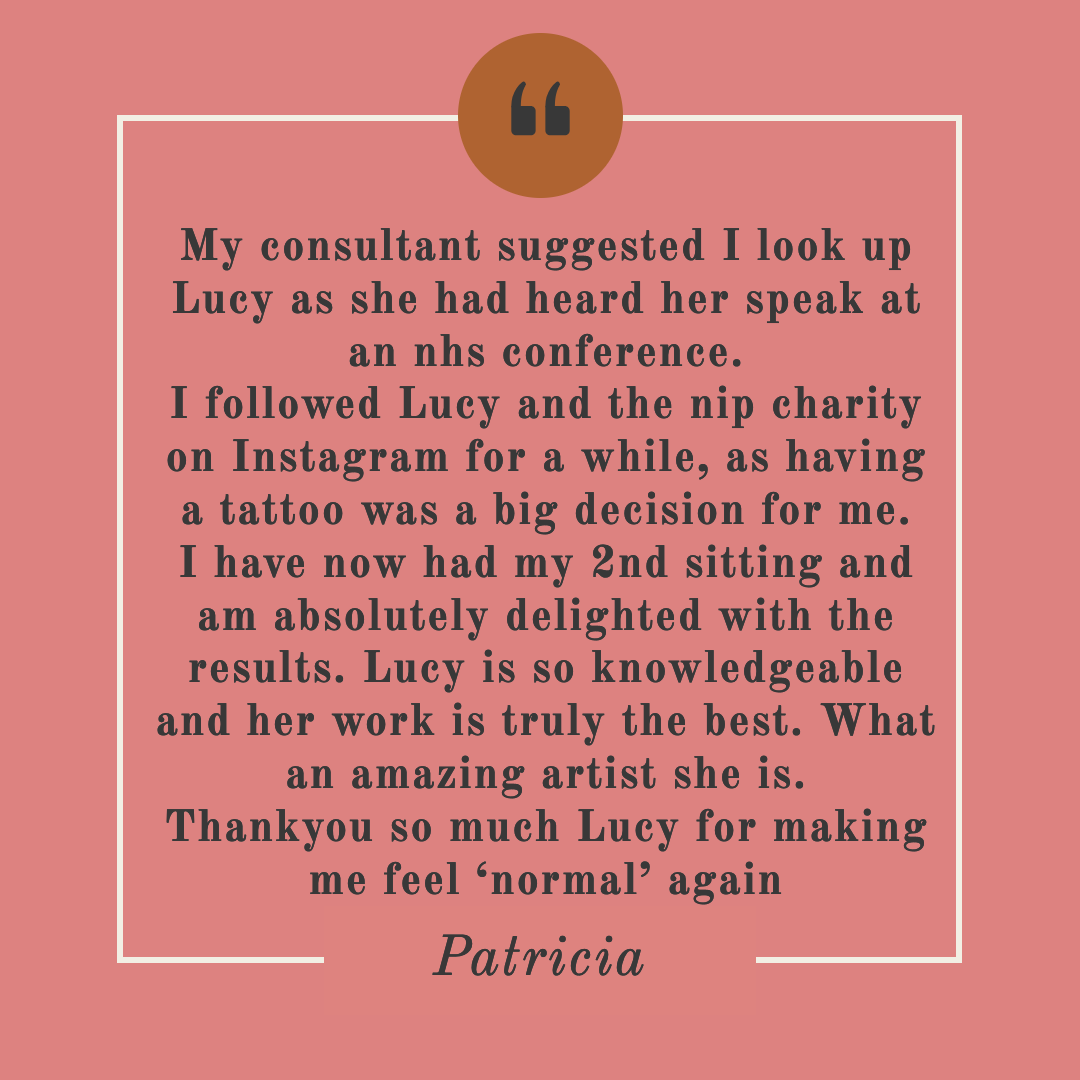
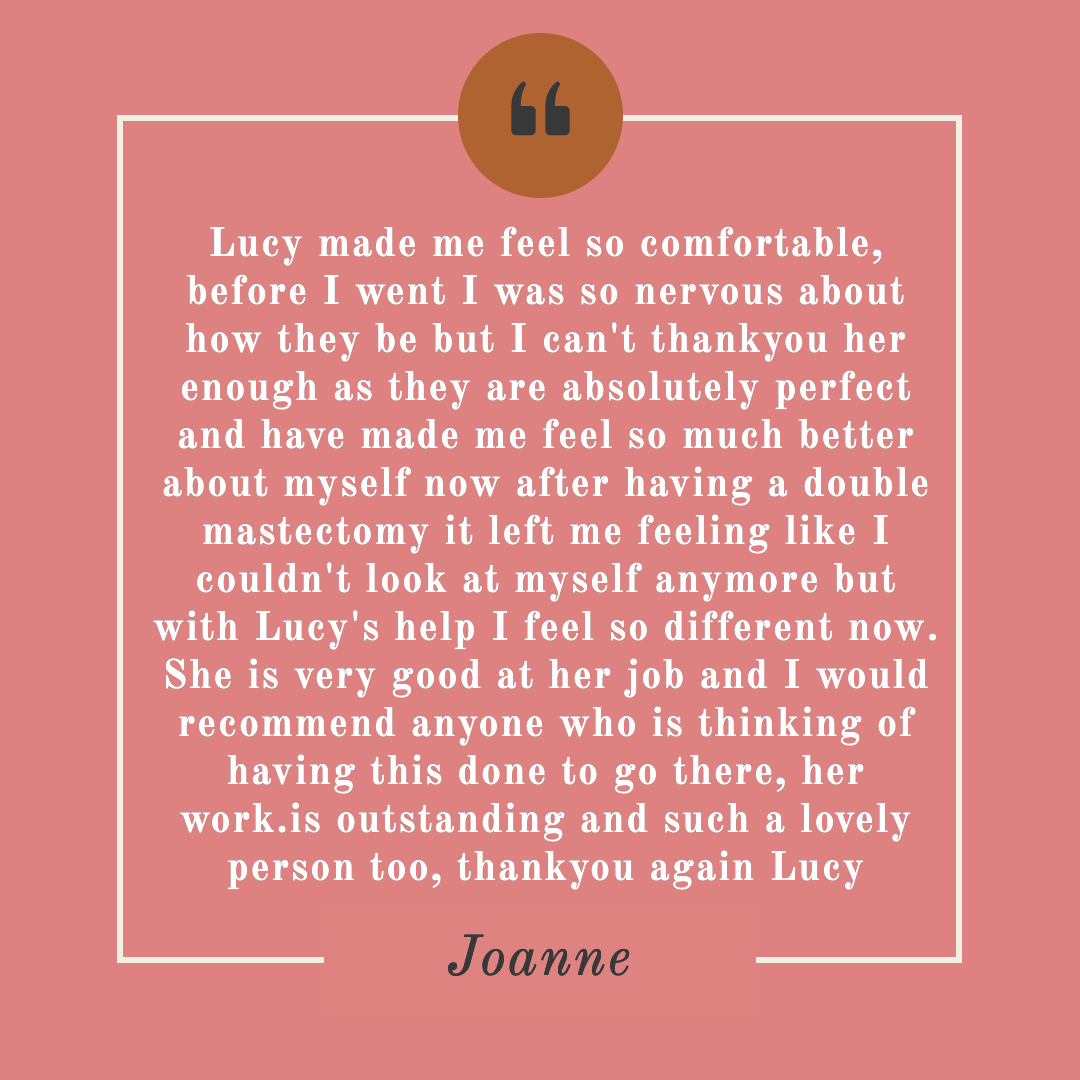
We plan to partner with more NHS trusts throughout the UK to make this post-mastectomy tattoo service the standard, offered through our areola artist directory.
A big part of what we do through The Nipple Innovation Project is also about raising standards.
Because right now, there’s still very little regulation in this space. Which means people are often left trying to navigate their options without really knowing what good looks like.
Our directory exists to give people a safer place to start. Artists are vetted, their work is assessed, and they must demonstrate that they understand both the technical and emotional responsibilities that come with this work.
Because this isn’t just another treatment. It’s the final step in a journey for many people.
And it deserves to be treated that way. There’s also a wider shift that needs to happen in how we talk about nipples in general.
They’re still something people feel awkward talking about, which is strange when you think about how important they are in identity and recovery generally and also after surgery.
Through my TEDxNHS talk, I’ve tried to open that conversation up a bit more.
Because when we normalise it, we make space for better care, and when we make space for better care, people get better outcomes.
Simple as that.
For me, this work has never just been about tattooing.
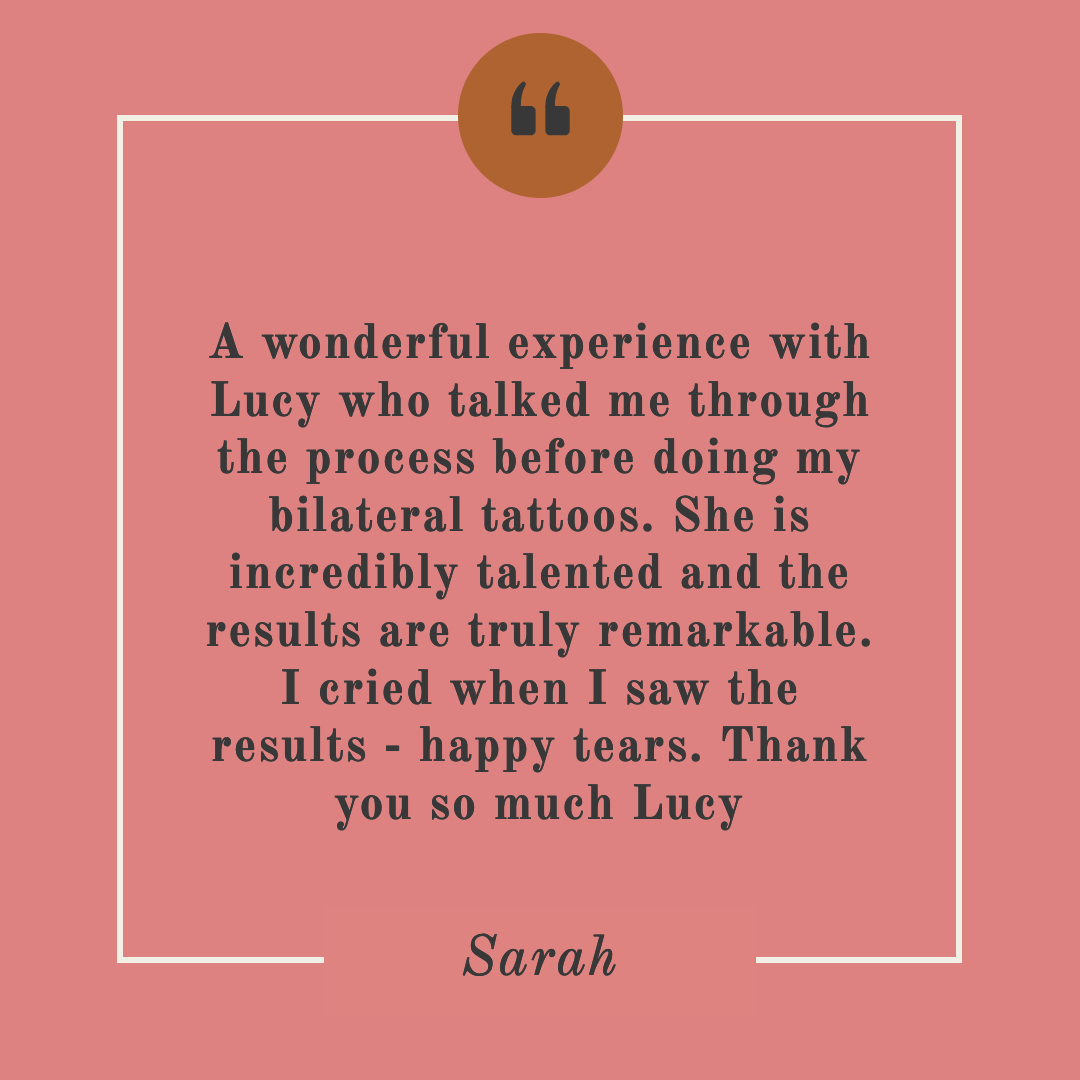
It’s about giving people a choice they didn’t know they had. It’s about raising the standard so that “good enough” is no longer acceptable. And it’s about making sure that no one feels alone in this part of their journey.
Because surviving is one thing, but feeling like yourself again afterwards is something else entirely.
And that part deserves just as much attention!
Founder of N.I.P, Owner of Areola Academy, Traditional & Medical Tattoo Artist, Educator & Public Speaker


