
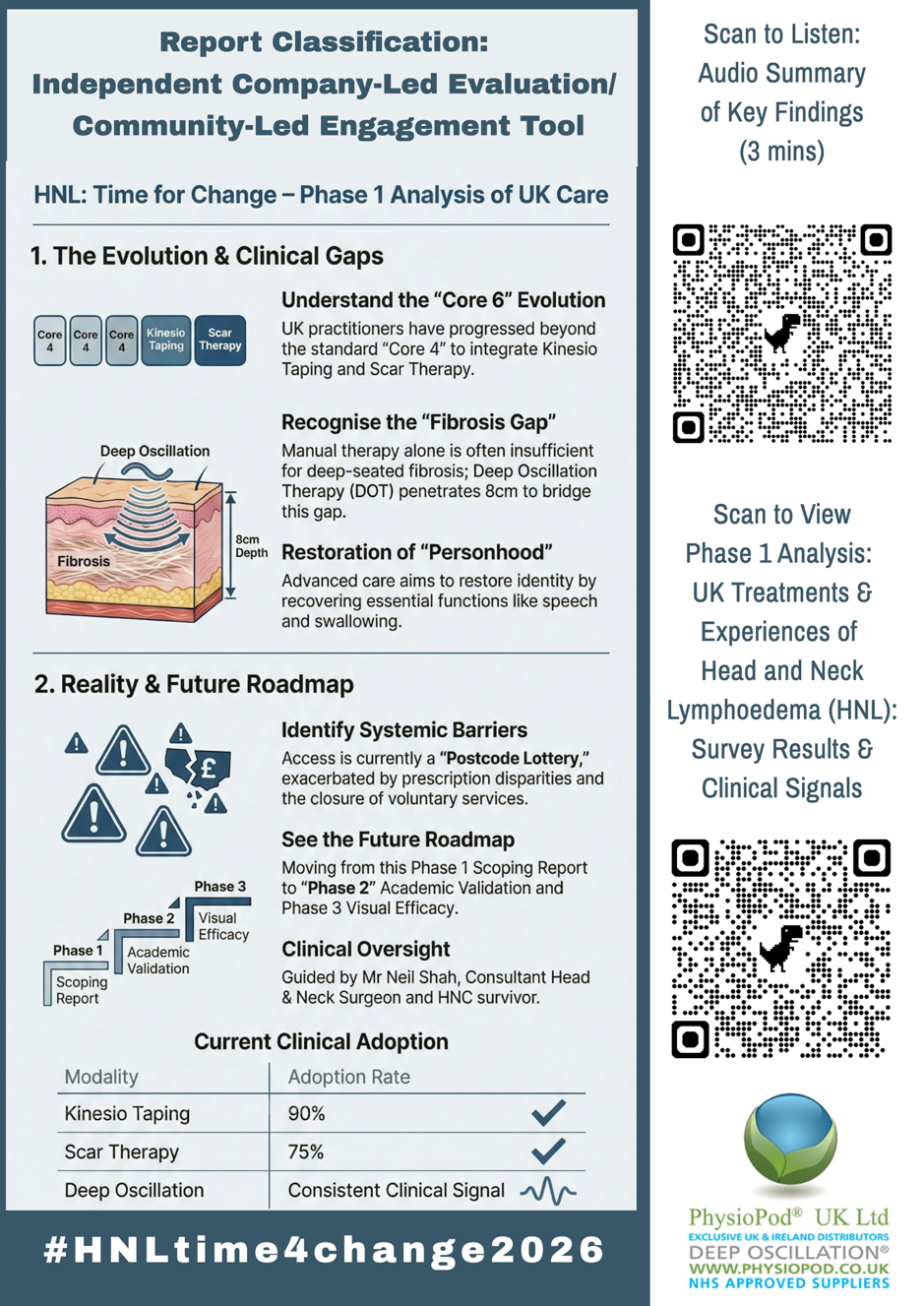
Phase 1 Analysis: UK Treatments and Experiences of Head and Neck Lymphoedema (HNL) - Survey Results & Clinical Signals


Publication Date: March 2026

#HNLtime4change2026

 
Report Classification: Independent Company-Led Evaluation Community-Led Engagement Tool
Evaluation Period: 1st October 2025 – 31st December 2025
Suggested Citation: Fickling, M. (2026). Phase 1 Analysis: UK Treatments & Experiences of Head and Neck Lymphoedema (HNL): Survey Results & Clinical Signals. Nottingham: PhysioPod® UK Ltd.
Correspondence: Mary Fickling, PhysioPod® UK Limited Email: enquiries@physiopod.co.uk
 

Audio: Open Text Feedback (14 mins)  Download Open Text Feedback PDF (220 KB) 

 
Copyright Notice: © 2026 PhysioPod® UK Limited. All rights reserved. This publication is intended as a community engagement tool. It may be reproduced and distributed for educational, clinical, and non-commercial purposes, provided that PhysioPod® UK Limited is clearly acknowledged as the source. No part of this publication may be altered, modified, or used for commercial gain without the prior written permission of the publisher.
 

AI Disclosure Statement: In the interest of full transparency, artificial intelligence (AI) tools have been used to analyse the raw data, structure the thematic findings, and generate the visual graphics presented in this report. While AI assisted in processing the information, the results represent the genuine, anonymous feedback received.


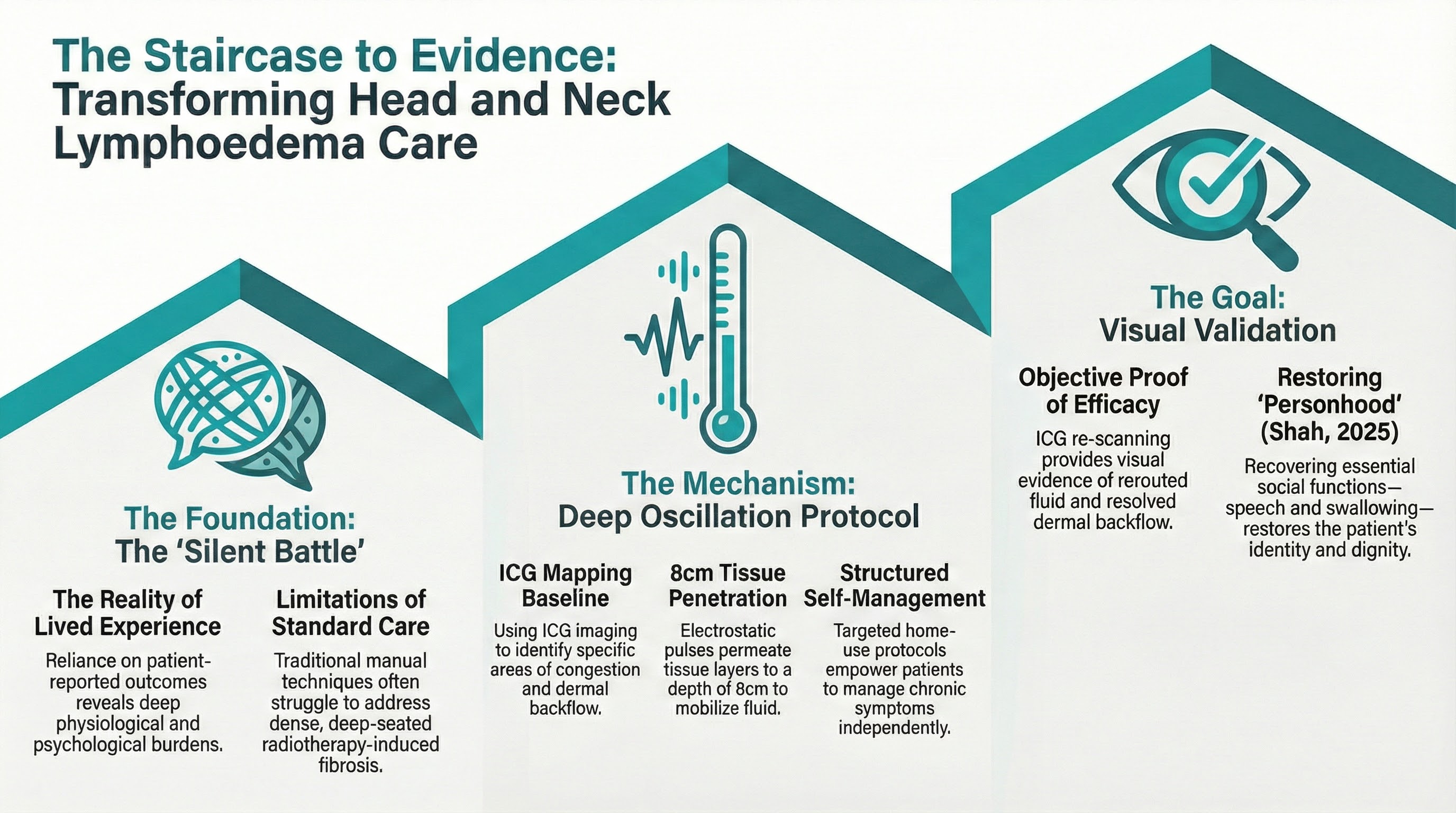
Strategic roadmap mapping the progression from subjective feedback to objective ICG lymphography validation.


Abstract

Background

Head and Neck Lymphoedema (HNL) is a complex, chronic condition affecting up to 90% of head and neck cancer survivors. It is characterised by anatomical heterogeneity and the rapid development of "fibro-fatty scarring" (fibrosis). At this time, there is no one "gold standard" treatment plan for HNL. While Manual Lymphatic Drainage (MLD) remains a core component of care, the British Lymphology Society (2024) states that current evidence for MLD as a stand-alone treatment in HNL is "limited in terms of abundance and quality" and "insufficient to fully support" its application without adjuncts.

Objectives

This company-led service evaluation (PhysioPod® UK Ltd) aimed to map the real-world UK treatment landscape, identify systemic barriers to care, and evaluate the organic clinical shift from standard "Core 4" maintenance to an evolved "Integrated Care" model utilising multiple adjunctive modalities.

Methods

A cross-sectional survey collected data from 84 respondents, categorised into NHS professionals (50%), private practitioners (31%), and patients (19%). Branching logic was used to compare the experiences of those receiving "standard care" (MLD/self-management) against those receiving "integrated care" (multimodal interventions).

Results

The evaluation confirms a fragmented "postcode lottery" of care, with significant prescription inequalities for head and neck garments consistent with national surveillance data (Smith et al., 2025). This systemic inequity is further compounded by instability in the voluntary sector, evidenced by the closure of established hospice-based services due to a lack of statutory funding. Despite these barriers, the data reveals a natural evolution in UK clinical practice from a "Core 4" to a "Core 6" standard. Kinesio Taping (90% adoption) is now routinely employed to promote drainage (Atar et al., 2023), while Scar Therapy (75% adoption) is a common intervention for mobilising adhesions (Venchiarutti et al., 2023). In high-resource areas, practitioners also use advanced adjuncts, such as negative-pressure therapy and photobiomodulation (PBM), to treat trismus (lockjaw) (Borges et al., 2023). Notably, regarding fibrosis management, Deep Oscillation Therapy (DOT) was identified as a distinct adjunct for treating "woody" induration. Practitioners reported superior outcomes in fibrosis softening compared with MLD alone, consistent with the modality’s mechanism of action, which utilises electrostatic impulses that have been shown to penetrate tissue to a depth of 8 cm (Hernández Tápanes et al., 2010). Patients reported that these clinical gains led to rapid improvements in speech and swallowing, which they said were very important for regaining their "personhood" (Shah, 2025). 'Personhood' is defined as the preservation of personal identity and dignity through the recovery of communication and a normal facial appearance.

Conclusion

This Phase 1 analysis identifies a distinct area of unmet clinical need within current management protocols. While the foundational "Core 4" has successfully evolved into a widely adopted "Core 6" standard—through the proactive integration of Kinesio Taping and Scar Therapy—managing deep-tissue induration (fibrosis) remains a significant therapeutic challenge. Furthermore, while advanced technologies such as photobiomodulation (laser) are used in high-resource regions to bridge this gap, access is currently constrained by a fragmented "postcode lottery" and the increasing instability of voluntary-sector provision. The data suggests that Deep Oscillation Therapy (DOT) offers a valuable mechanism to standardise this care, utilising an 8 cm penetration depth to address the deep fibrosis barrier that manual therapy alone may struggle to resolve. These findings serve as a vital "community-led engagement tool" to justify a formal Phase 2 Research Initiative. Led by consultant head and neck surgeon Mr Neil Shah, this next stage will utilise the validated Glasgow Benefit Inventory (GBI) to translate these exploratory signals into robust evidence to address current health inequalities.


Keywords
 
Head and Neck Lymphoedema (HNL); Secondary Lymphoedema; Head and Neck Cancer (HNC); Radiotherapy-Induced Fibrosis; Deep Oscillation Therapy (DOT); Manual Lymphatic Drainage (MLD); Fluoroscopy-Guided MLD (FG-MLD); ICG Lymphography; Kinesio Taping; Scar Therapy; Negative Pressure Therapy; Photobiomodulation (PBM); Submental Liposuction; Trismus; Dysarthria; Dysphagia; Cellulitis; NHS Service Provision; Cost-Effectiveness; Patient Experience; Quality of Life (QoL); 'Personhood'; Postcode Lottery; Self-Management; #HNLtime4change2026.


Table of Contents 
 
 
1.1 Background and Purpose
1.2 Methodology and Scope
1.3 Report Classification and Clinical Stewardship
 
 
2.1 Survey Design and Branching Logic
2.2 Data Collection and Respondent Selection
2.3 Respondent Demographics (Practitioners and Patients)
2.3.1 Professional Expertise and Sector Distribution
2.3.2 Patient Respondents
 

3.1 The Clinical Challenge: Heterogeneity and Lack of Standardisation
3.2 Standard Conservative Management (The "Core 4") 
3.3 The Evolving Standard: From "Core 4" to "Core 6"
3.4 The "Fibrosis Gap" and Advanced Adjunctive Modalities
3.4.1 Deep Oscillation Therapy (DOT): The "8 cm" Depth Advantage
3.4.2 Advanced Adjunctive Technologies
3.5 Specialist Surgical Intervention
 
 
4.1 The "Postcode Lottery" of Service Provision
4.2 Prescription Inequality and Financial Burden
4.3 Workforce Capacity vs. Clinical Demand
 
 
5.1 Fibrosis and Scar Tissue Softening
5.2 Oedema Reduction and Pain Management
5.3 Functional Restoration (Speech, Swallowing, and Airway)
5.4 Comparison: Standard Care vs. Integrated Modalities
 
 
6.1 Methodology: Thematic Analysis
6.2 Patient Themes: The Burden of Survivorship vs. Functional Restoration
6.3 Practitioner Themes: Capacity, Complexity, and Efficiency
6.4 Comparative Sentiment Analysis


8.1 Summary of Findings: The "Signal" in the Noise
8.2 The Phase 2 Research Initiative: Academic Validation
8.3 The Phase 3 Research Initiative: Visualising Efficacy
 

9.0 Special Acknowledgements

10.0 References


1.0 Introduction: A Service Evaluation of Head and Neck Lymphoedema Care


1.1 Background and Purpose

Head and Neck Lymphoedema (HNL) affects up to 90% of patients following cancer treatment, yet it remains a historically under-reported and under-treated complication compared to limb lymphoedema. The functional burden of HNL—compromising speech, swallowing, and airway patency—can be devastating to a survivor's quality of life. This document presents the findings of a Company-Led Service Evaluation (Scoping Exercise) conducted by PhysioPod® UK Limited between October and December 2025. The primary objective was to capture a "real-world snapshot" of the current HNL treatment landscape in the UK. Specifically, this evaluation aimed to:

Map the Status Quo: Find out what patients and NHS professionals say are the current barriers to care, establish the prevalence of standard interventions (e.g., Kinesio Taping, Scar Therapy), and identify the "postcode lottery" of service provision.
 
Evaluate Deep Oscillation Therapy (DOT): Gather preliminary user feedback on the clinical utility of Deep Oscillation, specifically comparing outcomes between practitioners who utilise this modality and those relying on standard Manual Lymphatic Drainage (MLD) alone.


1.2 Methodology and Scope

This evaluation collected data from 84 respondents, categorised into three distinct groups to ensure a balanced perspective:

NHS Professionals (50%): Clinicians working within Trust constraints.

Private Practitioners (31%): Independent therapists providing supplementary care.

Patients (19%): Individuals living with HNL.

By utilising specific survey branches (A–F), we established a 'Standard Care Group' (those receiving standard MLD/self-care) against a 'DOT Group' (those integrating Deep Oscillation). This report analyses differences in reported outcomes between these groups, with a specific focus on the management of deep-tissue hardening (fibrosis) and 'functional restoration'. In this report, functional restoration refers to the recovery of essential daily activities—specifically, the ability to speak clearly, swallow, and move the neck freely—which are critical to a patient’s quality of life.


1.3 Report Classification and Clinical Stewardship

As a company-led initiative designed to gather service user feedback and scope future research needs, this project is classified as a service evaluation rather than a clinical trial. It has not sought Health Research Authority (HRA) ethical approval but serves as the foundational "Phase 1" evidence required to justify a formal, ethically approved Phase 2 academic study. This initiative is guided by Mr Neil Shah (Consultant Oral & Maxillofacial / Head & Neck Surgeon). Mr Shah brings a unique ‘dual lens’ to this evaluation; as a specialist surgeon and a recent survivor of stage three mouth cancer, he combines expert clinical authority with the ‘lived experience’ of the survivorship challenges associated with HNL.

Notably, Mr Shah also contributed to this evaluation as a service user, having personally integrated Deep Oscillation into his own recovery. He reported observing "visible results within seconds" using his personal unit, providing direct clinical validation of the efficacy signals reported by the wider patient group (Shah, Personal Communication, 2025). His oversight ensures that the 'consistent clinical signals' identified in this dataset—specifically regarding fibrosis softening and functional restoration—are interpreted with both surgical rigour and patient-centred empathy.


2.0 Methodology

2.1 Survey Design and Branching Logic

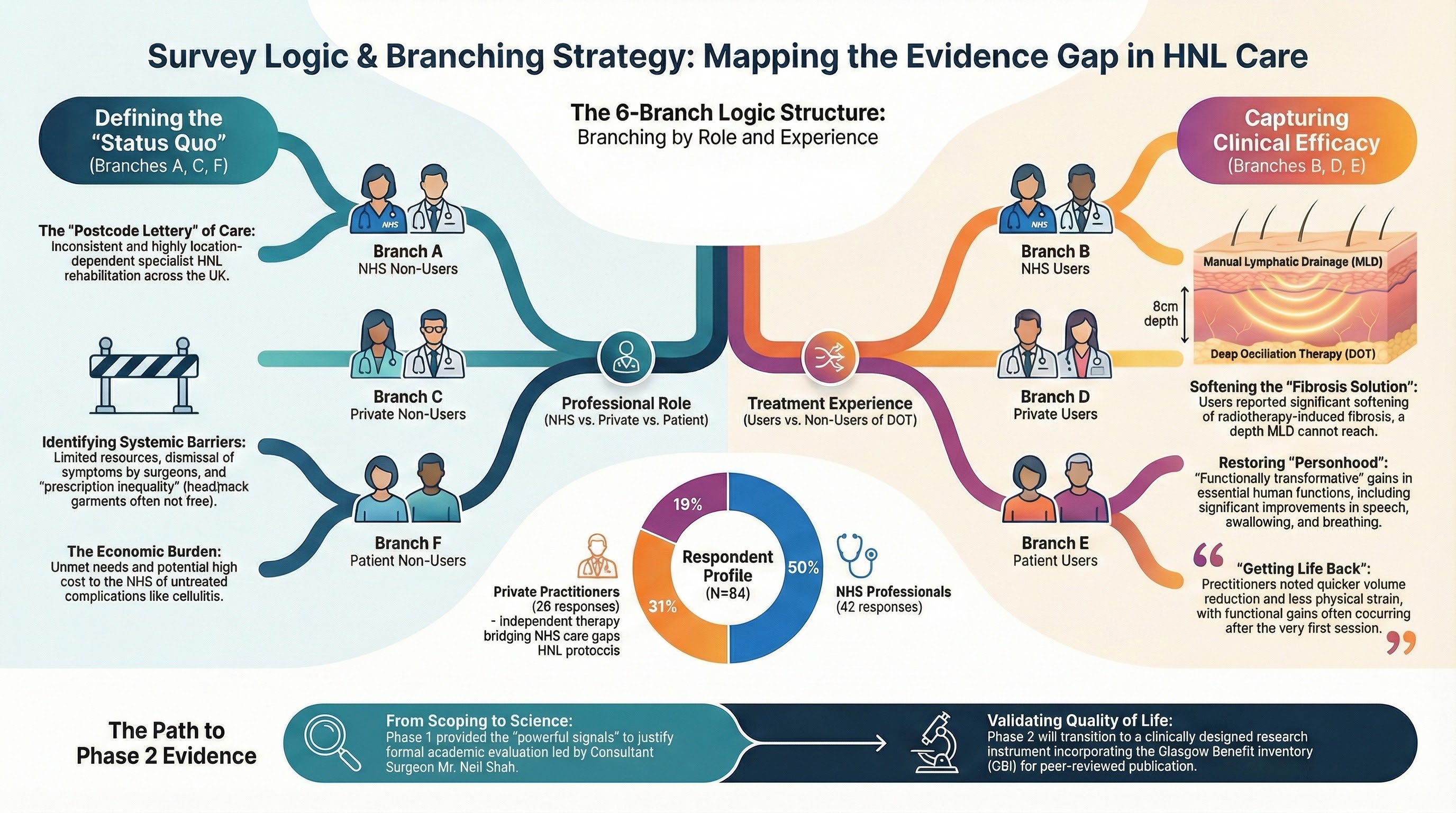
To ensure data relevance and allow for meaningful comparison between standard care and adjunctive therapies, the survey utilised a structured branching logic. Respondents were filtered based on two primary criteria: professional role and treatment experience. This segmentation ensured that patients were not asked clinical protocol questions, and practitioners were not asked lived-experience questions (see Figure 1) 


Downward branching flowchart dividing NHS staff, private practitioners, and patients into six distinct groups labeled A through F.

Figure 1: Survey Logic and Branching Strategy: Categorisation of NHS, Private, and Patient Respondents.

The survey utilised a six-branch logic structure (Branches A–F) to filter respondents by professional role and treatment experience, distinguishing standard care pathways from those integrating Deep Oscillation Therapy.

Source: Phase 1 Analysis: UK Treatments & Experiences of Head and Neck Lymphoedema (HNL). © 2026 PhysioPod® UK Limited.

 
The branching structure categorised the respondents into three comparative groups to isolate clinical efficacy signals from systemic resource issues:
 

Standard Care Group (Branches A, C, F): These branches targeted NHS and private practitioners not currently using Deep Oscillation, alongside patients who had not received the therapy. Questions focused on establishing the 'status quo', identifying resource limitations, and documenting the burden of self-management.

DOT Group / Integrated Care (Branches B, D, E): These branches targeted practitioners and patients with direct experience of Deep Oscillation. Questions focused on observing specific clinical outcomes, including fibrosis softening, oedema reduction, and functional restoration (speech/swallowing). 

Systemic Barriers (All Professional Branches): Both NHS and Private branches included specific items regarding service capacity, prescription inequalities, and the 'postcode lottery' of care provision.


2.2 Data Collection and Analysis
 
The survey was hosted on the secure online platform Mailchimp and distributed electronically over a three-month period between 1st October and 31st December 2025. A convenience sampling strategy was employed to reach both practitioners and patients, with the survey link disseminated via the professional networks of: 
 
  • HLP Therapy
  • Restore Scar Therapy
  • L-W-O Community (LWO)
  • Lymphoedema Wales Clinical Network
  • Lymphoedema Support Network (LSN)
  • Lymphoedema Training Academy (LTA)
  • Lymphoedema United
  • MLD UK
  • The Mouth Cancer Foundation
 
Data Cleansing and Respondent Selection: To ensure the integrity of the analysis, a rigorous data cleansing process was applied to the raw submissions:
 

Gross Submissions: The survey received a total of 105 initial responses.

Exclusions: [21] submissions were excluded from the final dataset. Exclusion criteria included incomplete responses (<50% completion rate), non-consent, or duplicate test entries.

Final Dataset: A final valid dataset of 84 respondents was retained for analysis.

Categorisation: To allow for meaningful comparison between standard care and adjunctive therapies, the final group (N=84) was categorised using the six-branch logic structure:

NHS Professionals (50%): Providing insight into public sector capacity and clinical protocols.

Private Practitioners (31%): Highlighting the role of the independent sector in bridging care gaps.

Patients (19%): Providing "lived experience" data, ranging from acute post-surgical cases to long-term survivors.

Anonymity and Candour: To encourage full transparency regarding sensitive systemic issues—such as workforce capacity and prescription inequalities—data were collected anonymously. This approach allowed NHS professionals to report resource limitations honestly without professional concern, while ensuring that patients felt safe to express the true psychological burden of their condition.

Data Analysis and AI Transparency: Quantitative data were analysed using descriptive statistics to establish the prevalence of specific interventions. Open-text responses were reviewed to identify recurring keywords (such as the 'postcode lottery') and to provide clinical context for the statistical findings. In the interest of full transparency, Large Language Model (LLM) technology was utilised to assist in the structural organisation of this data and the generation of visual graphics; however, all clinical insights and patient narratives presented in this report represent the genuine, unedited views of the respondents. (Note: A full transcript of the open-text responses is available via the link in Section 6.0).


2.3 Respondent Demographics (Practitioners and Patients)

2.3.1 Professional Expertise and Sector Distribution: The survey captured 84 respondents, of whom 68 (81%) were healthcare professionals directly involved in the management of Head and Neck Lymphoedema (HNL). To ensure the clinical validity of the observations regarding Deep Oscillation Therapy (DOT), it is essential to establish the professional calibre of this group. The respondents were categorised into NHS Professionals (50%) and Private Practitioners (31%), providing a balanced view of both statutory service capacity and the independent sector's role in bridging care gaps.

 
Table 1: Respondent Demographics (N=84)
 
Distribution of NHS, Private, and Patients
 
Respondent Category
Survey Branches
Number of Responses
Percentage of Total
NHS Lymphoedema Professionals
Branches A & B
42
50%
Private MLD Practitioners
Branches C & D
26
31%
Patients (Living with HNL)
Branches E & F
16
19%
TOTAL
 
84
100%
This table establishes the foundational dataset for the report, highlighting that half of the respondents were NHS professionals. This distribution lends significant clinical weight to the findings regarding workforce capacity and treatment efficacy.
 
Source: Phase 1 Analysis: UK Treatments & Experiences of Head and Neck Lymphoedema (HNL) 


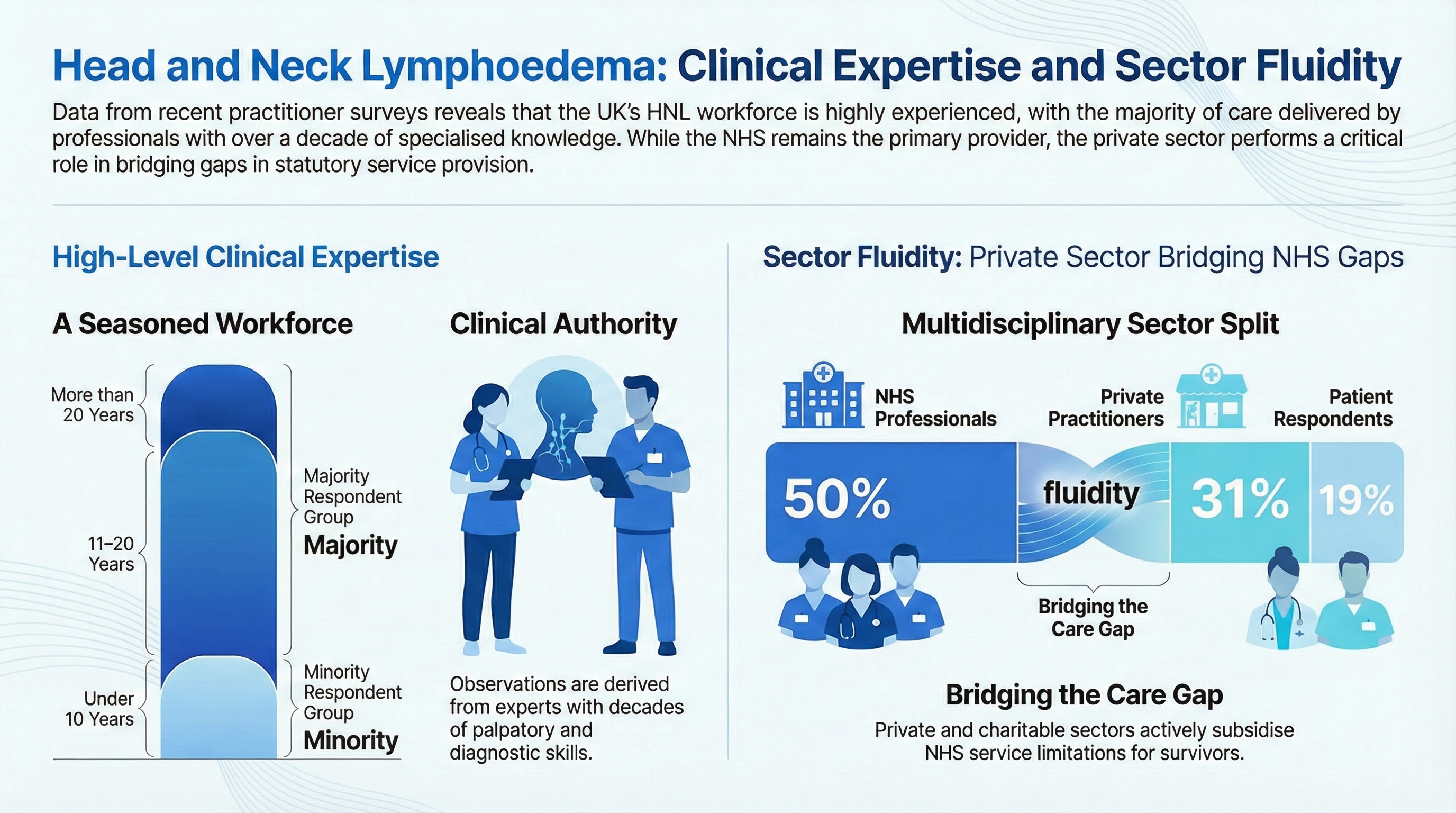
High experience levels dominate, with most practitioners reporting 11–20+ years in practice across NHS, private, and patient groups.

Figure 2: Practitioner Profile: Years of Clinical Experience and Sector Distribution.
 
The survey captured a highly experienced workforce, with significant crossover between NHS and private practice.
 
Source: Phase 1 Analysis: UK Treatments & Experiences of Head and Neck Lymphoedema (HNL). © 2026 PhysioPod® UK Limited.  
 
 
Findings: High clinical authority analysis of the practitioner profile reveals two critical factors that lend weight to the clinical efficacy signals reported in Section 5.0:
 
Experienced workforce: The data confirms that HNL care is being delivered by highly experienced clinicians. A significant majority of respondents reported possessing 11–20 years or more than 20 years of clinical experience in lymphoedema management. This indicates that the feedback regarding DOT’s ability to soften fibrosis is derived from clinicians with decades of palpation experience and diagnostic judgement, rather than from novice observation.
 
Multidisciplinary & Sector Fluidity: While Lymphoedema Nurses form the largest single group, the group includes Physiotherapists, Occupational Therapists, and MLD Therapists. Furthermore, the employment data reveals a fluid workforce, with many practitioners working concurrently across NHS, Private, and Charitable sectors (e.g., Hospices). This "cross-over" suggests that the private and charitable sectors are actively subsidising NHS service gaps, a theme further explored in the Barriers to Care section.
 
 
2.3.2 Patient Respondents
 
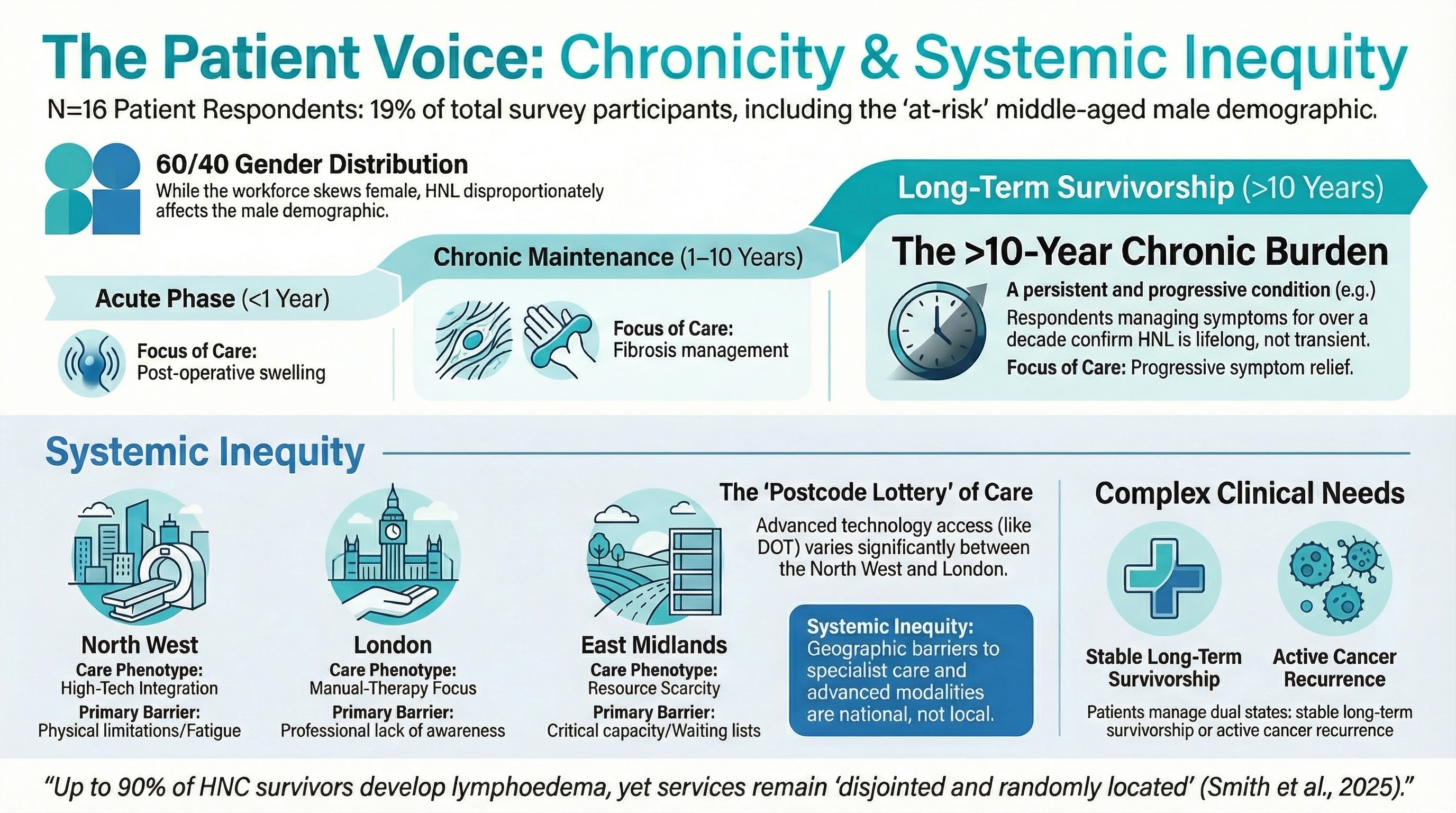
A National Snapshot of Survivorship: While the patient group represented 19% (n=16) of the total respondents, the data provides a critical cross-sectional view of the survivorship journey. Responses were received from across the United Kingdom—including Scotland, Wales, Northern Ireland, and multiple English regions—confirming that the challenges of accessing specialist HNL care are a national systemic issue rather than a localised service failure. Furthermore, the "Survivorship Timeline" (Figure 3) reveals that patients seek intervention at every stage of recovery. Respondents ranged from those in the acute post-operative phase (<1 year) to long-term survivors living with HNL for more than a decade. This validates the position of Rajaram et al. (2025) that HNL is a chronic, progressive condition requiring sustainable, life-long management strategies rather than acute-only intervention.
 
 
UK wide distribution of patient experiences, highlighting chronic symptom burden and regional inequity across multiple phases of survivorship.
 
Figure 3: Patient Demographics: Geographic Distribution and Survivorship Timeline.
 
The survey captured a national spread of respondents, confirming that barriers to care are a UK-wide issue. The timeline reveals that HNL affects patients from the immediate postoperative phase through long-term survivorship (>10 years), necessitating sustainable lifelong management strategies. 
 
Source: Phase 1 Analysis: UK Treatments & Experiences of Head and Neck Lymphoedema (HNL). © 2026 PhysioPod® UK Limited. 


Findings: Demographic Insights and Chronicity

Analysis of the patient demographics (N=16) and practitioner distribution (N=68) yields two significant clinical signals regarding the scale and duration of HNL care:

Validation of National Systemic Inequity (The "Postcode Lottery"): The geographic distribution of respondents confirms that the barriers to access identified in the qualitative narratives are not isolated to specific failing Trusts.

National Scope: Responses were received from across the UK, including Northern Ireland, Scotland, Wales, and multiple English regions (e.g., North West, South East).

Systemic Failure: Patients from diverse locations reported identical difficulties in accessing specialist HNL services and obtaining funding for head and neck compression garments. This confirms the Smith et al. (2025) survey, which describes UK lymphoedema services as "disjointed, under-resourced, and randomly located.

The "Lifelong" Burden: The Case for Sustainable Self-Management: The survey data challenges the perception of HNL as a temporary acute side effect of cancer treatment.

Chronicity: The "Survivorship Timeline" (Figure 3) identifies a group of respondents managing symptoms for >10 years post-treatment.

Implication for DOT: This longevity confirms that HNL is a chronic condition requiring sustainable, lifelong maintenance. This supports the integration of Deep Oscillation Therapy (DOT) personal units as a primary self-management tool. If care is required for decades, patients need home-based solutions that reduce reliance on perpetual specialist appointments.

Strategic Alignment: This approach aligns directly with the NHS Long Term Plan, which prioritises "supported self-management" to reduce avoidable hospital activity and empower patients to manage their long-term conditions. Furthermore, Mullan et al. (2025) highlight that because specialist resources are finite, self-management must become an "important pillar of patient management."


3.0 Current Treatment Landscape: Standards, Gaps, and Evolution

 
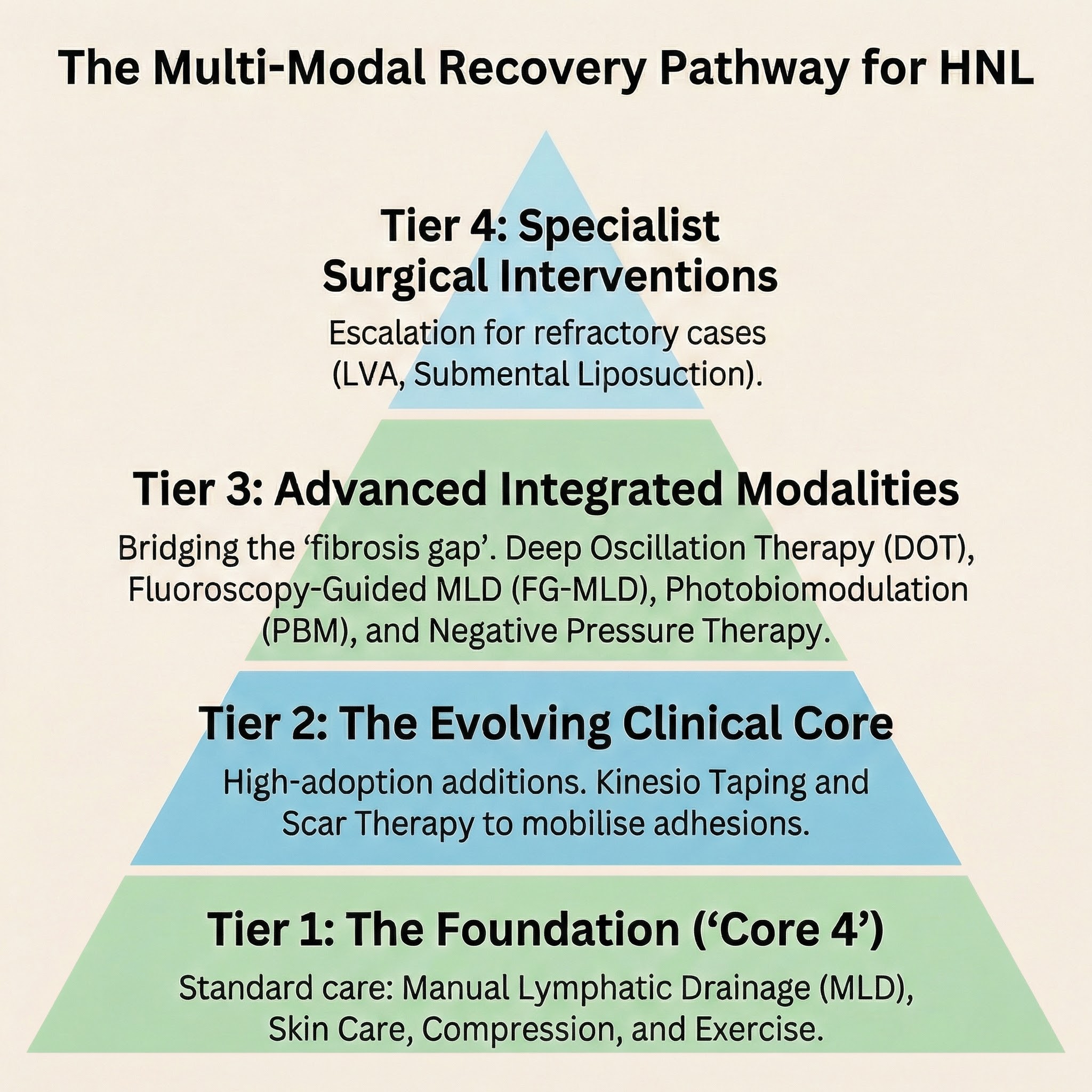
Hierarchical pyramid progressing upward from foundational Tier 1 to specialized Tier 4 within a structured multimodal recovery pathway.
 
Figure 4: The Multi-Modal Recovery Pathway for Head and Neck Lymphoedema (HNL).
 
A four-tiered approach moving from standard maintenance to advanced fibrosis management, incorporating the "Core 6" strategies identified
 
Source: Integrated Care Model based on Phase 1 Analysis. © 2026 PhysioPod® UK Limited.


3.1 The Clinical Challenge: Heterogeneity and Lack of Standardisation

Head and Neck Lymphoedema (HNL) presents a clinical challenge distinct from limb lymphoedema, due to the complex anatomy of the cervical region and the critical functions it supports (breathing, swallowing, and communication).

"The condition is characterised by severe functional deficits. Jeans et al. (2023) confirmed that internal oedema following chemoradiotherapy is strongly associated with dysphagia (swallowing difficulties). Furthermore, Arends et al. (2024) identify trismus (lockjaw) as a critical driver of poor body image and reduced quality of life in this population"

Prevalence and Under-Reporting: In the past, HNL was considered a minor side effect. However, a major 2025 UK survey of practice by Smith et al. challenges this, confirming that up to 90% of patients treated for head and neck cancer develop some degree of lymphoedema. Despite this high incidence, Mullan et al. (2025) note that the condition remains "underrecognised" and "undertreated", often due to a lack of standardised referral pathways and diagnostic criteria.

The "Sheer Heterogeneity" of Symptoms: Unlike extremities, where volume is the primary metric, HNL is characterised by "sheer heterogeneity" in its presentation. A 2025 systematic review by Rajaram et al. notes that symptoms range from external submental swelling to internal laryngeal oedema, which can compromise the airway. This variability has hindered the development of a single treatment model.

The "Fibro-Fatty" Progression: The pathophysiology of HNL is aggressive. Ridner et al. (2016) and Rajaram et al. (2025) identify the rapid development of "fibro-fatty scarring" (fibrosis) in the interstitial tissues as a hallmark of the condition. This structural induration creates a mechanical barrier—often described by patients as a "woody" texture—that restricts cervical range of motion and causes trismus (lockjaw).

Absence of a "Gold Standard": Perhaps the most significant barrier to effective care is the absence of a universally accepted management algorithm. Rajaram et al. (2025) conclude that "currently, there is no gold standard therapy or treatment algorithm for HNL." This fragmentation forces practitioners to adapt limb-based protocols (like standard MLD) to the neck, which the British Lymphology Society (2024) notes is often "insufficient" to address the specific fibrotic challenges of HNL without adjunctive support.


3.2 Standard Conservative Management (The "Core 4")
 
The current management of Head and Neck Lymphoedema (HNL) in the UK follows the guidelines of Complete Decongestive Therapy (CDT) (HSE & LNNI, 2022). A 2025 systematic review by Rajaram et al. identifies CDT as the modality with the "largest and most consistent data" and focuses on four main domains aimed at reducing functional impact and controlling complications. Standard management protocols align with the rehabilitation interventions reviewed by Cheng et al. (2023), which emphasise the necessity of a multi-modal approach combining manual therapy and adjuncts to effectively manage volume and fibrosis. However, applying these pillars in the head and neck region poses distinct clinical challenges compared to limb lymphoedema.
 

Manual Lymphatic Drainage (MLD)

Definition: A specialised massage technique designed to stretch the skin and stimulate the intrinsic contraction of lymphatic vessels (lymphangiomotoricity).

Evidence Status: While MLD remains a cornerstone of care—offered by 85% of UK services according to Smith et al. (2025)—its evidence base in HNL is currently under scrutiny. The British Lymphology Society (2024) position document states that evidence for MLD as a stand-alone treatment in HNL is "limited in terms of abundance and quality" and is currently "insufficient to fully support" its application without adjuncts.

Clinical Limitations: Tyker et al. (2019) note that while studies often report positive outcomes, the validity is frequently compromised by study heterogeneity and small sample sizes.


Skin Care

Definition: Meticulous daily hygiene and moisturising to maintain skin integrity.

Clinical Rationale: Lymphoedematous fluid is protein-rich, serving as an ideal medium for bacterial growth. Webb et al. (2023) demonstrated that effective management of chronic oedema significantly reduces the incidence of recurrent cellulitis.

Adoption: This concept is the most universally applied pillar, with Smith et al. (2025) reporting that 97% of practitioners provide skincare advice as a standard intervention.


Compression Therapy

Definition: The use of low-pressure garments or pneumatic devices to support tissues and prevent fluid re-accumulation.

Challenges: Unlike limb lymphoedema, anatomy and patient tolerance complicate compression in the head and neck. Smith et al. (2025) discovered that although 92% of services provide compression, obstacles to adherence include airway anxiety and the psychosocial effects of visible facial garments.

Evidence: Ridner et al. (2021) conducted a randomised, controlled trial confirming that advanced pneumatic compression (e.g., Flexitouch) is safe and effective for HNL, with Mayrovitz et al. (2018) noting a 1.18% improvement in facial volumes.


Exercise & Movement

Definition: Targeted jaw and neck exercises (e.g., yawning, chewing, cervical rotation) to stimulate the "muscle pump" effect.

Clinical Rationale: Due to the lack of valves in head and neck lymphatics, gravity and muscle activity are critical for drainage. Tsai et al. (2022) confirmed in a randomised trial that early rehabilitation exercise combined with MLD significantly improved the cervical range of motion and controlled oedema in the acute phase.

Feasibility: A recent study by Wood et al. (2025) validated the feasibility and safety of home-based exercise protocols for head and neck cancer patients, reinforcing their role in self-management.


3.3 The Evolving Standard: From "Core 4" to "Core 6": Analysis of the Phase 1 survey data (N=84) reveals that UK practitioners have organically expanded the standard of care to address the specific deficits of the traditional "Core 4" (MLD, compression, skin care, and exercise). High adoption rates indicate that scar therapy and Kinesio taping have effectively become de facto standard treatments, creating a "Core 6" model of care.

Scar Therapy: Clinical Rationale: The management of "fibro-fatty scarring" is critical in HNL. Warren et al. (2007) confirmed that scar tissue acts as a physiological barrier, causing "microlymphatic stasis," which effectively traps fluid and requires specific mobilisation to restore flow. Adoption: This aligns with international best practices; a study by Venchiarutti et al. (2023) in comprehensive cancer centres confirmed that scar management is now a fundamental component of the HNL treatment algorithm.

Kinesio Taping: Clinical Rationale: Taping is utilised to create an interstitial space and facilitate continuous drainage between clinical sessions. A recent randomised controlled trial (RCT) by Atar et al. (2023) specifically on HNL patients demonstrated that Kinesio Taping produced statistically significant reductions in neck circumference (approximately 5%) and improvements in quality of life compared to standard care alone. Adoption: Smith et al. (2025) report that approximately 71% of UK practitioners now use taping as a standard intervention, mirroring the high adoption rates found in this evaluation.


3.4 The "Fibrosis Gap" and Advanced Adjunctive Modalities: Despite the evolution to a "Core 6" model, a significant efficacy gap remains regarding the management of "fibro-fatty scarring" (fibrosis). This deep-seated induration, often described by patients as having a "woody" texture, creates a mechanical barrier to fluid movement that superficial manual techniques cannot resolve. To bridge this gap, practitioners are increasingly integrating advanced technologies.

3.4.1 Deep Oscillation Therapy (DOT): The "8 cm" Depth Advantage: Deep Oscillation is identified in the survey as a primary adjunct for addressing fibrosis. Unlike mechanical vibration, DOT utilises an intermittent electrostatic field to create resonant vibrations within the tissue.

Mechanism of Action: The electrostatic attraction and friction generate a "shuffling" effect within the interstitium, mobilising protein solids and fluid [Reinhold, 2025].

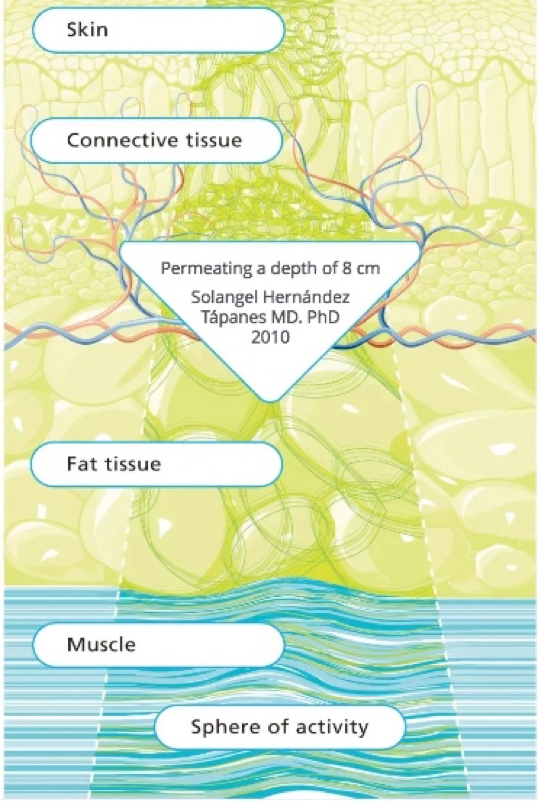
Depth Validation: In a clinical study regarding burn rehabilitation, Hernández Tápanes et al. (2010) utilised diagnostic ultrasound to visually verify that these impulses penetrate connective tissue, subcutaneous fat, and muscle to a depth of 8 cm.

Clinical Evidence (Fibrosis & Pain): The efficacy of this mechanism was further validated in a large-scale Randomised Controlled Trial (N=401) by Hernández Tápanes et al. (2018). The study confirmed that DOT achieved statistically significant reductions in pain and fibrosis, with diagnostic ultrasound confirming that the vibration effect reached deep tissue layers.

Clinical Relevance: This depth is critical for HNL, where radiotherapy-induced fibrosis adheres to deep muscular and vascular structures. Halliday et al. (2020) validated this utility using the Glasgow Benefit Inventory (GBI), noting DOT is "particularly useful in areas harder to massage, such as the head and neck".

The NPLP Connection: Recent anatomical research has mapped the Nasopharyngeal Lymphatic Plexus (NPLP), a deep lymphatic hub at the back of the nose (Sustainability Directory, 2025). The 8 cm penetration of DOT provides a non-invasive method to stimulate these deep-seated drainage pathways, which are crucial for cerebrospinal fluid outflow and reducing internal oedema.


Electrostatic impulses depicted penetrating sequential tissue layers to reach the muscle at an 8 cm depth.

Figure 5: Mechanism of Action – Electrostatic penetration of connective tissue to 8 cm depth.

Unlike externally applied mechanical vibration, Deep Oscillation utilises an electrostatic field to generate friction and attraction deep within the tissue. Diagnostic ultrasound studies have verified that these resonant vibrations permeate the epidermis, dermis, subcutaneous fat, and muscles to a depth of 8 cm. This deep-acting effect is critical for HNL management, enabling fluid mobilisation and softening of fibrosis in areas where manual pressure is contraindicated or ineffective.

Source: Adapted from Hernández Tápanes, S. et al. (2010). Cuban Journal of Physical Medicine & Rehabilitation. Verification via diagnostic ultrasound provided by Hospital Hermanos Ameijeiras.


3.4.2 Advanced Adjunctive Technologies

Beyond the "Core 6", survey respondents and current literature identify three additional advanced modalities used to target specific aspects of HNL pathology, particularly where standard manual techniques are insufficient to address deep-seated fibrosis or complex drainage pathways.


Photobiomodulation (PBM), also known as Low-Level Laser Therapy (LLLT) or "Red Light Therapy", is increasingly utilised as a preparatory adjunct to soften indurated tissue and relieve neuropathic pain prior to manual therapy.

Mechanism: PBM employs non-thermal light energy to stimulate cellular metabolism (mitochondrial activity). Deng et al. (2021) suggest that the mechanisms include the mitigation of pro-inflammatory cytokines and the promotion of lymphangiogenesis (the growth of new lymphatic vessels).

Clinical Rationale: A pilot feasibility study by Deng et al. (2021) in head and neck cancer patients reported that PBM significantly reduced symptom burden and improved cervical range of motion. Furthermore, Borges et al. (2023) highlighted its specific efficacy in treating radiotherapy-related trismus (lockjaw), a debilitating complication of HNL fibrosis


Fluoroscopy-Guided MLD (FG-MLD): Often described as the "Fill and Flush" technique, FG-MLD represents a paradigm shift from "blind" massage to targeted drainage.

Mechanism: This technique is derived from Indocyanine Green (ICG) Lymphography, which utilises Near-Infrared Fluorescence (NIRF) imaging to visualise superficial lymphatic architecture in real-time.

Clinical Rationale: Traditional MLD follows anatomical textbook pathways, which may be severed or irradiated in HNC survivors. Wigg & Cooper (2017) and Suami et al. (2019) demonstrated that visualisation allows therapists to map functional dermal backflow routes, ensuring fluid is directed away from blockages rather than into them. This targeted propulsion is critical for bypassing the complex anatomical barriers found in the neck following dissection.


Negative Pressure Therapy (LymphaTouch): Increasingly identified as a standard tool for fibrosis management in comprehensive cancer centres, this mechanical modality is used to 'lift' dense scar adhesions where positive pressure is ineffective

Mechanism: This modality delivers controlled, intermittent negative pressure (suction) to expand inter-endothelial junctions, dilate initial lymphatics, and stretch anchoring filaments.

Clinical Rationale: In a large cohort study of an Australian HNL service, Venchiarutti et al. (2023) identified negative pressure therapy as a standard component of fibrosis and scar management protocols. Survey respondents similarly identified it as a valuable tool for "lifting" dense scar adhesions and expanding tissue space to facilitate fluid movement where positive pressure (compression/massage) is ineffective.


3.5 Specialist Surgical Intervention: (Escalation for Refractory or Focal Cases)

Surgery represents the peak of the recovery pathway, reserved for severe cases where conservative therapy has failed. The Rajaram et al. (2025) systematic review confirms that these interventions are rare, used in less than 2% of cases globally. The evidence suggests surgery is effective for focal problems (e.g., a swollen eyelid) but is unproven for the widespread diffuse swelling that affects most HNL patients.

Lymphaticovenous Anastomosis (LVA) – 0.55% Adoption: A microsurgical technique that bypasses blockages by connecting lymphatic vessels to veins. It shows promise for focal swelling (e.g., cheeks/eyelids) where a specific blockage can be identified (Mihara et al., 2011), but outcomes for diffuse 'pan-facial' swelling remain uncertain.

Submental Liposuction – 1.64% Adoption: The removal of the "turkey neck" caused by fibro-fatty deposits that cannot be moved by massage. While effective for reshaping the neck, it is not a cure; patients must usually wear compression garments for life after surgery to prevent fluid reaccumulation.

Surgical Debulking – 0.89% Adoption: The excision of redundant tissue, typically reserved for severe eyelid lymphoedema where swelling obstructs vision (Chalasani & McNab, 2010).

Access Barriers: The PhysioPod Phase 1 Survey highlights that these procedures are often restricted under NHS "Not Normally Funded" policies. Consequently, patients facing these severe functional deficits often resort to self-funding private surgery.


If you are viewing Table 2 on a phone, please swipe right to see all columns.

Table 2: The Multi-Modal Recovery Pathway for Head and Neck Lymphoedema (HNL)

 
From Standard Maintenance to Specialist Surgical Intervention
 
Tier & Category
Modality
Mechanism & Clinical Rationale
Comprehensive Scientific Evidence Base
TIER 1: THE FOUNDATION
(Standard Conservative Care)
The "Core 4"
1. Manual Lymphatic Drainage (MLD)
Mechanism: Skin stretch to stimulate intrinsic contraction of lymphatics (lymphangiomotoricity).
Rationale: A cornerstone for symptom management, though superficial techniques may struggle to bypass deep fibrotic blockages.
 
BLS Position Document (2024): States evidence for MLD as a stand-alone treatment in HNL is "insufficient" and "limited in terms of abundance and quality".
Prevalence: Remains the dominant modality (69.25%) globally despite the evidence gap.
 
2. Compression Therapy
Mechanism: Reduces ultrafiltration and improves reabsorption by increasing interstitial pressure.
Rationale: Essential to maintain MLD effects, but adherence is challenged by airway anxiety and aesthetics.
Ridner et al. (2021): Confirmed advanced pneumatic compression (e.g., Flexitouch) is safe and effective, though patients often find standard head/neck garments "unacceptable". Mayrovitz et al. (2018): Noted a 1.18% improvement in facial volumes with pneumatic devices.
 
3. Skin Care
Mechanism: Hygiene protocols to prevent bacterial entry and cellulitis.
Rationale: HNL fluid is protein-rich, creating a high risk for infection. Prevention is a critical cost-saving measure for the NHS.
Webb et al. (2023): Demonstrated that infection prevention strategies are "cost-saving," reducing daily health service costs by 75% by preventing recurrent cellulitis admissions.
 
4. Exercise & Movement
Mechanism: Targeted jaw and neck exercises stimulate the "muscle pump" to drive fluid.
Rationale: Critical in HNL as cervical lymphatics lack valves; movement is required to propel fluid against gravity.
Tsai et al. (2022): RCT confirming early rehabilitation exercise significantly improved cervical range of motion and controlled oedema.
Wood et al. (2025): Validated the safety and feasibility of home-based exercise protocols.
TIER 2: THE EVOLVING CORE
(The "Core 6")
Expanded Standard of Care
5. Scar Therapy
Mechanism: Manual mobilisation of adhesions to reconnect superficial lymphatic pathways.
Rationale: Scars create mechanical "dams" blocking flow; release is essential for drainage and restoring range of motion.
Warren et al. (2007): Confirmed that scars cause "microlymphatic stasis" and that mobilisation is required to restore flow.
Venchiarutti et al. (2023): Identifies scar/fibrosis management as a core treatment component in major specialist centres.
 
6. Kinesio Taping
Mechanism: Elastic tape lifts the epidermis to expand interstitial space and create pressure differentials.
Rationale: Provides 24/7 drainage support between clinic sessions and offers a "lighter" alternative to garments.
Atar et al. (2023): RCT (N=30) specifically on HNL patients confirmed statistically significant reductions in neck circumference (5%) and improved Quality of Life compared to standard care.
TIER 3: ADVANCED
(Integrated Modalities)
Bridging the "Fibrosis Gap"
Deep Oscillation Therapy (DOT)
Mechanism: Electrostatic impulses create resonant vibrations penetrating 8 cm deep through skin, connective tissue, and muscle.
Rationale: The "Fibrosis Solution." Specifically targets the "woody," radiotherapy-induced fibrosis in the submental area that manual therapy cannot reach.
Hernández Tápanes et al. (2010): Verified the 8 cm penetration depth via diagnostic ultrasound.
Halliday et al. (2020): Validated DOT for HNL using the Glasgow Benefit Inventory (GBI), noting it is "particularly useful" for areas hard to massage.
 
Photobiomodulation (PBM/Laser/Red Light Therapy)
Mechanism: Non-thermal light energy stimulates lymphangiogenesis and mitigates pro-inflammatory cytokines.
Rationale: Used as a pre-treatment to soften indurated tissue and treat Trismus (lockjaw).
Deng et al. (2021): Pilot study (N=11) showed 72% improvement in severity at external sites.
Borges et al. (2023): Confirmed efficacy for treating radiotherapy-related trismus.
 
Fluoroscopy-Guided MLD (FG-MLD)
Mechanism: "Fill & Flush" technique using real-time Indocyanine Green (ICG) imaging.
Rationale: Moves from "blind" massage to targeted drainage, visualising dermal backflow to redirect fluid toward functional pathways.
Suami et al. (2019): Established ICG as the "gold standard" for mapping functional drainage routes in complex anatomy.
Wigg & Cooper (2017): Validated the "Fill & Flush" methodology.
 
Negative Pressure Therapy (LymphaTouch)
Mechanism: Delivers controlled, intermittent negative pressure (suction) to expand the interstitial space and stretch anchoring filaments.
Rationale: Used to "lift" dense scar adhesions and expand tissue space where positive pressure (massage) is ineffective.
Venchiarutti et al. (2023): Identified Negative Pressure Therapy as a standard tool for fibrosis and scar management in comprehensive cancer centres.
Note: Included based on literature; isolated quantitative data not collected in this survey.
TIER 4: THE PEAK
(Surgical Intervention)Escalation for Refractory Cases
LVA & Liposuction
Mechanism: Microsurgical bypass (LVA) or removal of fibro-fatty tissue (Liposuction).
Rationale: Targeted for intractable focal swelling (e.g., eyelids) or "turkey neck" deformity where conservative therapy fails.
Rajaram et al. (2025): Systematic review (N=1452) found LVA used in only 0.55% of cases and Liposuction in 1.64%.
Alamoudi (2018): RCT showing significant improvement in appearance and QoL following submental liposuction.
 

4.0 Results: Systemic Barriers and Regional Variation  

 
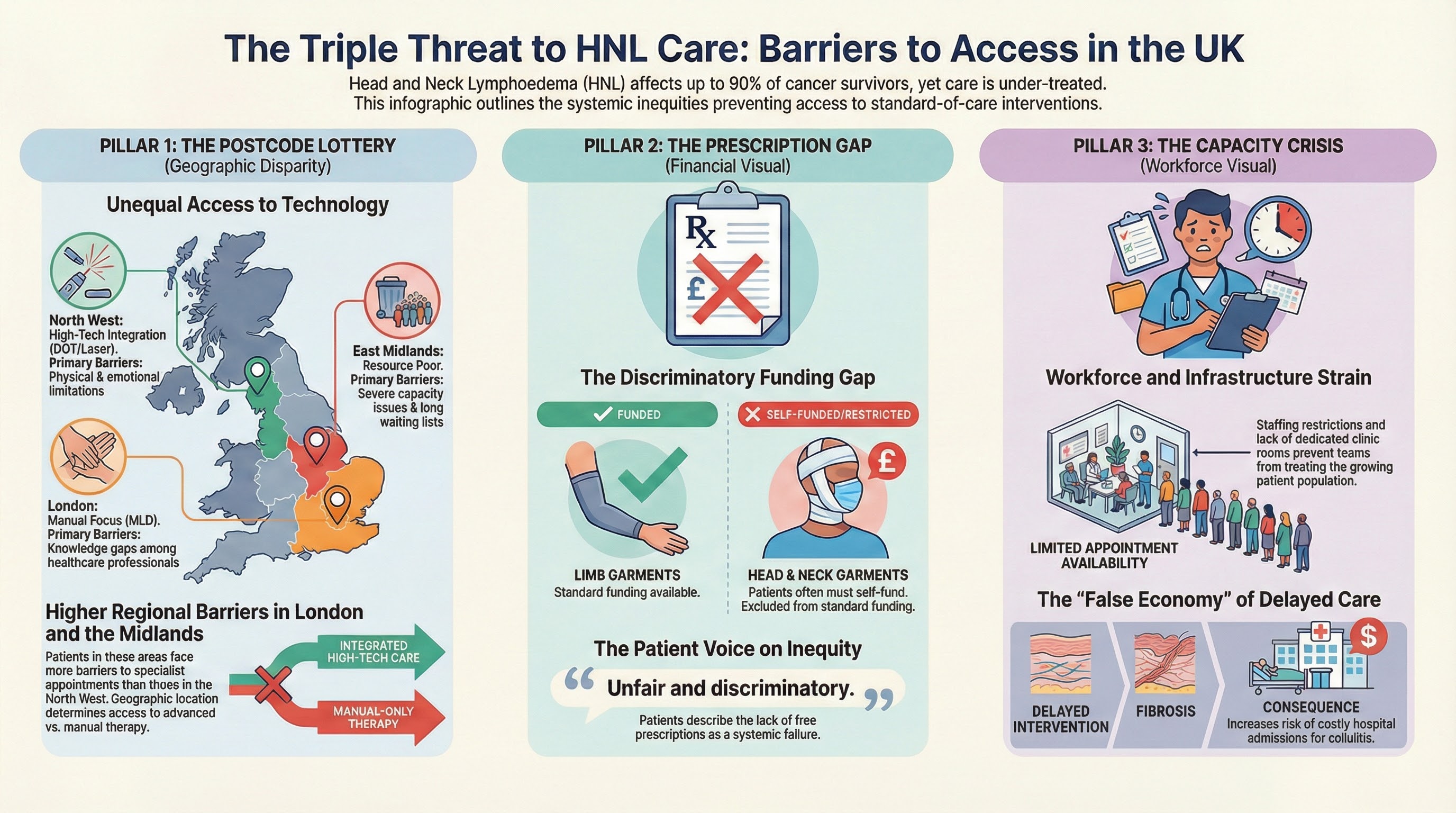
4.1 The "Postcode Lottery" of Service Provision: Analysis of the survey data reveals a fragmented treatment landscape, corroborating recent findings by Smith et al. (2025), which describe UK lymphoedema services as "disjointed, under-resourced, and randomly located". This mirrors the wider deficit in dedicated 'Late Effects' services (specialist post-radiotherapy clinics), which Julka-Anderson et al. (2026) identify as inconsistent across the UK. Despite a clinical incidence rate of up to 90% among head and neck cancer (HNC) survivors, the data indicate that access to specialist rehabilitation is frequently determined by geography rather than clinical need.
 
The survey identified distinct regional phenotypes in care delivery:

Clinical Availability: Regions with High Multi-Modal Access (e.g., North West, West Midlands): Respondents in these areas reported the highest access to multi-modal care, utilising Deep Oscillation Therapy (DOT) and Photobiomodulation (PBM) alongside manual therapy. This aligns with best practice recommendations for managing the heterogeneity of HNL symptoms.

Resource-Restricted Regions (e.g., East Midlands, London): Conversely, respondents in these regions reported severe capacity deficits. In the East Midlands, "long waiting lists" were cited as the primary barrier, with some patients unable to access any specialist care. In London, despite the density of teaching hospitals, patients reported relying on basic manual therapies and a perceived "lack of awareness" of advanced adjunctive modalities.

The Crisis in the Voluntary Sector:

A Real-Time Case Study: Instability in the voluntary sector (the third sector) further exacerbates this regional disparity. A clear example of this kind of unfairness happened on 30th January 2026 when the Mary Ann Evans Hospice Lymphoedema Service closed. Despite the unit's commitment to "integrated care"—having successfully utilised three charity-funded Deep Oscillation units to manage complex cases—rising operational costs and a lack of statutory NHS funding led to the service's cessation of operations.

This closure displaces a group of complex patients back onto the "Postcode Lottery", confirming the warning from Smith et al. (2025) that reliance on charitable provisions without NHS underwriting is unsustainable. It represents a "false economy", where the loss of preventative, hospice-based care inevitably leads to higher costs for the NHS through acute admissions for unmanaged complications.


4.2 Prescription Inequality and Financial Burden
 
A significant systemic inequity identified in the dataset is the discriminatory classification of head and neck compression garments compared to limb garments.
 
  • The Prescription Anomaly: Respondents highlighted that while compression garments for limbs are routinely available on NHS prescription (FP10), specific head and neck garments (e.g., Comfiwave) are often excluded or restricted. This creates a barrier to adherence, as patients described the policy as "unfair and discriminatory".
  • The "False Economy" of Non-Intervention: This lack of funding shifts the burden to the patient, with some respondents reporting self-funding "private surgeries" to resolve complications like sepsis. From a health-economic perspective, this represents a false economy. Webb et al. (2023) demonstrated that effective compression therapy is "cost-saving", significantly reducing the risk of recurrent cellulitis. Given that a single non-elective admission for cellulitis costs the NHS approximately £2,300—rising to over £100,000 for severe sepsis—the failure to fund preventative garments presents a substantial, avoidable fiscal drain. Furthermore, Lian and Atkin (2025) warn that gaps in compression provision—particularly during hospital admissions—perpetuate a 'cycle of delayed healing'. This creates a substantial burden; while Webb et al. demonstrated savings regarding cellulitis, Guest et al. (2020) established that the broader economic burden of unhealed wounds on the NHS remains substantial, reinforcing the need for preventative compression."


4.3 Workforce Capacity vs. Clinical Demand

The survey highlights a critical mismatch between the rising prevalence of HNC survivorship and the availability of a specialist workforce.

Capacity Crisis: NHS practitioners explicitly cited "staffing restrictions" and "difficulty fitting in MLD appointments" as major hurdles to delivering adequate care. This aligns with national data indicating that only 57% of treating clinicians hold full lymphoedema certification (135 hours), leading to a reliance on generalist staff who may lack the skills to manage complex HNL fibrosis.

Impact on Pathology: The inability to access timely care contributes to the progression of "reversible" fluid swelling into "irreversible" fibro-fatty tissue. Given the limitations of standard MLD for complex fibrosis, reliance on manual-only therapy places a greater physical burden on staff, necessitating adjuncts such as Deep Oscillation to improve efficiency and reduce the physical burden on an already overstretched workforce.


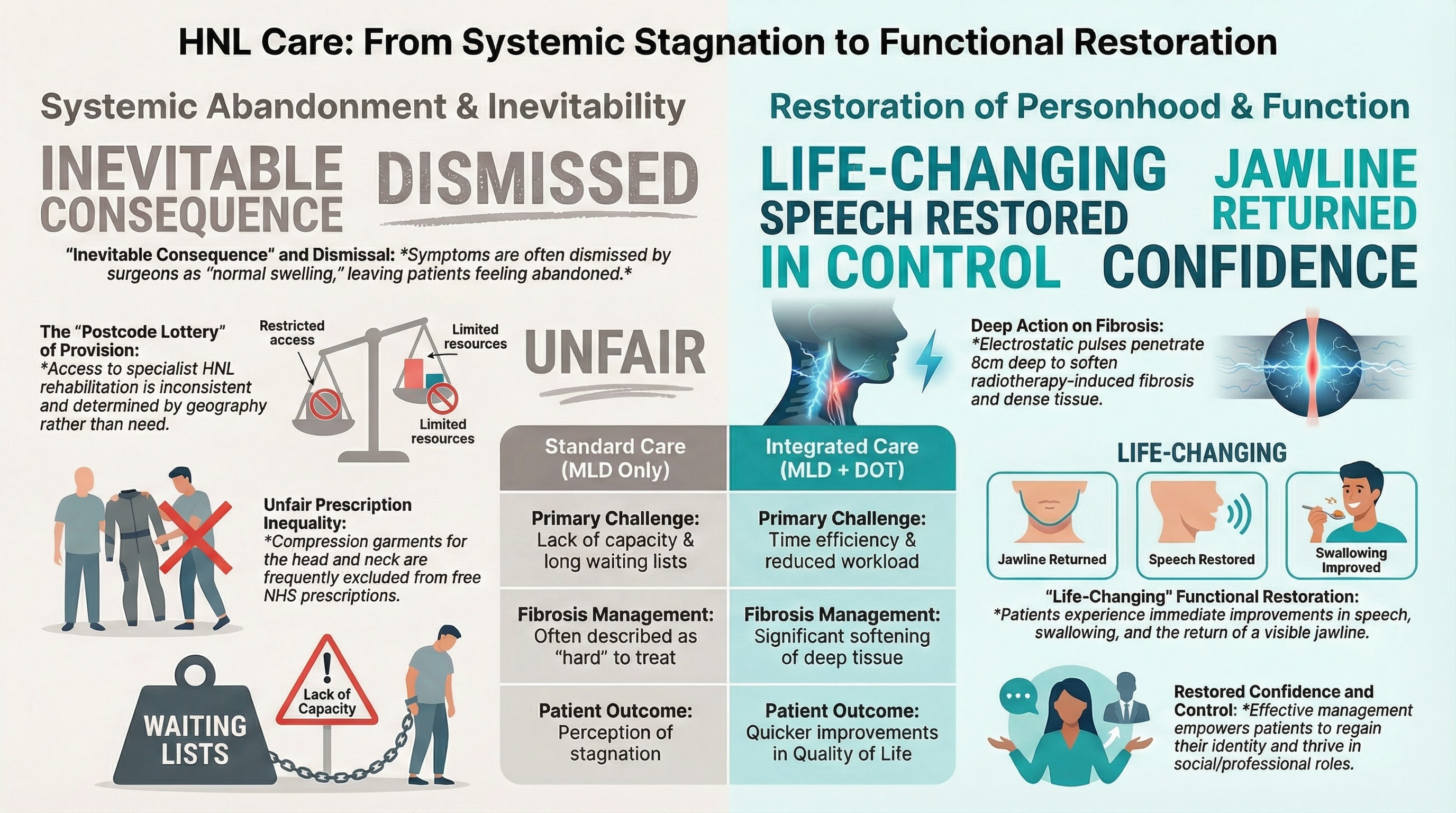
Geography, funding, and capacity depicted as three concurrent barriers constraining equitable access to HNL care across the UK


Figure 6: Barriers to Care – Systemic Inequities.

The survey highlights three critical barriers to effective HNL management: geographic variation in service provision ("Postcode Lottery"), the exclusion of essential head and neck garments from standard NHS prescriptions, and severe workforce capacity constraints that delay treatment.

Source: Phase 1 Analysis: UK Treatments & Experiences of Head and Neck Lymphoedema (HNL). © 2026 PhysioPod® UK Limited.


5.0 Results: Clinical Efficacy of Deep Oscillation Therapy (DOT)

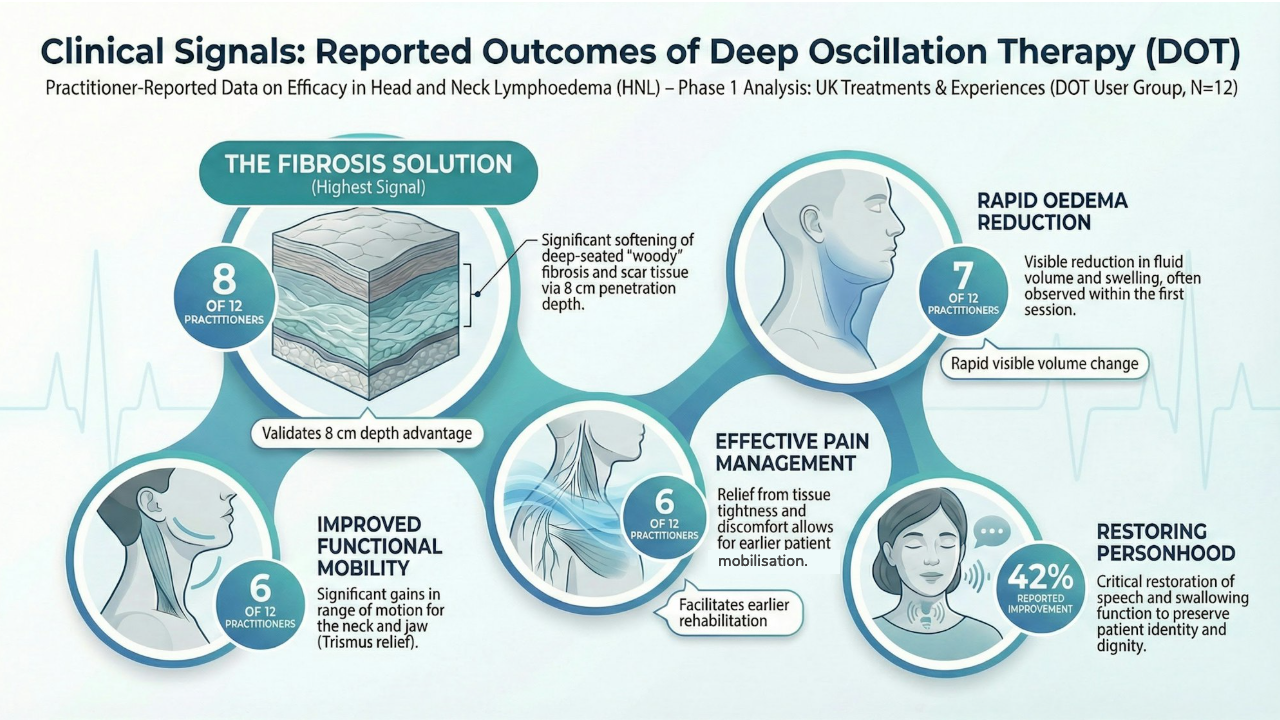
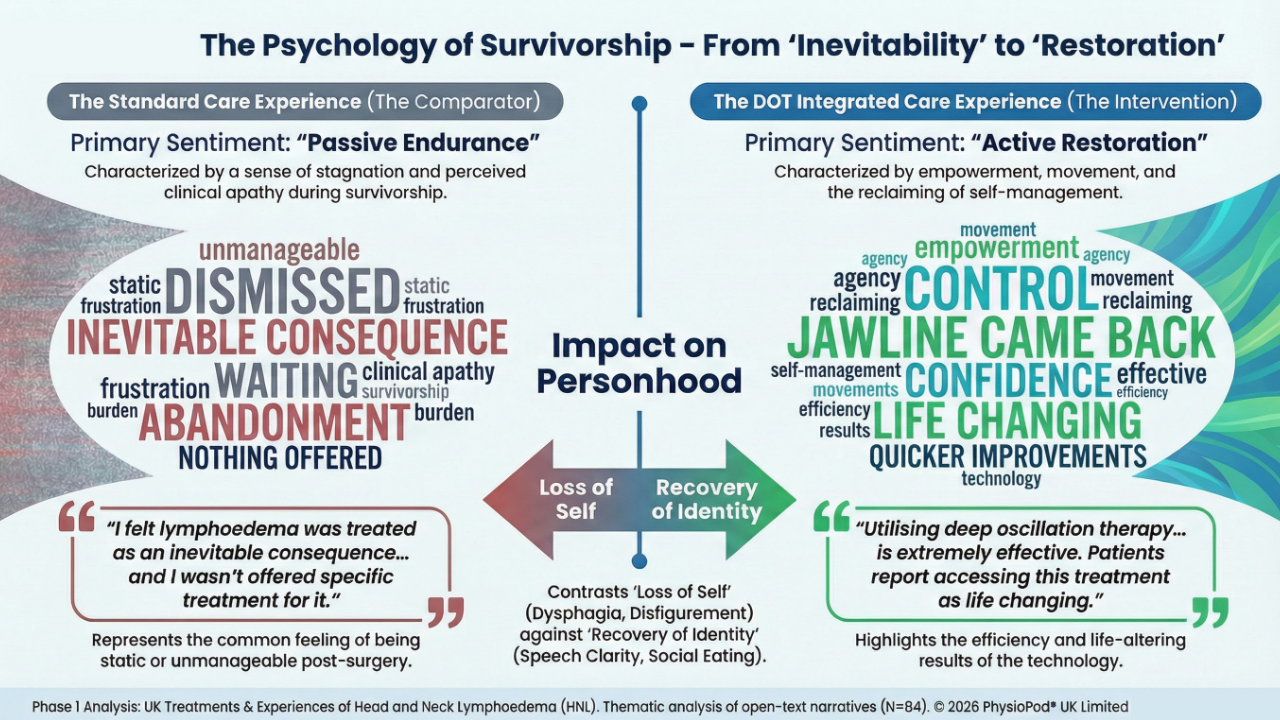
An overview of clinical findings from the DOT Group (N=12 practitioners) reveals a strong correlation between the use of Deep Oscillation Therapy (DOT) and the resolution of complex HNL symptoms. As illustrated in Figure 7 and detailed in Table 3, respondents reported outcomes consistent with the physiological mechanisms described in the literature, particularly regarding fibrosis softening and deep-tissue drainage.
 
 
Standard care associated with passive descriptors contrasted against DOT, which aligns with restorative themes such as speech and jawline recovery.
 
Figure 7: Clinical Signals: Reported Clinical Outcomes Specifically Attributed to Deep Oscillation Therapy.
 
Survey data (N=84) indicates a strong clinical signal for the efficacy of DOT, particularly in the softening of fibrosis and scar tissue which is often resistant to standard manual therapy.
 
Source: Phase 1 Analysis: UK Treatments & Experiences of Head and Neck Lymphoedema (HNL). © 2026 PhysioPod® UK Limited.


Table 3: Reported Clinical Outcomes Specifically Attributed to Deep Oscillation Therapy (DOT)
 
Practitioner-Reported Symptom Resolution (DOT User Group)
 
Clinical Indicator (Symptom Treated)
"Significant" Improvement (Frequency)
"Moderate" Improvement (Frequency)
Key Clinical Implication
Fibrosis & Scar Tissue Softening
 8
 1
Highest Clinical Signal: Supports the 8 cm depth advantage for treating dense, radiation-induced fibrosis that manual techniques cannot penetrate.
Oedema (Swelling) Reduction
 7
 2
Visible Change: Rapid reduction in fluid volume, often observed within the first session.
Mobility & Flexibility
 6
 3
Functional Gain: Improvement in neck and jaw movement (Trismus) is essential for eating and speaking.
Pain & Discomfort Relief
 6
 1
Patient Comfort: Reduction in tissue tightness and pressure, reducing the need for analgesic medication.
Functional Restoration (Speech/Swallowing)
 5
 4
Restoring Personhood: Directly impacts the ability to communicate and swallow, thereby reducing social isolation.
Source Data Note: The frequency data are derived from responses to the DOT User Group (Branches B & D) (N=12 practitioners using DOT), as detailed in Section 5.0 of the Phase 1 Analysis.


5.1 Fibrosis and Scar Tissue Softening
 
The management of fibrosis emerged as a distinct clinical advantage of DOT over standard care. Our survey findings identify this as the "highest signal" of efficacy (8/12 practitioners reporting "Significant Improvement"). These practitioner reports of fibrosis softening align directly with the deep-tissue mechanism detailed in Section 3.4.1. The reported clinical efficacy confirms the utility of the 8 cm penetration depth for mobilising the deep-seated "woody" induration in the submental and perilaryngeal spaces that superficial manual techniques fail to resolve.
 
 
5.2 Oedema Reduction and Pain Management
 
While oedema reduction was a consistent finding (7/12 practitioners reporting "Significant Reduction"), the analgesic effect of the therapy was equally prominent. Practitioners noted "Significant Relief" from pain, which Reinhold (2025) attributes to reduced pro-inflammatory cytokine (IL-8) levels and the mitigation of tissue acidosis. This analgesic effect is vital in HNL, permitting earlier mobilisation of the neck and jaw in patients who are otherwise too sensitive for standard manual therapy.
 
 
5.3 Functional Restoration (Speech, Swallowing, and Airway)
 
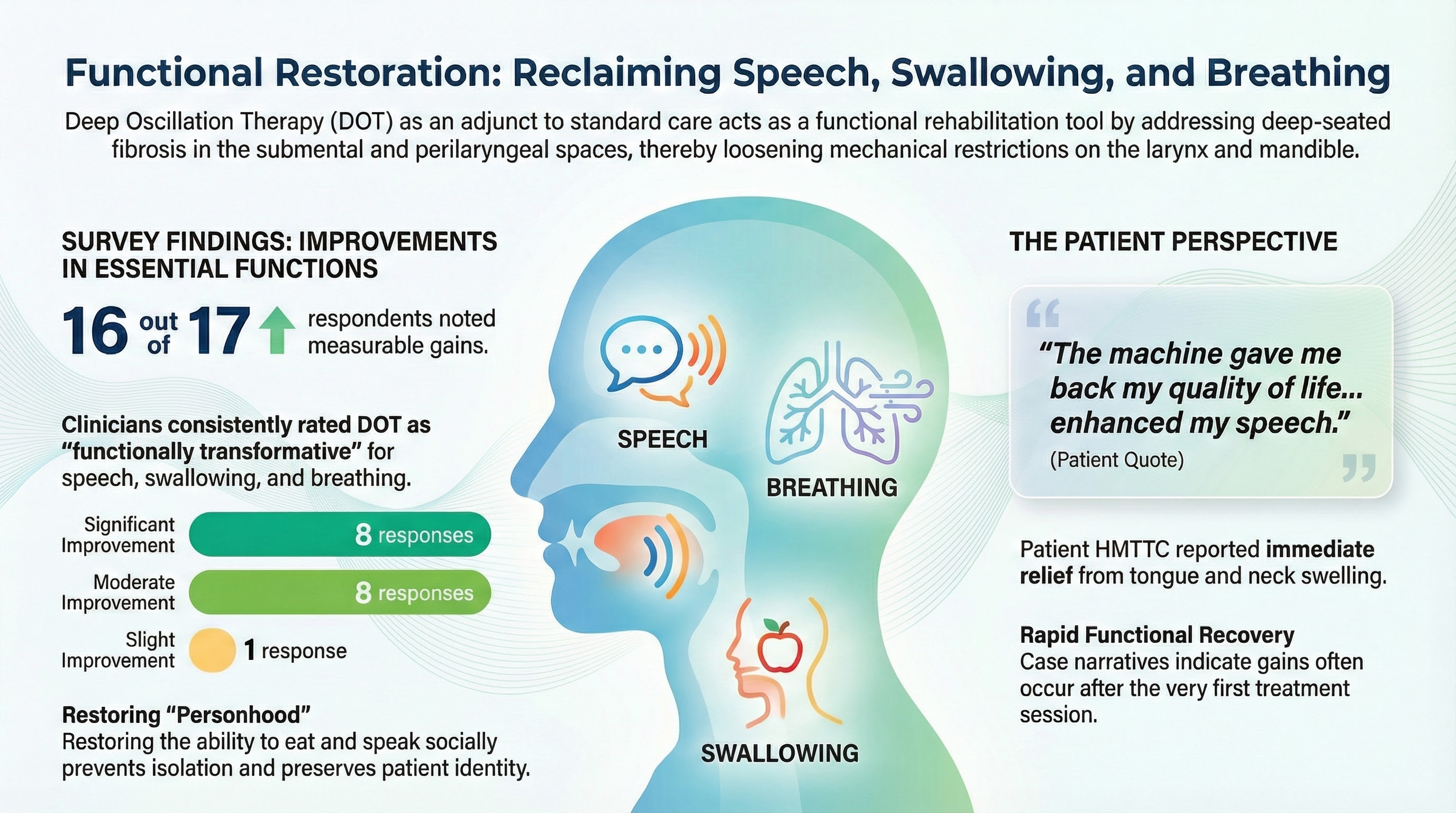
The data indicate that DOT acts as a functional rehabilitation tool. By reducing submental oedema and softening deep fibrosis, the therapy reduces the mechanical load on the larynx and mandible.
 

Quantitative Results: As detailed in Table 3, 5 out of 12 (42%) practitioners reported "Significant Improvement" in functional outcomes, with a further 4 respondents reporting "Moderate Improvement".

Clinical Implication: These improvements in speech and swallowing were identified as the primary drivers for recovering 'personhood' (Shah, 2025)—defined as the preservation of personal identity and dignity through the recovery of speech, swallowing, and normal facial appearance. These findings align with those of Halliday et al. (2020), who noted the utility of DOT in facilitating tissue relaxation in the head and neck to restore function.


Functional gains concentrated in speech, swallowing, and breathing, with most respondents reporting measurable improvement after DOT treatment.
 
Figure 8: Improvements in Essential Functions.
 
Beyond volume reduction, respondents reported that Deep Oscillation facilitated significant improvements in speech, swallowing, and breathing. By reducing laryngeal and submental oedema, the therapy helps restore the patient's ability to communicate and eat, directly impacting their 'personhood'.
 
Source: Phase 1 Analysis: UK Treatments & Experiences of Head and Neck Lymphoedema (HNL). © 2026 PhysioPod® UK Limited. 


5.4 Comparison: Standard Care vs. Integrated Modalities
 
Practitioner narratives and survey data suggest that Deep Oscillation Therapy (DOT) acts as a "force multiplier" for Manual Lymphatic Drainage (MLD). When comparing the "Standard Care Group" (MLD alone) against the "Integrated Care" group (MLD + DOT), distinct divergences in clinical efficiency and patient experience emerge.
 
  • Clinical Efficiency and Workforce Impact: NHS professionals using DOT reported that the modality yields "quicker improvements" in volume reduction compared to manual techniques alone. This "efficiency dividend" addresses the capacity issues identified in Section 4.0; practitioners noted that DOT reduces the physical fatigue associated with deep manual work, stating they "don’t get as tired as when doing MLD alone". This suggests a pathway to reduce the total number of clinical sessions required per patient while preserving the workforce.
  • Symptom Resolution: The Fibrosis Advantage: A clear efficacy gap exists regarding fibrosis management. In the standard care group, manual therapy was frequently described as insufficient for treating "solid" or "hard" induration. In contrast, the integrated care group consistently reported "significant softening", validating the utility of the 8 cm penetration depth for influencing deep-seated tissue that manual palpation cannot effectively resolve.
  • Patient Sentiment: Inevitability vs. Restoration: The comparative analysis reveals a psychological shift in patients treated with DOT. Patients relying solely on standard care frequently employed passive language, viewing their symptoms as an "inevitable consequence" of cancer survival. Conversely, patients receiving DOT utilised restorative language, citing improvements in "control" and "confidence". Notably, while standard care users focused on maintenance, DOT users focused on the return of visible identity markers, specifically noting that their "jawline came back".
