
Oncology Rehabilitation: Narrative Review Documents Evidence Base for Deep Oscillation
A 2026 Peer-Reviewed Review Evaluates the Clinical Safety and Role of DEEP OSCILLATION® in Supportive Care
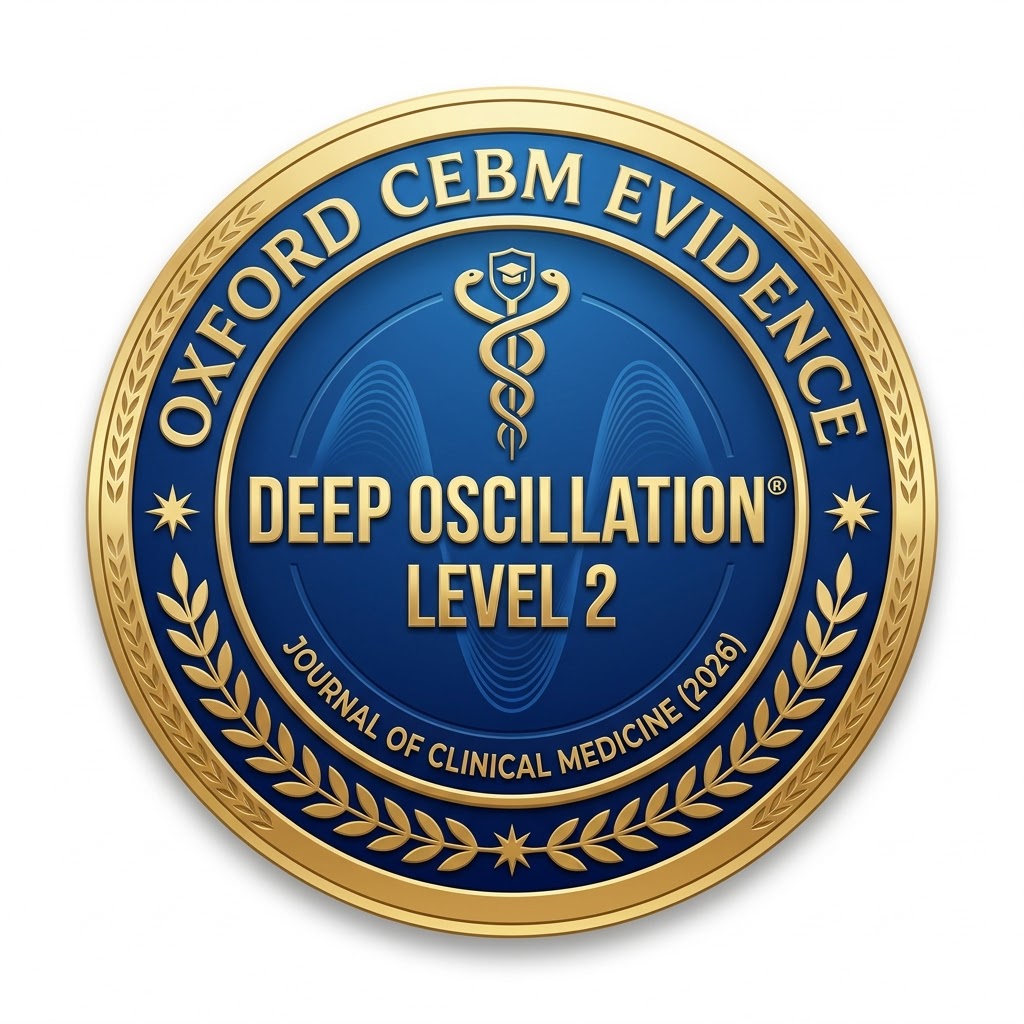
Source: Daia et al. (2026). Journal of Clinical Medicine, 15(5548).
Licensed under CC BY 4.0
Oxford Level of Evidence 2 Classification
Using the guidelines established by the Oxford Centre for Evidence-Based Medicine (OCEBM), the authors categorised physical modalities according to their clinical support in published studies. The review classifies Deep Oscillation under Oxford Level of Evidence 2 for selected supportive indications in oncology rehabilitation.
According to the compiled literature, the documented clinical evidence for Deep Oscillation in this field is concentrated in:
- The supportive management of secondary lymphoedema (particularly breast cancer-related lymphoedema).
- The reduction of localised swelling (oedema) and fluid pooling.
- Assisting with tissue softening to manage tissue tightness and physical discomfort.
Because of its low-intensity biophysical mechanism, the therapy is highlighted in the review as a well-tolerated option when traditional, more intensive manual methods cannot be comfortably performed.
Systematic Assessment of Safety
Clinical practices in lymphatic care have historically operated with strict caution regarding oncology diagnoses. The Journal of Clinical Medicine review provides a systematic analysis of the safety literature for physical modalities.
The review notes that no clinical or experimental evidence in the evaluated literature suggests that Deep Oscillation Therapy promotes tumour growth, cellular migration, or disease progression. When applied in accordance with established clinical contraindications and protocols, the therapy maintains an excellent safety and tolerability profile, aligning with the clinical safety observations documented in UK practices over the last twenty years.
An Individualised, Biology-First Approach
A core conclusion of the 2026 review is that electrophysical modalities should not be viewed as a single, interchangeable group of therapies. Instead, the authors suggest comparing physical therapy selection to pharmacological prescription, where safety and parameters must be tailored to the specific tissue presentation.
To support patient safety and comfort, the authors outline a framework for selecting physical therapies based on:
- The unique biophysical properties of the modality.
- The immediate biological state and sensitivity of the patient's tissues.
- The specific supportive and rehabilitative goals of the individual.
This approach aligns closely with contemporary, tissue-centred clinical reasoning—ensuring that technology is introduced as a logical, customisable response to a patient's immediate biological needs, rather than as a rigid, technology-first starting point.
Focus on Standardisation and Care Integration
As a natural sign of a scientifically maturing physical therapy, the authors emphasise that the future clinical development of Deep Oscillation relies on greater standardisation of care. The paper calls for continued research focus on unifying treatment protocols, session frequencies, treatment durations, and dosing parameters.
This call for standardisation is welcomed by the clinical community, as it provides a structured framework that allows lymphoedema therapists, surgeons, and oncologists to work collaboratively, ensuring patients receive standardised, non-thermal supportive care based on their individual tissue needs.
Scientific Reference
- Daia, C. O., Paduraru, D. N., Radu, L., Lipianu, I., & Bumbea, A. M. (2026). Electrotherapy in Oncology Rehabilitation: Current Evidence, Safety Considerations, and Future Perspectives. Journal of Clinical Medicine, 15(14), 5548.
