
Jane Wigg on New Courses for 2026 and "Uncomfortable Topics" for Lymphoedema Awareness Week
"Hello, what a fantastic start to the year we have seen at the Lymphoedema Training Academy! Courses are in full swing after a great Christmas break, and the Team and I are feeling energised and excited for the work ahead...
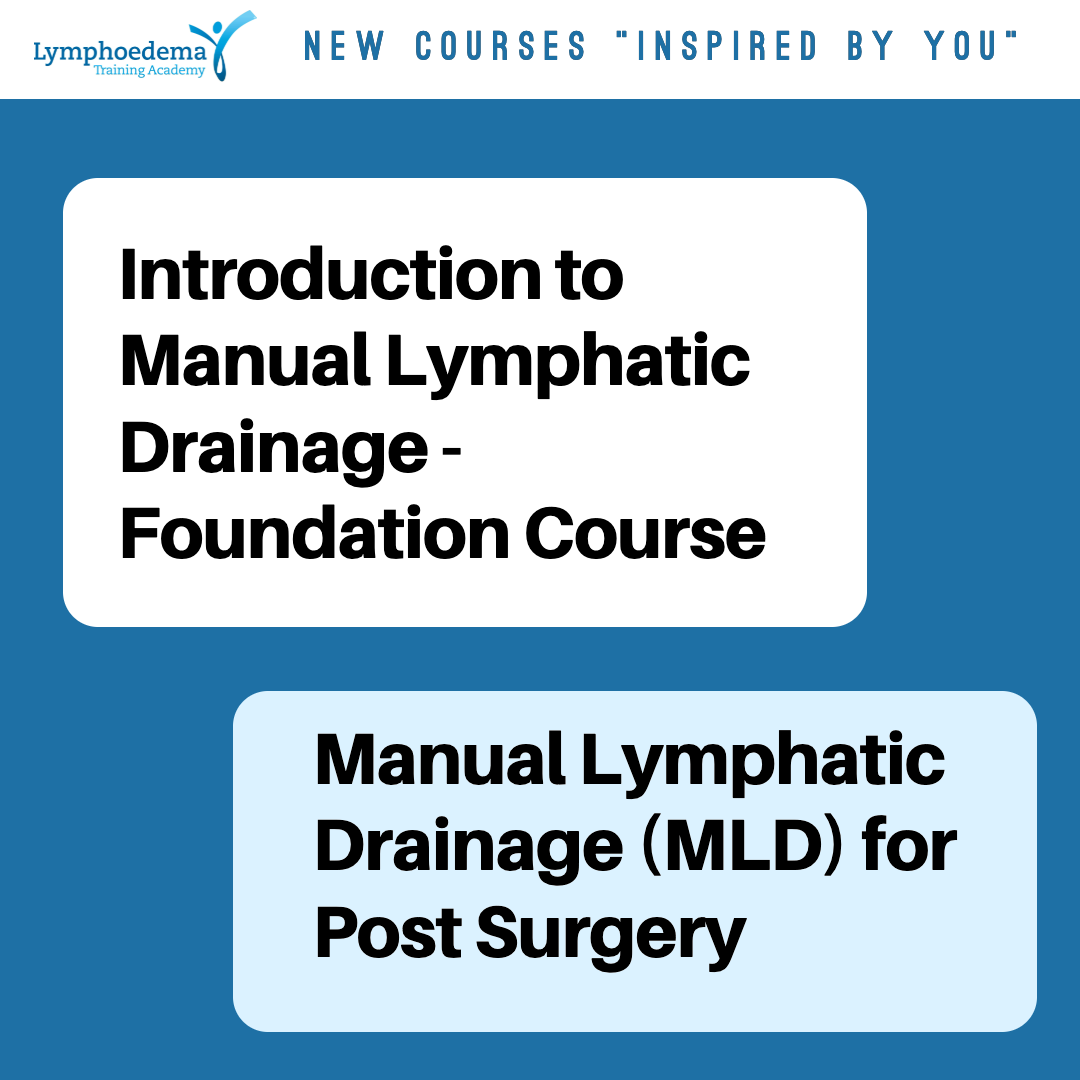
This year, we have launched two new courses, our ‘Introduction to Manual Lymphatic Drainage - Foundation Course’ and ‘Manual Lymphatic Drainage (MLD) for Post Surgery’. Inspired, as they often are, by your demand! Our foundation training, entry-level, will allow those who do not meet the entry requirements for our general training to attend and learn about Manual lymphatic drainage, its benefits, indications, contraindications, and hand movements. Allowing you to apply MLD to the healthy lymphatic system. This will add to their existing skill set and enable them to build on their attendance at our usual training programmes, which are a prerequisite for those not holding a full level 3 diploma.
Our post-surgical training will help therapists better understand how to support all clients with post-surgery lymphatic drainage and recovery. It will cover all types of surgery, such as joint replacement, cancer surgeries, and post-cosmetic procedures. We will be joined by many surgeons, who will provide their expert knowledge and pre-op and recovery programs. Detailing surgeries and what happens to the tissues/ muscles and bones, and how we can speed up and support recovery. This is not any post op surgical course, it’s an LTA one- building to support repair and recovery with an academy you can trust and be recognised for.
As a clinic, like many of you, we have seen an increase in clients being referred by their surgeons for post-operative MLD following liposuction and ‘mummy makeover’ type surgeries, to improve the outcomes and recovery period- so we hope that this training with give clients and surgeons the confidence that LTA Post-surgical Certified Therapists are appropriately trained to handle this specific type of MLD, and all of the considerations which go with it. We are also delighted that Karen Cooper, with her decades of expertise in this field, will be co-leading this training.
A Passion for Passion

Jane Wigg (RGN MSc)
As many will know from my previous writing, I have been working with people living with lymphoedema for over 30 years and in all that time, I have noticed that there are still things that therapists and patients find it difficult to talk about. Although many of their questions are answered at a lymphoedema appointment, such as ‘do I need compression’, ‘what exercise should I do’, ‘will it get worse’, all important questions, for many, there are questions left unasked, unprompted, and therefore, unanswered.
Questions which patients or clients may find difficult to verbalise, don’t know how to ask, or even if it’s a ‘thing’ and therapists who may be uncomfortable asking or broaching difficult questions.
However, comfort is not more important than care, and being uncomfortable as a therapist is not as uncomfortable as being a patient. I want to start breaking down barriers and discussing ‘The Things We Don’t Say’. This is my focus for Lymphoedema Awareness Week, but I hope the theme can be considered continuously and that everyone can join the movement to normalise the hard conversations.
What do I mean by hard conversations? I’m struck by how, even in healthcare, some nurses, therapists, and other professionals are embarrassed by ‘uncomfortable topics’. Using correct or even casual genital anatomy terms, talking about bodily fluids, and, well… SEX.

For me, The Things We Don’t Say covers:
- Hormones (and menopause)
- Intimacy and sexual wellness
- Contraception, conception, pregnancy and childbirth
- The physical changes following breast, gynae and genital surgery
- Men’s sexual health and wellness, and many more…
These are the topics patients approach me with these topics, even after living for years (or a lifetime!) with a lymphoedema or lipoedema diagnosis. At LymphVision, we are fortunate to be able to dedicate extra time to discuss these issues during our consultations, a benefit not all services can offer.
Although these subjects affect Quality of Life, given clinic constraints, both patients and therapists may not have the resources or time to delve deeper into open, genuine, and sensitive discussion, often leaving time dedicated to the practicalities of lymphoedema and lipoedema care. When we do, do we have answers, or where should we signpost?
Let’s cover a few subjects, but wait for Lymphoedema Awareness Week (LAW) to dive deeper.
Hormones… Hormones can play a huge part in lymphoedema and lipoedema. Often with onset occurring in puberty, pregnancy or menopause (rise and fall of hormones) and generally worsening at these times, with some recovery after the events. Some patients will notice cyclical changes in oedema, corresponding to phases of the menstrual cycle.
Hormones are also responsible for thyroid function, weight gain and ‘mood’, adding to reducing motivation in continuing treatment. I’m pleased that hormones are more understood than ever before, that hormone supplements and replacement therapy are more accessible, and that there is more talk about menopause than previous generations have ever had (where they were expected to largely suffer in silence). Yet have we considered what we are still not saying about hormones, and are you asking in detail about how cancer treatments and hormone changes have affected the lives of our lymphoedema population?
Hormones and menopause are closely linked to one of our more substantial topics. Intimacy. It’s difficult enough to discuss intimacy ‘anyhow’ without the added complication of lymphoedema. Many living with secondary lymphoedema will have experienced cancer, and the treatments and surgeries that come with that diagnosis. Many people will have found that intimacy is affected by the diagnosis, treatments, stress and other factors which all go hand in hand. Maybe intimacy is the last thing on your mind following cancer treatment, but it is a part of life, and people with primary lymphoedema have the condition almost all of their lives. This also has an effect on partners, too, and their right words and actions in different situations, and how to understand the effects and support.
Cancer Research, Macmillan, Maggie's, and TILWC all offer resources to provide support (links below). This provides resources for people, with concerns documented and accessible. However, when the issue is raised in the clinic, can you provide support? Specifically for lymphoedema, some of the hidden distress arises from radiotherapy or the slow onset of genital lymphoedema in males and females. Intercourse can lead to recurrent infection, known as streptococcal sex syndrome (SSS), as well as papillomatosis (fibrosed initial lymphatics), increasing the risk of infection, hygiene issues, and leakage. Late effects of radiotherapy can cause incontinence and bowel issues, leading to increased lack of confidence, reduced socialisation, psychosocial and psychosexual disturbances.
I talk a lot about ‘passion’- but not this type of passion. It’s not a subject I have formal training in, just anecdotal conversations with complex patients, making me passionate to improve care and the lives of those living with but suffering silently. I recognise that I am not the expert to address this, but we will be collaborating with a psychosexual therapist and women’s health physios over lymphoedema awareness week to fill in the gaps, and we’ll get to the bottom of this together (no pun!).
- https://www.macmillan.org.uk/cancer-information-and-support/impacts-of-cancer/sex-and-cancer
- https://www.cancerresearchuk.org/about-cancer/coping/physically/sex/effects
- https://www.maggies.org/support-information/living-with-cancer/managing-symptoms-and-side-effects/sex-intimacy-and-cancer/
- https://www.thisislivingwithcancer.com/content/Nurturing_Intimacy_While_Living_with_Cancer
We will cover many other subjects, but I’ll leave this here as food for thought.
What all of this means… During Lymphoedema Awareness week (LAW) I want to work with experts in these fields to get answers for you. But I also want to empower clinicians and therapists with the words, tips and answers to help them, and their clients have these conversations. I’ll be discussing a different theme, subject, or topic every day. This will be Answers, Advice, Tips, Tricks, Support, Resources and of course, expert and evidence-based information from trusted sources. We will use the ‘real’ words so you feel you can too; we will talk openly, honestly, and sometimes frankly so you can too. The more exposure (no pun again- sorry), the more awareness, and the better things will get. So, get comfortable, because things are about to get uncomfortable!
