Finding My Voice: The Vital Role of Speech Apps in Head and Neck Cancer Recovery
Karen Liesching-Schroder offers a raw and inspiring look into the realities of life after Head and Neck Cancer, highlighting the life-changing power of speech apps in helping patients reclaim their voices and their lives
Hello, my name is Karen Liesching-Schroder
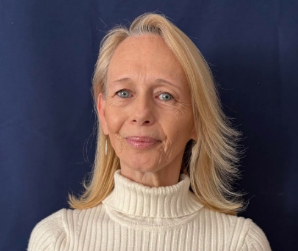
There is power in speech. I introduce myself to people using a speech app, because after going through life-changing tongue cancer surgery and radiotherapy 10 years ago, I can no longer pronounce my name properly. Something so simple for everyone, except for an H&NC patient who is now speech-impaired. The things we all take for granted are being able to talk and be understood by others, and join in conversations with multiple people. When Mary asked me to write about my experiences with speech apps, I was ecstatic because it was another opportunity to share this knowledge and to explain how speech apps can support patients on the head and neck cancer pathway.
For years, my husband or my children supported my communication by speaking on my behalf, but when it came to my job (which at that time was in education), I needed support to be understood. Having to constantly repeat myself was exhausting and didn’t really help people trying to work out what I was saying; it hurt my tongue and made me slur my speech more. When I first went through my surgery and radiotherapy, I was visited twice by a speech therapist (once in hospital after surgery, and then again after radiotherapy finished), who announced that I could “make do” with what I had and did not require speech therapy.
I wasn’t happy with this at the time, but it wasn’t up for discussion. It was after an incident 2 years later at work that my confidence was shattered and I was left with very little self-esteem, and my cancer nurse introduced me to a lovely young speech therapist who took great care of me and supported me with really tough exercises that were at times, almost impossible to do, they also were painful and exhausting on my poor partial tongue that I had been left with. My tongue wasn’t reconstructed during my surgery. Nerves were cut and then permanently damaged when I went through 6 weeks of intensive radiotherapy. My salivary glands were permanently damaged, which impacts my ability to be understood, too. I do rely on products to help with saliva and rely on different tools for communication.
My speech therapy department didn’t support speech apps, preferring exercises instead. However, not all patients can do the exercises, and it shouldn’t be one-size-fits-all. We, as patients, need options that will work for us. I completed my exercises 5 times a day for 3 years, and I was religious about completing them to the best of my ability. I even posted videos of myself doing them on my social media to bring awareness of what patients must do as part of their daily routine after these cancers, to make living their daily lives more manageable.
Just before COVID, I encountered the Mouth Cancer Foundation, a charity with many clinical ambassadors working to improve life after cancer for H&NC patients and their families. As I became more involved in the charity and became a patient ambassador, I was introduced to a speech therapist named Richard Cave, who connected other patients and me with a world where speech-impaired people can regain their voice through a voice app. This voice app was called Project Relate. It was only available to Android users, but it was free. I (the user) had to teach the app my particular speech algorithm, and it had to learn to decipher how I spoke to make it intelligible to other people.
Recording over 1000 voice cards was a lot of work for me, but it was worth it. It wasn’t always perfect, but it was amazing when it worked. A few years ago, I went through a risk assessment at the school where I worked, and it was approved for me to begin using this as needed. Unfortunately, Project Relate is no longer accepting new users, but Richard Cave and his team are now working on another voice app that will be available on both Android and iPhone, so I am looking forward to seeing how this develops.
I did experience some issues with adults in my workplace not liking me talking into a voice app and for it to talk to them, so I spoke with a fellow patient who has become a good friend and asked him for a recommendation of a speech app that I could type responses into and he suggested Speech Assistant AAC, which is free on Android phones and £19.99 on iPhones.
With this app, I was able to save common phrases and details like my full name, email, and mobile phone number. So I now had 2 options to choose from. The children in the nursery that I worked with loved hearing my “WhatsApp voice” or my “Robot voice,” and would encourage me to use it a lot. I was also able to type phrases into it, so I could then play them back to the children or staff if I couldn’t manage to say everything or if the environment was too loud for my voice to be heard.
From an emotional perspective, not being able to say my full name was a huge loss of identity for me. When I am in environments where I must introduce myself, my husband happily introduces us both if he is with me, saving me the awkwardness. However, on occasion, when I have been on my own, I literally stumble over my name, as it is no longer understood or recognised when I say it. While working in school, I became Mrs Schroder instead of Mrs Liesching-Schroder. When I realised it was never going to be possible, I decided saying it through a speech app was necessary, and I made sure that I had my speech app with me, ready to use. I remember years ago, dreading having to say my name to people, waiting for my turn, and just feeling very lost and incapable. That needed to change, and for me, the way it changed and took some power back was to be brave and use the apps.
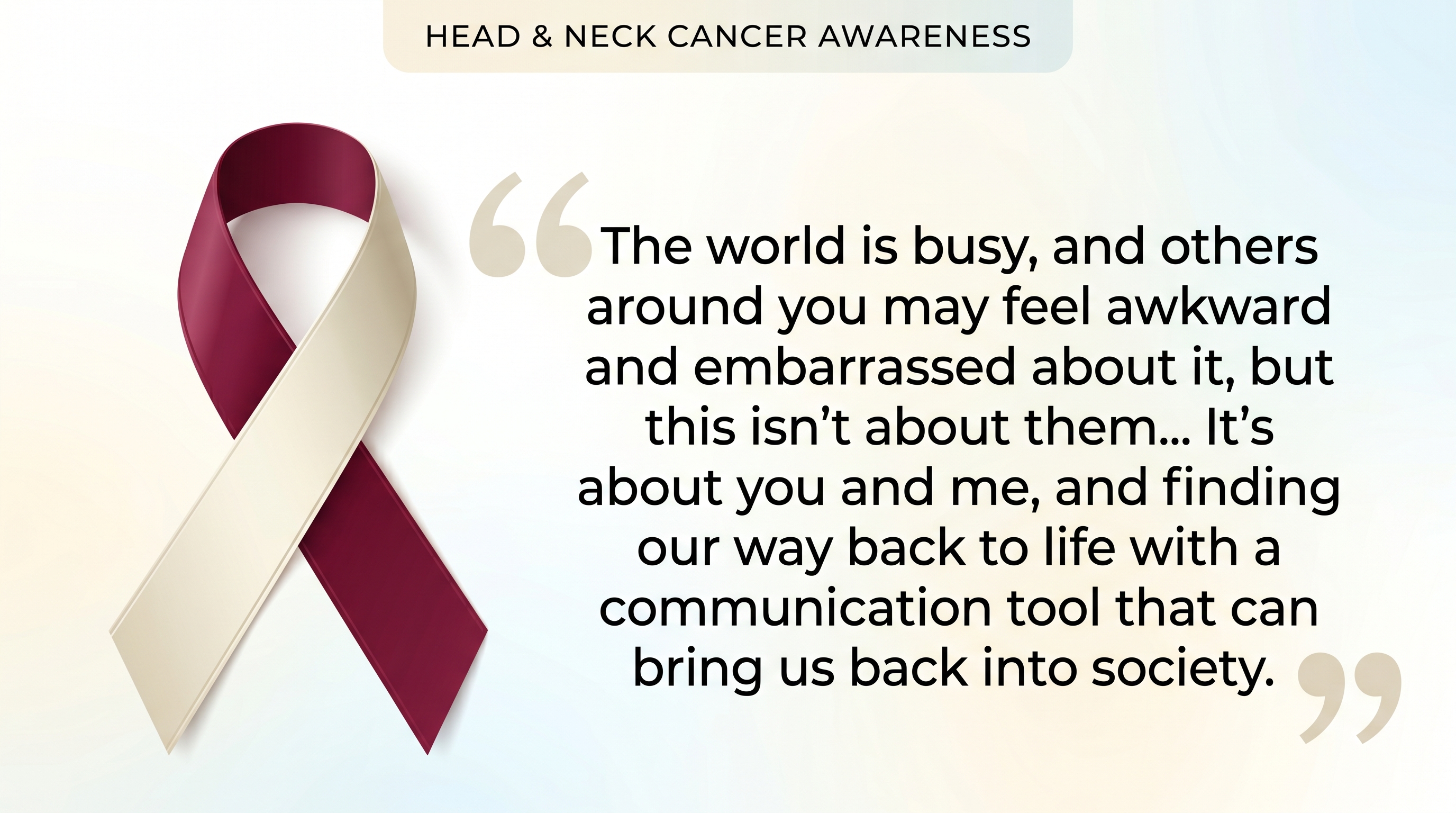
Let me be clear, though, the world is a very impatient place and can be judgmental (trust me, I have experienced this on so many occasions in the past) I will also be honest, it takes a lot of courage to start using a speech app, and if you are already feeling anxious or have been suffering from depression or low self-esteem, because of going through a life-changing diagnosis and treatment plan, being “different” can be challenging at times. The world is busy, and others around you may feel awkward and embarrassed about it, but this isn’t about them… It’s about you and me, and finding our way back to life with a communication tool that can bring us back into society.
When do I use the app? If Ian isn’t with me, I take it to use in a café with friends. I have used it during online meetings to introduce myself, even though my name is already on the screen. I use it at the Doctor’s to get an appointment, and I use it when I need to call to schedule one. Normally, I avoid talking on the phone as I find it triggering, but if I must call the hospital regarding appointments, I use my app to say and spell my name. I have used it to introduce myself on podcasts and when presenting to professionals and patients, as I believe this communication option needs to be more visible and discussed.
The reason for demonstrating it at professional presentations is so they can see how it works and, just maybe, signpost and encourage their patients to investigate these. I strongly believe that more speech therapy departments need to support patients by offering a variety of options to help them navigate life after treatment ends.
Through the Mouth Cancer Foundation, I co-host a 2-hour weekly support Zoom with the President of the charity, and we often have patients joining us who have such low confidence and low self-esteem because their speech is not well understood by others around them, and this invariably impacts their mental health and well-being. I know it did for me.
I remember reaching a point in my life on this medical pathway when I felt invisible to others and my voice no longer counted. I didn’t like how I sounded, and I had to constantly rethink sentences and words to speak, because some of the words I used couldn’t be understood, as they were lost in my translation. It probably sounds a bit dramatic to you, but when I worked in education, I had to think on my feet and find other words quickly while speaking when I was greeted with blank expressions. I also had to slow my speech down to try to sound clearer, which then made me sound like I had a learning difficulty (I am not alone in this, as so many patients I support have expressed the same sentiment).
Before I learned that speech apps existed, I think it is safe to say that I was depressed and had a low opinion of myself. Yes, I was continuing to work full-time in a very toxic environment with some colleagues who didn’t support my disability from cancer. However, while I worked, I distanced myself from many and to teaching colleagues I became invisible. The children, who were all accepting, embraced learning with me using my speech apps. As I have mentioned, some staff didn’t relish change, and when I used the apps, they would ask me not to as they found it either time-consuming or embarrassing, so I would eventually avoid entering into conversations with them and concentrate on using my apps with others who were more willing to give me time and space to communicate in the ways I needed. It made me realise that I had to dig deep at times.
Since walking away from a career in education and stepping into another dimension of raising awareness and education of a different kind, where I present, write articles, or speak at various support groups and meetings, my life has changed immeasurably and for the better. Through the support network I am involved with through the Mouth Cancer Foundation, I can see what is evident, and I will share this with you now. The depression rates among patients with H&NC are double those of any other cancer group, and the suicide rate is rising. I often encounter patients who say they don’t want to be here anymore. Why is this? When you think about the area affected by H&NC, it impacts our eating, drinking, talking, breathing, swallowing, and our intimacy. That is an awful lot of responsibility.
As patients, we look and sound very different after our surgeries and treatment, which is why options and support for these options are needed. If people can’t express themselves through speech, they can feel invisible, with nothing to contribute. I realise not everyone is good with technology. I, for one, am not, and in the early days I often asked fellow users of the speech apps to assist me because I was too scared to explore on my own. However, that is when support groups can help with discussions about the relevant speech apps others are comfortable using.
As patients, we find the speech apps that work for us, as there are different ones available. I remember trying one a few years ago that was only available on iPhones, but I found it hard to navigate, so I removed it. We are all different, and that is why it is good to find what works for us as individuals.
My communication is different, but using speech apps supports my disability through cancer, and I hope it can support you, too or the patients you support. Please feel free to reach out to me if you wish to discuss further.
On social media you can find me by my name, Karen Liesching-Schroder.
If you are not on social media platforms you can email me: karen_l_l_s@yahoo.co.uk
My new book, My Silver Linings, is available through York Bookstore and Amazon in paperback, and on Amazon Kindle, kobo and iTunes.
https://www.amazon.co.uk/dp/1919564500
My Silver Linings: A Memoir to Head and Neck Cancer and Late Effects with Friends