
Easing Pain and Tightness After Radiotherapy
Recovery from radiotherapy and surgery can lead to tissue tightness and scarring, causing neck stiffness, swelling, and restricted movement. Operating via the biophysical Johnsen-Rahbek effect, DEEP OSCILLATION® delivers gentle microscopic movement deep within the tissue to help soften dense collagen, ease scar adhesions, and restore natural lymphatic flow.

Radiotherapy and surgery are life-saving cancer treatments. As tissues recover, however, they may experience long-term changes known as radiogenic fibrosis. Tissue damage and excess collagen buildup can gradually cause soft tissue to become dense and restricted. Post-surgical scars can also act as physical barriers, impeding natural lymphatic flow. This can lead to neck stiffness, difficulty speaking or swallowing, and swelling.
So, how does patented Deep Oscillation help? It uses a non-heating, pulsed electrostatic field to create gentle microscopic movement deep inside the tissue—with zero downward pressure. This rhythmic attraction and release produces gentle endogenous microdeformations within the connective tissue, helping soften dense collagen, ease scar adhesions, and restore pliability. At the same time, these microscopic movements encourage natural fluid mobility across tissue boundaries.
Easing scar tightness helps re-establish lymphatic flow across surgical boundaries. At the same time, these microscopic movements gently open tiny lymphatic channels, helping move stagnant fluid out of the tissue. Deep Oscilation helps soothe sensitised pain pathways and hypersensitive tissue. By easing tightness around deep neck muscle groups, surgical scars, and lymphatic channels, Deep Oscillation gently supports fluid clearance, pain relief, and functional restoration.
Survivor & Charity Leader Perspective
However, while sitting in the car on the journey home, all I could think was, “WOW what a difference!” The pain had gone, and I had noticeably more movement.
The Biological Cascade of Radiotherapy
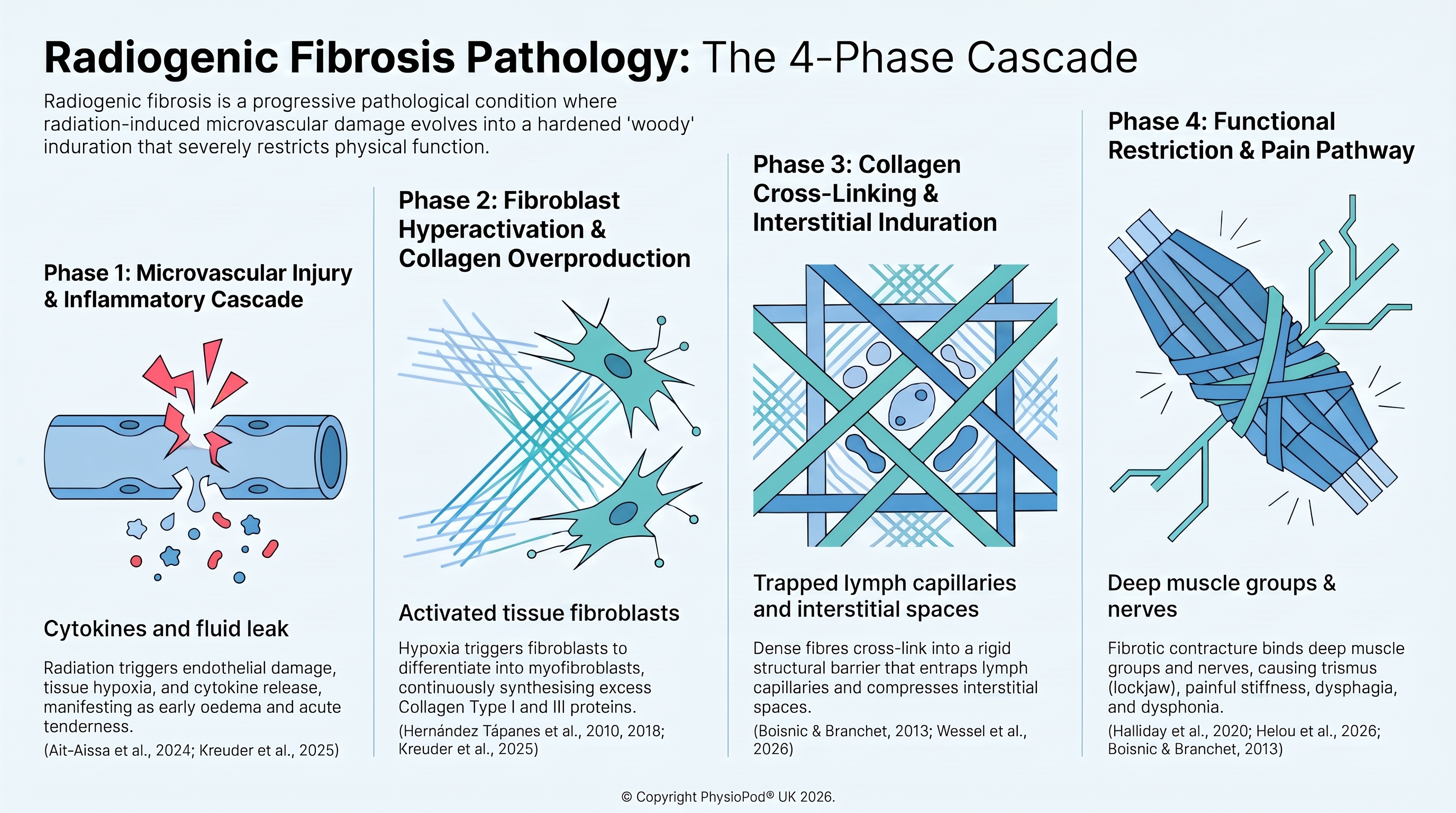
Figure 1: The 4-phase biological cascade of radiogenic fibrosis pathology in radiation oncology.
DEEP OSCILLATION®
This rhythmic interaction produces gentle endogenous microdeformations that may support tissue mobility and pliability, and may contribute to oedema management. [2, 3].
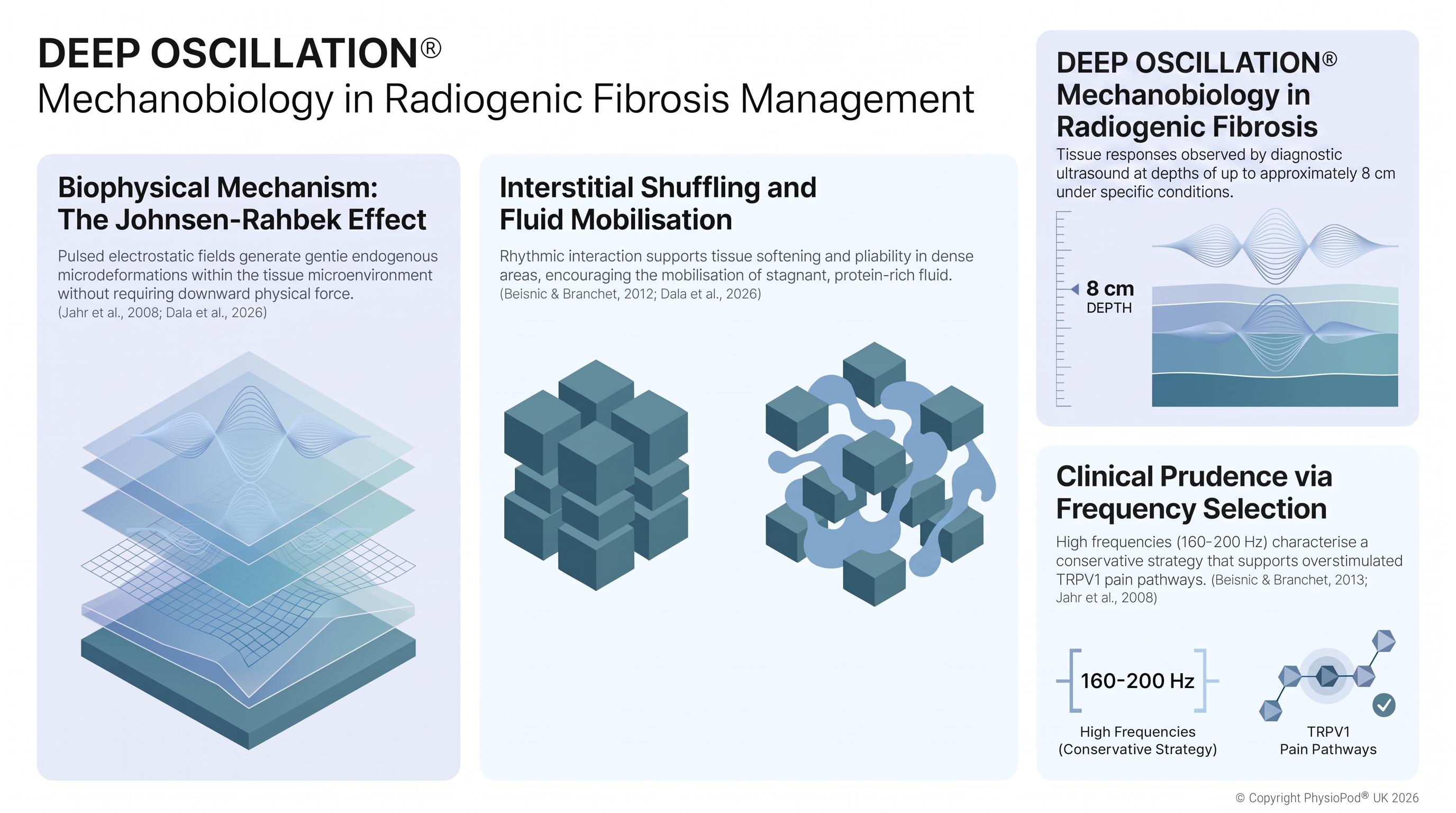
Figure 2: Biophysical mechanisms, observed tissue responses, and supportive care role of DEEP OSCILLATION®
Glossary
Athermic: A treatment modality that produces zero endogenous heat within body tissues, making it suitable over passive implants and delicate post-radiation skin.
Anchoring Filaments: Elastic fibres connecting initial lymphatic endothelial cells to surrounding connective tissue; gentle microdeformations apply tension to support capillary fissure opening dynamics.
Endogenous Microdeformations: Localised microscopic changes in tissue shape and tension generated within the tissue microenvironment itself via electrostatic attraction and release.
Interstitial Space: The fluid-filled extracellular microenvironment situated between cells and connective tissue fibres, serving as the primary target for DEEP OSCILLATION®.
Johnsen-Rahbek Effect: The biophysical phenomenon of electrostatic attraction established between semiconductor-insulated conductors, forming the operational basis of DEEP OSCILLATION®.
Radiogenic Fibrosis: Radiation-induced progressive tissue hardening characterised by excessive collagen deposition, microvascular restriction, and loss of tissue elasticity.
TRPV1 Pain Receptors: Sensory receptors involved in tissue pain signalling. Clinical applications using higher frequencies aim to support pain modulation and tissue comfort.
Further Reading: Phase 1 PhysioPod® UK Independent Service Evaluation on Head and Neck Lymphoedema - Full Open Text Narrative Review
References
- Ait-Aissa, K. et al. (2024). Short-term statin treatment reduces, and long-term statin treatment abolishes, chronic vascular injury by radiation therapy. Journal of the American Heart Association, 13(11), e033558.
- Boisnic, S., & Branchet, M. C. (2013). Anti-inflammatory and draining effect of the DEEP OSCILLATION® device tested clinically and on a model of human skin maintained in survival condition. European Journal of Dermatology, 23(1), 59–63.
- Daia, C. O., P?duraru, D. N. et al. (2026). Electrotherapy in Oncology Rehabilitation: Current Evidence, Safety Considerations, and Future Perspectives. Journal of Clinical Medicine, 15(14), 5548.
- Halliday, R., Gittins, S., & Ahsan, S. (2020). Evaluation of Deep Oscillation in Head and Neck Lymphoedema. Journal of Lymphoedema, 15(1), 24–30.
- Helou, V. et al. (2026). Measurement tools for radiation-induced fibrosis in head and neck cancer: A systematic review. Head & Neck, 48(7), 1012–1025.
- Hernández Tápanes, S. et al. (2010). Value of DEEP OSCILLATION® therapy in the healing of AB burns. Cuban Journal of Physical Medicine & Rehabilitation, 2(1), 1–10.
- Hernández Tápanes, S. et al. (2018). The Effect of DEEP OSCILLATION® in Fibrocystic Breast Disease: A Randomized Controlled Trial. International Archives of Medicine, 11(14).
- Jahr, S., Schoppe, B., & Reisshauer, A. (2008). Effect of treatment with low-intensity and extremely low-frequency electrostatic fields (Deep Oscillation) on breast tissue and pain in patients with secondary breast lymphoedema. Journal of Rehabilitation Medicine, 40(8), 645–650.
- Kreuder, L., Bissey, P. A., Yip, K. W., & Liu, F. F. (2025). Exploring radiation-induced fibrosis: biological mechanisms and new frontiers in research and therapeutics. International Journal of Radiation Biology, 1–16.
- Wessel, I., & Jensen, T. B. (2026). The Copenhagen Model: Advancing multidisciplinary strategies for dysphagia and supportive care after head and neck cancer. Current Opinion in Otolaryngology & Head and Neck Surgery, 34(3), 179–184.
