
Dealing with a Waterfall of Changes by Fiona Stevenson
Fiona Stevenson is an inspirational speaker, accessibility campaigner, and Macmillan reviewer. In 2025, she won the RDA Creative Writing Competition with her moving account of transitioning from physical horse riding to carriage driving at the Cavalier Centre in Much Wenlock. Her journey of overcoming intense physical barriers, learning to drive a pony carriage directly from her seat, and building immense self-confidence has fueled her passionate advocacy for disabled people.
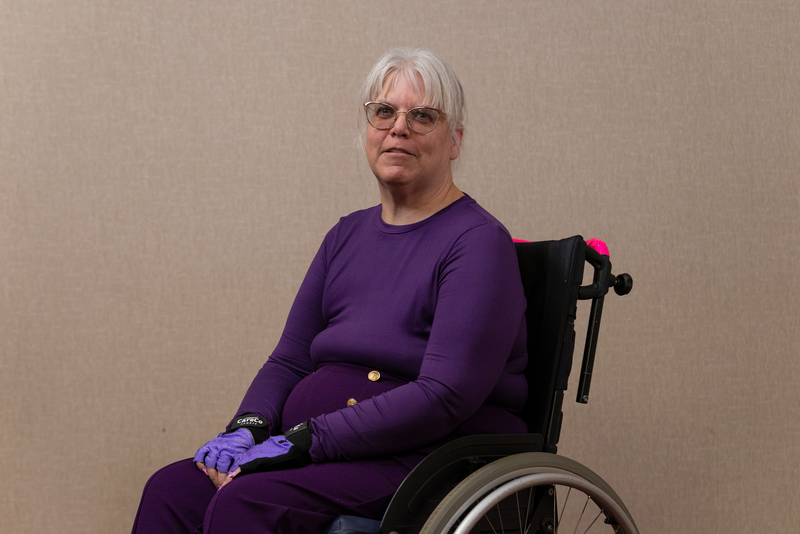
People often tell me how resilient I am. The truth is, disabled people have little choice. We adapt because we have to. We overcome barriers because there is no alternative. But recently it feels as though the barriers are no longer appearing one at a time—they are arriving as a waterfall. Every time I deal with one change, another follows.
Executive Policy Impact Matrix
The following table outlines the individual policy adjustments I am navigating and how they accumulate to create severe financial and physical barriers:
| Policy Area | Specific Decision & Rules | Financial & Practical Impact | Lived-Experience Reality |
|---|---|---|---|
| Motability Scheme | Adjustments to the annual mileage and tyre allowances. | Restricts my ability to travel, forcing me to carefully evaluate "every unnecessary journey". | My vehicle is not a luxury; it is my vital lifeline for hospital visits, campaigns, and meetings. |
| Universal Credit | Managed migration resulting in a "Surplus Income" assessment. | Assumption made that I have excess money on paper, ignoring the reality of disability living costs. | Extra daily costs (equipment, heating, transport) immediately absorb any paper "surplus". |
| Council Tax | Reassessment triggered directly by the change in the benefits system. | Resulted in an "enormous increase" in my Council Tax bill. | Feels like a penalty simply because the administrative benefits system changed. |
| Social Care | The Universal Credit "Surplus Income" figure was applied to my social care financial assessment. | My monthly care contribution skyrocketed from £0 to £725.01 every month. | A devastating, life-changing financial shock that creates severe hardship. |
| Patient Transport | Policy restricting transport only to individuals with "crash-tested" wheelchairs. | Deems my current wheelchair unusable for transport, forcing a referral for a new assessment. | Triggers an exhausting cycle of more waiting lists, paperwork, appointments, and anxiety. |
The Motability Changes: A Lifeline Restricted
Like thousands of other disabled people, I rely on my Motability vehicle. It isn't a luxury; it is my independence. It gets me to hospital appointments, meetings, speaking engagements, shopping, and the many places where I campaign to improve accessibility for everyone.
However, changes to the scheme's annual mileage and tyre allowances have made many of us question whether our vehicles will continue to meet our needs. When your vehicle is your lifeline, policy changes become deeply personal.
Forced onto Universal Credit & The "Surplus Income" Trap
The next wave came with the managed migration to Universal Credit, where I was told I had "Surplus Income". It is a phrase that sounds reassuring until you realise it bears little resemblance to reality.
Despite this reality, being assessed as having "Surplus Income" has had immediate, far-reaching, and penalising consequences.
The Council Tax Shock
One of the first consequences was an enormous increase in my Council Tax bill. It felt as though I was being penalised simply because the benefits system had changed. For many disabled people, these increases have been extraordinary, leaving households wondering how they are expected to find the money.
The Skyrocketing Cost of Social Care
Unfortunately, it did not stop there. The same "Surplus Income" assessment was then applied to my financial assessment for social care.
- Previous Care Contribution: £0 / month
- New Care Contribution: £725.01 / month
Seven hundred and twenty-five pounds every month is not a small adjustment—it is life-changing. If this money is supposedly "surplus," why does paying it create such immediate financial hardship?
Transport Barriers & The Wheelchair Dilemma
Just as I was trying to understand these financial changes, Patient Transport informed me they would only transport people whose wheelchairs are crash-tested. My current wheelchair, which has given me my independence, does not meet this standard.
This means being referred for yet another wheelchair assessment. While safety is vital, another assessment means more appointments, more waiting, more paperwork, and another major change to adapt to. It is one more piece added to an already overwhelming jigsaw.
The Cumulative Reality
People making decisions often look at each policy in isolation. They see:
- One change to benefits.
- One change to Council Tax.
- One change to social care.
- One change to transport.
- One new wheelchair assessment.
Individually they may seem manageable. Together they become exhausting.
Disabled people are spending increasing amounts of time navigating uncoordinated, siloed systems. The emotional impact is every bit as significant as the financial one. Independence begins to feel fragile, confidence is replaced with uncertainty, and energy that could be spent contributing to society is instead spent trying to survive the latest rule change.
A Call to Action: We Need Joined-Up Thinking
I am not asking for sympathy. I am asking for joined-up thinking.
When Government departments, local authorities, and organisations introduce changes, they must look beyond individual policies and consider the cumulative impact on real lives. One decision triggers a chain reaction that leaves people financially and emotionally overwhelmed.
- Ask Disabled People: Before introducing new rules, consult those affected.
- Listen to Lived Experience: Learn from the real-world trials of those navigating these systems.
- Conduct Meaningful Impact Assessments: Move beyond spreadsheets and statistics to see the human faces behind the numbers.
When individual changes are allowed to become a waterfall, it is people's independence, wellbeing, and quality of life that are swept away.

Read more from Fiona (Fee) Stevenson
