Beyond MLD: What I’ve learnt about recovery and why I’ve introduced Deep Oscillation
Rachel Fincham, Lymphara Clinic, Cheltenham

My Personal Recovery Journey
I sometimes wonder whether I’d be doing what I do now if I’d had a completely straightforward recovery from my own surgery.
In 2021, I travelled to Lithuania for a mummy makeover. I’d researched the surgery, prepared myself as best I could and knew that recovery wasn’t going to be particularly glamorous. What I hadn’t anticipated was how much I’d need someone knowledgeable to turn to afterwards.
During my stay in Lithuania, I received daily manual lymphatic drainage (MLD), which I found really helpful with the swelling and discomfort. Back in the UK, I wanted to continue with it, but finding someone who genuinely understood post-operative recovery proved much harder than I’d expected.
I ended up having what was described as MLD, but involved oil and massage techniques that were very different from what I’d experienced abroad. I subsequently struggled with significant swelling and changes in my tissues. Looking back, the biggest thing wasn’t even the physical discomfort. It was feeling quite alone with it all. I had so many questions about what was normal, what I should be doing and whether things were healing as they should.
I didn’t need someone to tell me everything was fine. I needed someone who understood the surgery I’d had, could give me sensible advice and would know if something needed checking.
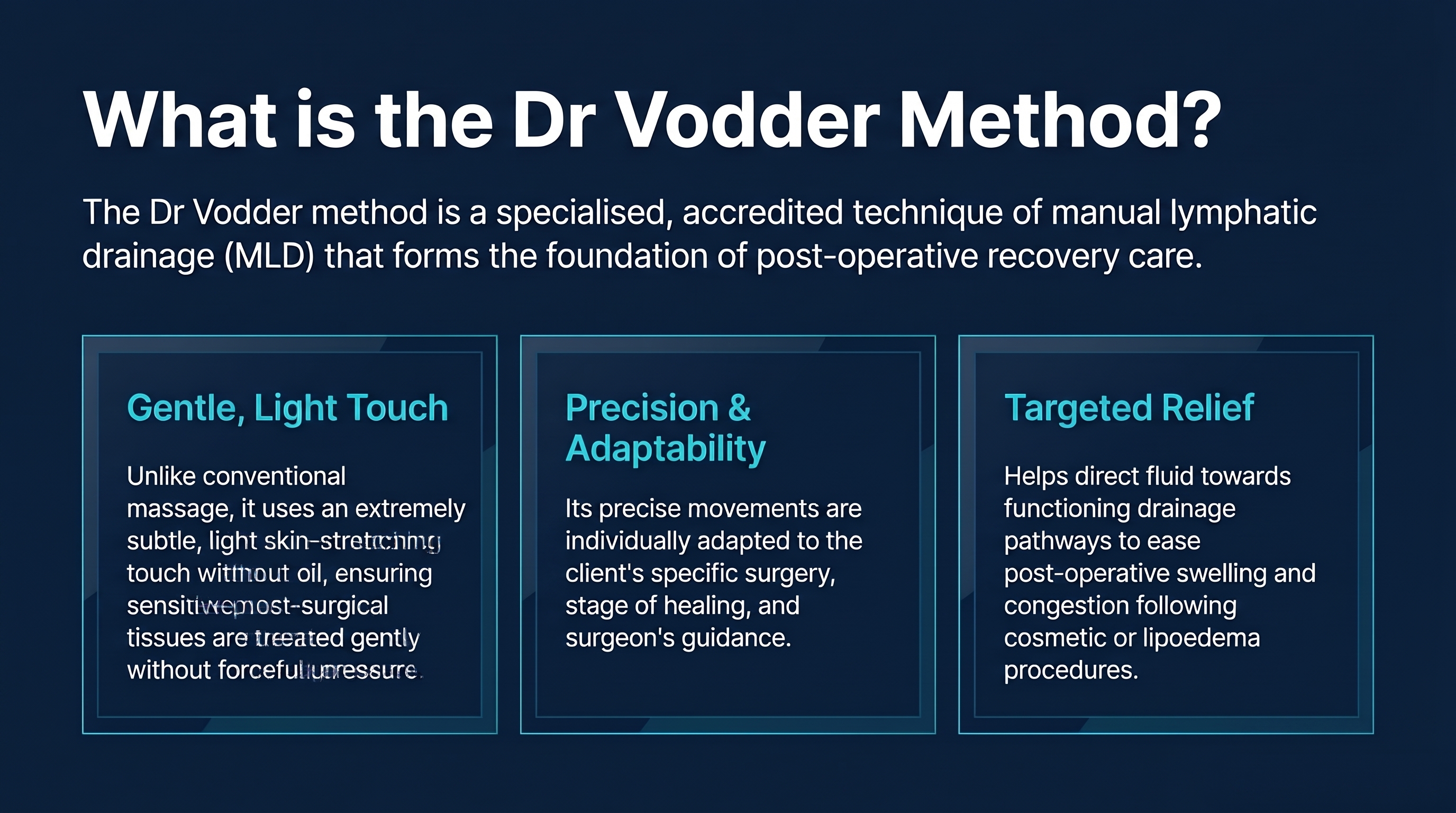
That experience stayed with me. It was a big part of what eventually led me to train in the Dr Vodder method and establish Lymphara Clinic in Cheltenham.
What I’ve Discovered Working with Post-Operative Clients
Today, I specialise in recovery following cosmetic and lipoedema surgery, and I can see so much of what I experienced reflected in the people who come to see me. I work with clients following tummy tucks, liposuction, breast surgery and body contouring, alongside people recovering from liposuction for lipoedema.
Although their procedures can be very different, the questions are often remarkably similar. Is this swelling normal? Why does one area feel harder than another? Should my compression garment be digging in like that? Why do I feel worse today when I was doing so well yesterday?
And it’s rarely as simple as someone arriving, having their MLD and leaving. Compression alone can take up a surprising amount of an appointment. I’ve had clients arrive with layers of garments, foam and padding that all need carefully removing and putting back on. Sometimes the garment isn’t fitting properly, or the swelling has changed enough that what worked last week isn’t working now.
With lipoedema surgery, this can be particularly involved. Clients may have undergone extensive liposuction across their legs or arms, sometimes as one stage in a series of operations. They can be exhausted, sore and understandably anxious about getting everything right.
There are also clients further along in recovery who are worried about firmness, tightness or changes in the texture of their tissues. I’ve learnt that you can’t just follow the same treatment routine for everyone. You need to understand what surgery they’ve had, how far along they are, what their surgeon has advised and what’s actually happening in front of you.
Sometimes the most useful part of an appointment is MLD. Sometimes it’s helping someone get their compression right or explaining why their swelling may fluctuate. And sometimes it’s recognizing that something needs medical review, rather than trying to treat it. Most post-operative healing progresses normally, but if something falls outside therapist scope, I work alongside an experienced prescribing district nurse with specialist wound-care expertise and keep surgical teams informed where appropriate.
That’s the part of post-operative care I find so interesting—it’s never quite as straightforward as it looks from the outside!
Why I Started Looking into DEEP OSCILLATION® (HIVAMAT®)
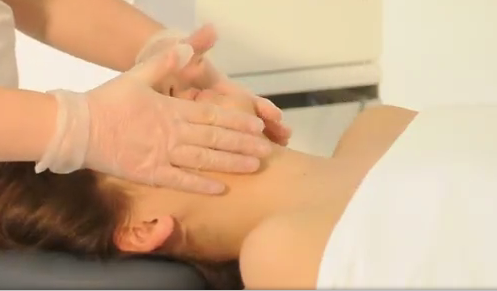
MLD remains the foundation of my work. I love the precision of the Dr Vodder method and how gently it can be adapted to sensitive tissues. But as I’ve worked with more surgical clients, I’ve become increasingly interested in what else might be useful alongside it.
There are times when someone is particularly tender or uncomfortable, and you really don’t want to introduce unnecessary pressure. There are also different stages of healing when the concerns shift from initial swelling towards tissue firmness, scar development and how comfortably someone is moving.
I’d been researching different approaches to post-operative tissue recovery, and Deep Oscillation kept coming up.
(Note: You may also hear Deep Oscillation referred to as HIVAMAT, particularly if your plastic or lipoedema surgeon has included it within your post-operative aftercare protocol).
What caught my attention was that it works deep without relying on the mechanical pressure or heat of conventional massage. The technology uses a pulsed electrostatic field to create a rhythmic attraction and release within the tissues beneath gloved hands or an applicator. It produces a distinctive oscillating effect, even though the therapist is using very little pressure.
That was particularly interesting to me because so much of my work involves people whose tissues are already sensitive following surgery. I wanted to understand whether it could give me another way of working alongside MLD, rather than simply doing more of the same.
I looked into the technology, its applications and the available research before deciding to invest in the Deep Oscillation Personal Pro and undertake specialist training with PhysioPod® UK. I’m not interested in having a piece of equipment just because it’s the latest thing—if I’m going to introduce something to the clinic, I want to know why I’m using it and what I hope it will contribute.
So, How Am I Finding It?
It’s still early days, which I’m quite happy to admit. I’ve started incorporating Deep Oscillation into selected post-operative appointments alongside MLD, rather than automatically adding it to everyone’s treatment.
One thing I’ve found particularly interesting is how clients experience the two treatments. People are often a bit apprehensive before their first MLD appointment, expecting something firm or worrying it will hurt. Then I start treating them and they are genuinely surprised by how light the touch is. Because we associate effective massage with pressure, gentle Vodder MLD can sometimes feel almost too subtle.
Deep Oscillation creates a different impression. Clients can feel that distinctive rhythmic sensation, and I’ve noticed they often seem more convinced that something is happening, even though the treatment itself is still very gentle. One client recently shared that she loved the sensation and felt she got even more from her appointment when we combined Deep Oscillation with MLD.
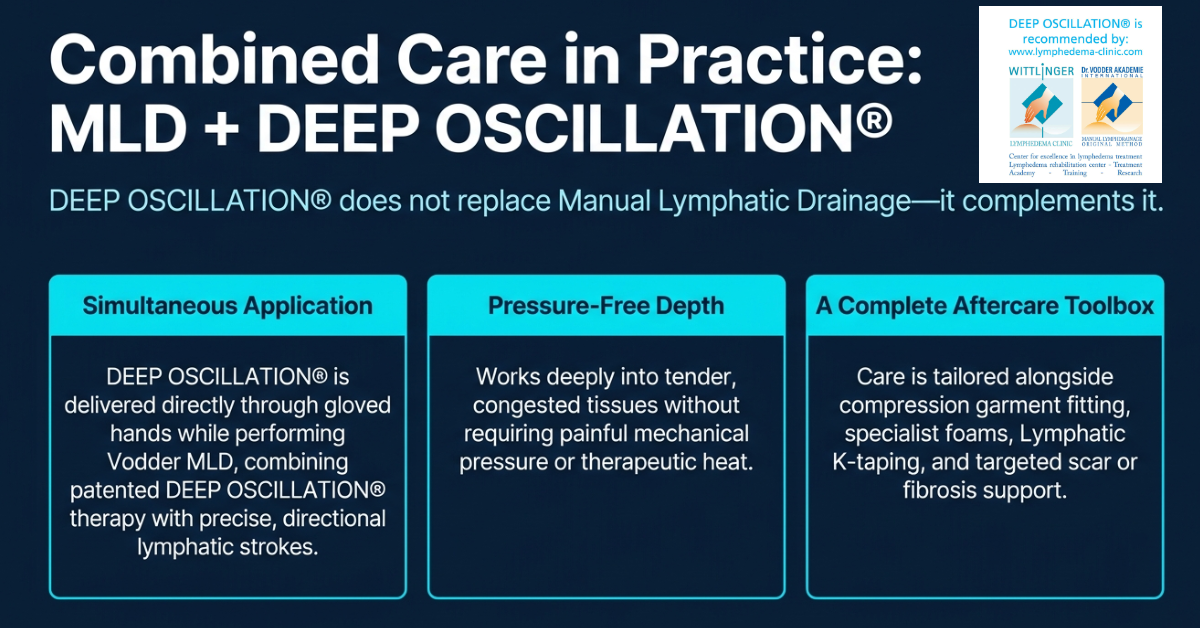
What also gave me confidence in investing in Deep Oscillation was the clinical research behind it. Studies have reported encouraging results for pain and swelling, including research looking at Deep Oscillation alongside MLD in post-operative rehabilitation.
For me, that combination of published research, specialist training and the way the treatment complements my existing MLD work made it a really valuable addition to Lymphara. But I don’t see it replacing MLD, compression or the other aspects of recovery care. It’s another option I can consider depending on the individual.
The Thing I Keep Coming Back To
When I think about why I started Lymphara, I always come back to how I felt after my own surgery. I was uncomfortable, worried about whether things were normal and trying to make sense of conflicting advice. I would have been so grateful for someone who really understood post-operative recovery and could talk me through it without making me feel silly for asking questions.
I see that same need in my clients now. Someone might come in asking for lymphatic drainage, but what they really need is a combination of appropriate hands-on treatment, help with compression fitting, practical advice and someone who will take their concerns seriously.
That’s what I’m trying to provide. As Lymphara grows, I want to keep developing my knowledge and the treatments I can offer, but without losing sight of that. Deep Oscillation is a really interesting addition, but the important thing isn’t how many treatments I can offer—it’s understanding which ones make sense for the person in front of me, remembering there’s a person going through recovery, not just a swollen area that needs treating.
Preparing for Surgery or Navigating Recovery?
Whether you are planning an upcoming tummy tuck, liposuction, breast surgery, or lipoedema reduction, having structured, knowledgeable aftercare makes all the difference.
If your surgeon has recommended post-op MLD or requested specific HIVAMAT / Deep Oscillation protocols, send over your surgeon's aftercare instructions when you enquire. We can create a tailored recovery plan to support you safely every step of the way.
Enquire About Post-Op Care at Lymphara Clinic
About Rachel Fincham
Rachel Fincham is the founder of Lymphara Clinic in Cheltenham, Gloucestershire, offering clinic-based care and select mobile recovery visits across Gloucestershire and the Cotswolds.
She is an MLDUK-registered specialist therapist with advanced certifications including:
- Dr. Vodder Academy Manual Lymphatic Drainage & Combined Decongestive Therapy (Level 2)
- The Aftercare Academy – Advanced MLD & Treatment Protocols for Aesthetic and Cosmetic Plastic Surgery
- Kathleen Lisson Plastic Surgery Recovery & Fibrosis Massage Certification
- PhysioPod Trained Deep Oscillation Specialist
Her holistic post-operative work combines Dr Vodder MLD with compression garment fitting and foam placement, Deep Oscillation (HIVAMAT) therapy, Lymphatic K-taping, and scar/fibrosis management.
Lymphara Clinic | Cheltenham, Gloucestershire
www.lymphara.com | hello@lymphara.com
