
Benefits, Headlines and Fear: The Human Cost of Uncertainty for Disabled People - By Fiona (Fee) Stevenson, Disability and Accessibility Advocate
Fee Stevenson examines the human cost of speculative benefits headlines, how PIP supports disability costs, and why disabled people need facts over fear.
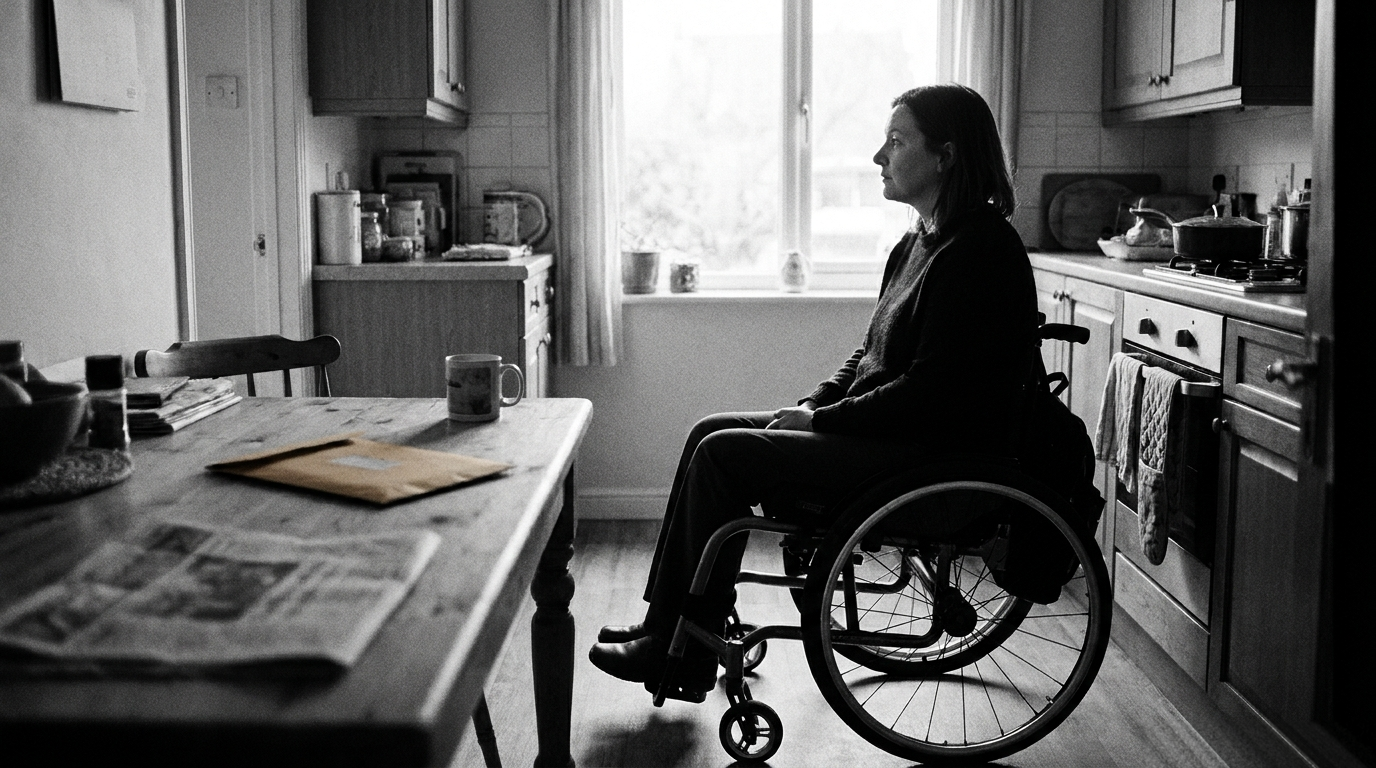
When speculation becomes another burden
Imagine waking up every morning wondering whether the financial support you depend upon will still be there in the future. You turn on the television, open a newspaper or scroll through social media, only to be confronted with another alarming headline about disability benefits. One day, a particular benefit is supposedly being scrapped. The next, thousands of people are apparently going to lose their financial support. Then another headline suggests a completely different outcome.
But how much of what we are reading is actually confirmed? For disabled people, this is not simply a political debate or an interesting news story. It is about independence, dignity, security and the ability to live our everyday lives.
We know changes to the benefits system are being considered. What we do not yet know is precisely what all those changes will be, who will be affected and when they will happen. Yet headlines frequently give the impression that decisions have already been made.
The emotional cost of uncertainty
Behind every benefit claim is a human being—someone who may already be managing chronic pain, fatigue, fluctuating conditions, mobility difficulties or mental health challenges, and who may rely on financial support to pay for essential transport, heating, personal care or the additional costs of disability.
Now add the constant fear of losing that support. The result can be sleepless nights, increased anxiety, stress and uncertainty about the future. For people whose health conditions are aggravated by stress, the impact can be particularly serious.
We frequently hear discussions about the financial cost of the benefits system. But who is measuring the human cost of the fear being created?
- How many disabled people are worrying unnecessarily because a newspaper headline has presented a proposal as though it were an established fact?
- How many are frightened to open their post, worried that another assessment or reduction in support is just around the corner?
- And how many are experiencing worsening health because of uncertainty over decisions that have not yet been finalised?
Headlines are not legislation
There is an enormous difference between a political suggestion, a recommendation from an independent review, a government proposal and a change that has actually become law. These distinctions matter.
Journalists have an important responsibility to scrutinise government policy, investigate proposed changes and report on their potential consequences. But reporting should make it clear what is confirmed, what remains under consideration and what is simply speculation.
Social media adds another complication. A sensational headline can be shared thousands of times without anyone reading the full article, checking the original source or questioning whether the information is accurate. Before long, speculation becomes accepted as fact. Disabled people deserve better than this.
When exceptional achievements become political arguments
Recent comments by Conservative leader Kemi Badenoch have raised another important concern. During a speech about welfare reform on 10 November 2026, she referred to double amputees running marathons, people who are housebound undertaking creative work and autistic people running major technology companies.
There is nothing wrong with recognising the remarkable achievements of disabled people. Indeed, disabled people achieve extraordinary things every day. But there is a significant danger when exceptional achievements are used in political discussions about who should receive financial support.
Just because one double amputee can run a marathon does not mean every double amputee can do the same. Disability is not a competition. Two people with apparently similar disabilities may have entirely different levels of pain, mobility, stamina, health complications and support needs. One person may be an elite athlete; another may struggle to get out of bed, prepare a meal or leave their home. Neither person's experience invalidates the other, and neither should have to prove their worth through extraordinary achievements.
Being able to achieve something does not mean disability disappears
As a disability advocate, I regularly challenge assumptions about what disabled people can and cannot do. I believe in encouraging opportunities, removing barriers and recognising people's abilities. But recognising ability must never mean dismissing disability.
A disabled person may be able to deliver a speech, participate in sport, volunteer, work or contribute to their community. What the audience does not necessarily see is the preparation, assistance, pain, fatigue or recovery involved. They may see an achievement lasting an hour; they do not see what happens during the following 24 or 48 hours.
Being capable of doing something occasionally is not the same as being able to sustain it every day. This distinction is particularly important when discussing employment. Working involves more than completing an individual task. It may require travelling, maintaining regular hours, managing symptoms, accessing suitable facilities and recovering sufficiently to do it all again the next day.
Some disabled people can work full-time. Others can work part-time or with adjustments. Some cannot undertake paid employment at all. All deserve respect.
Benefits and employment are not opposites
Personal Independence Payment (PIP) is not an unemployment benefit. It is designed to help with the additional costs associated with disability and long-term health conditions.
People can receive PIP while working. In fact, disability-related support can sometimes be what makes employment possible, helping someone meet the costs of transport, equipment or other essential needs.
Removing financial support does not automatically remove the barriers preventing someone from working. An inaccessible workplace remains inaccessible. A lack of suitable transport does not disappear. An employer's unwillingness to provide reasonable adjustments is not resolved by reducing someone's income.
If politicians genuinely want more disabled people to enter or remain in employment, accessibility, appropriate support and inclusive recruitment must be part of that conversation.
Listen to disabled people before making assumptions
Disabled people are not a single group with identical experiences. We have different conditions, circumstances, ambitions and support requirements. Some disabilities are visible; others are not. Some conditions fluctuate dramatically, while others remain relatively stable, and some people live with multiple conditions that interact in complicated ways. This is why broad generalisations are so concerning.
Policy should be informed by evidence, meaningful consultation and an understanding of how people actually live. Disabled people should be involved in shaping decisions that affect their lives, not simply informed of the outcome afterwards.
What needs to change?
We need clearer communication from politicians, government departments, journalists and everyone sharing information online:
- When proposals are announced, the public should be told exactly what stage they have reached.
- When reviews make recommendations, those recommendations should not be reported as though they have automatically become government policy.
- When politicians highlight exceptional disabled individuals, they should recognise that those experiences cannot represent everyone.
- And when the media reports on welfare reform, it should consider the consequences of its language for people already living with considerable uncertainty.
This is not about preventing difficult conversations or avoiding necessary scrutiny of public spending. It is about having those conversations responsibly.
People deserve facts, not fear
Disabled people understand that governments review policies and that benefit systems may change. We are perfectly capable of engaging with those discussions.
What we should not have to endure is a constant stream of alarming headlines that blur the distinction between possibility and reality. We should not have to wonder whether our independence is about to disappear because somebody has shared an unverified social media post. And we should not be judged against the achievements of an elite athlete to determine whether our individual support needs are legitimate. A marathon runner's achievements should be celebrated, not used as a measuring stick for somebody else's disability.
Before publishing the next dramatic headline, consider the person reading it: the person who is already struggling, the person who relies on their benefits to maintain their independence, and the person who may spend another sleepless night worrying about something that has not even been decided.
Because behind every headline is a human being. Disabled people deserve clarity, accuracy, dignity and respect.
We need facts, not fear.
Fee Stevenson
Disability and Accessibility Advocate
